Tree Care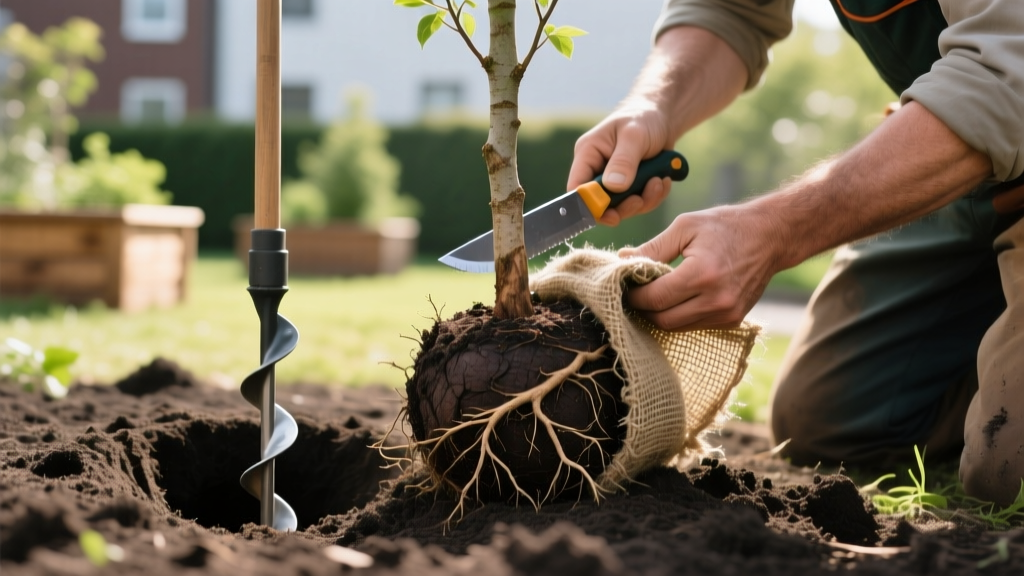
2026 Tree Planting: Root Ball Prep & Burlap Aeration
James MillerPublished
The Intersection of Core Aeration and B&B Tree Planting in 2026
Planting a Balled and Burlapped (B&B) tree is a significant investment in your landscape, but improper installation remains the leading cause of premature tree decline. As we move through 2026, modern arboriculture has shifted away from simply digging a hole and dropping the root ball into the ground. Today, the focus is on soil physics, gas exchange, and rhizosphere health. By integrating core aeration principles into your root ball preparation and burlap removal protocol, you can prevent the dreaded 'bathtub effect' and ensure your new tree establishes a robust, lateral root system.
Core aeration is traditionally associated with lawn care, but its underlying science—relieving soil compaction and increasing pore space for oxygen and water infiltration—is equally critical when planting trees. When you plant a B&B tree in an existing lawn or compacted clay soil, you are placing a porous root ball into a dense, impermeable matrix. Without proper soil aeration and meticulous root ball preparation, the tree's roots will circle inside the loose backfill, eventually girdling the trunk and starving the canopy. This comprehensive 2026 guide will walk you through the exact steps of pre-planting core aeration, root flare excavation, and complete burlap removal to guarantee long-term tree health.
Step 1: Pre-Planting Core Aeration of the Planting Zone
Before you even pick up a shovel to dig the planting hole, you must address the compaction of the surrounding native soil. In 2026, certified arborists highly recommend performing mechanical core aeration on the turfgrass in a 6-foot to 8-foot radius around the intended planting site. Using a heavy-duty walk-behind core aerator, such as the Classen CA-18 or a modern Ryan Lawnaire equivalent, pull 3-inch soil cores across the entire planting zone.
Why Aerate Before Planting?
- Eliminating the Bathtub Effect: If you dig a hole in compacted clay and fill it with loose backfill, water will pool in the hole like a bathtub, drowning the roots. Core aeration fractures the surrounding clay, creating drainage pathways and allowing lateral roots to easily penetrate the native soil.
- Removing Turf Competition: The aeration process severely disrupts the grass rhizomes in the immediate vicinity, reducing competition for water and nutrients during the tree's critical first year of establishment.
- Enhancing Gas Exchange: Tree roots require oxygen for cellular respiration. Pulling cores from the surrounding soil immediately increases the soil's macroporosity, ensuring that oxygen can reach the newly planted root ball's perimeter.
After aerating, you can use the extracted soil cores to help grade the area later, or compost them if they are heavy clay. This leaves you with a fractured, oxygen-rich soil matrix ready to receive the new tree.
Step 2: Inspecting the Root Ball and Locating the Root Flare
The most common mistake in B&B tree planting is burying the root flare—the point where the trunk widens and transitions into the structural roots. In the nursery, B&B trees are often buried under several inches of excess soil to prevent them from tipping over during transport. According to the PennState Extension, planting a tree even two inches too deep can lead to severe stem girdling roots and hypoxia within five years.
To prepare the root ball, use a hand trowel or a pneumatic tool like the AirSpade 2026 Series to gently excavate the top of the root ball until you expose the first structural root. This process, known as root collar excavation, is non-negotiable in modern tree care. The depth of your planting hole must be measured from this exposed root flare, not from the top of the burlap. The planting hole should be two to three times wider than the root ball, but no deeper than the root ball's height, ensuring the tree sits on undisturbed, aerated soil at the base to prevent settling.
Step 3: Complete Burlap and Wire Basket Removal
There is a persistent myth in the landscaping industry that burlap and wire baskets can be left in the ground to 'decompose' or 'rust away.' In 2026, this practice is considered malpractice by the International Society of Arboriculture (ISA). Synthetic burlap will never decompose, and even natural burlap takes years to break down, acting as a wick that draws moisture away from the root ball and a physical barrier to fine root growth. Furthermore, wire baskets frequently cause girdling roots as the trunk and structural roots expand over the decades.
For a detailed look at how different materials behave, review the 2026 Burlap Removal Protocol table below:
| Material Type | Decomposition Rate | 2026 Removal Protocol |
|---|---|---|
| Natural Jute Burlap | 1 to 3 Years | Must be completely removed from the top and sides of the root ball before backfilling. |
| Treated/Plastic Burlap | Never | Highly hydrophobic. Must be 100% removed to prevent root desiccation and physical barriers. |
| Galvanized Wire Basket | 20+ Years | Cut away the top half to the bottom ring. Remove all ropes and twine around the trunk. |
| Nylon Twine/Ropes | Never | Cut and remove entirely. Will girdle and kill the tree as the trunk caliper expands. |
The Safe Removal Process
Once the tree is hoisted into the planting hole and leveled, do not immediately backfill. First, cut all nylon ropes and twine wrapped around the trunk and the base of the root ball. Next, use tile nippers or heavy-duty bolt cutters to sever the top half of the wire basket. Peel back the burlap from the top and sides of the root ball, cutting it away with a sharp Hori-Hori knife or bypass pruners. Leaving a small amount of burlap under the very bottom of the root ball is acceptable, as it is nearly impossible to remove without dropping and shattering the root ball, but the top 75% of the root ball must be entirely exposed to the surrounding aerated soil.
Step 4: Radial Aeration and Backfilling
With the burlap removed and the root flare exposed, it is time to backfill. However, do not simply shovel soil back into the hole and tamp it down. Tamping destroys soil structure and reverses the benefits of your pre-planting core aeration. Instead, use a water-hose to 'mud in' the backfill. As you shovel the native soil back into the hole, spray it with water to eliminate large air pockets without compacting the soil particles.
For heavy clay soils, consider incorporating a radial aeration technique during backfilling. By mixing in small amounts of coarse compost or using vertical mulching tubes (columns of gravel and compost) at the four cardinal directions around the root ball, you create permanent aeration chimneys. These chimneys draw oxygen deep into the soil profile, encouraging the tree's roots to grow outward into the core-aerated lawn zone rather than remaining trapped in the planting hole.
Step 5: Post-Planting Mulching and Lawn Integration
After backfilling, apply a 2-to-3-inch layer of organic wood chip mulch over the core-aerated planting zone. This mulch ring serves multiple purposes: it mimics the natural forest floor, retains soil moisture, regulates soil temperature, and keeps string trimmers away from the vulnerable trunk. Crucially, the mulch must be kept at least 3 inches away from the trunk itself to prevent bark rot and rodent damage—often referred to as avoiding 'volcano mulching.'
Because you core-aerated the surrounding lawn in Step 1, the transition between the new mulch ring and the existing turf will be seamless. The fractured soil outside the mulch ring is already primed for the tree's lateral roots to invade. According to the Michigan State University Extension, maintaining a wide, aerated mulch ring that expands with the tree's drip line over the years is the single most effective way to ensure long-term vigor and drought resistance.
2026 Cost Estimates for Professional Root Ball Aeration and Planting
If you are hiring a certified arborist to handle the heavy lifting, pneumatic excavation, and core aeration, expect pricing to reflect the advanced techniques and equipment used in 2026. Below is a general cost breakdown for professional B&B tree planting with integrated soil aeration:
| Service Component | Estimated 2026 Cost (Per Tree) | Details |
|---|---|---|
| Standard B&B Planting (Up to 3-inch caliper) | $350 - $600 | Includes digging, basic burlap removal, and backfilling. |
| Pneumatic Root Collar Excavation | $125 - $250 | Using AirSpade to safely expose the root flare without damaging bark. |
| Pre-Planting Core Aeration (6-foot radius) | $75 - $150 | Mechanical core aeration of surrounding turf to prevent compaction. |
| Radial Trenching / Vertical Mulching | $200 - $400 | Creating aeration chimneys in heavy clay soils during backfill. |
While the upfront costs of integrating core aeration and meticulous burlap removal may seem high, it pales in comparison to the cost of removing a dead, girdled tree five years down the road. As noted by the Arbor Day Foundation, proper planting depth and soil preparation are the foundational pillars of urban forestry success.
Conclusion
Planting a B&B tree in 2026 requires more than just a shovel and a strong back. By treating the planting process as an exercise in soil aeration and root biology, you set your tree up for decades of success. Remember to core-aerate the surrounding lawn to break up compaction, excavate the root ball to find the true root flare, and ruthlessly remove all burlap, twine, and wire baskets. When you prioritize oxygen, drainage, and lateral root expansion, your newly planted tree will thrive, anchoring itself deeply into a healthy, well-aerated landscape.