Tree Care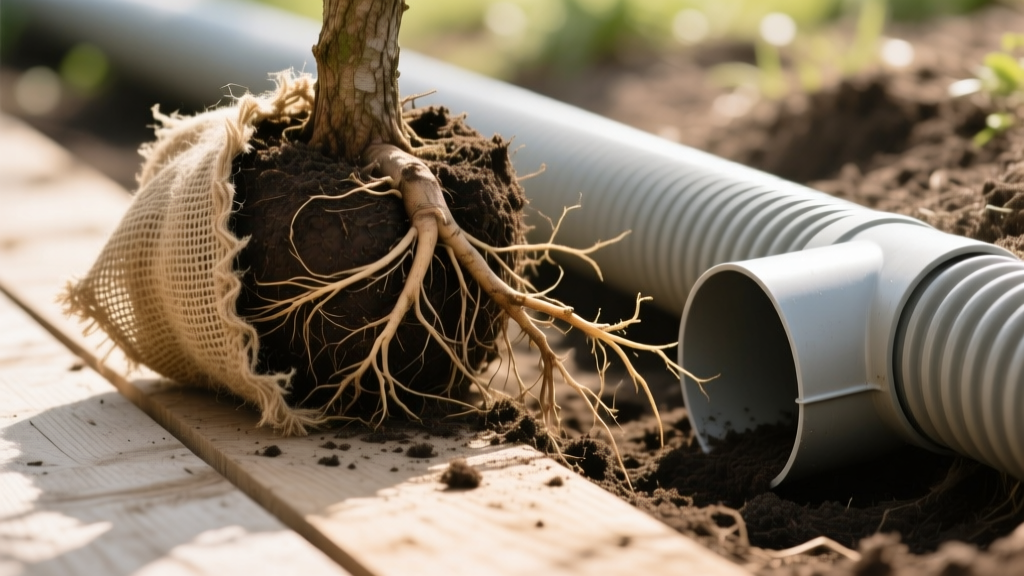
2026 Guide: Root Ball Prep and Burlap Removal Near Drain Pipes
Mike RodriguezPublished
The Critical Intersection of Tree Planting and Subsurface Drainage
In modern landscaping, managing surface and subsurface water is just as important as the aesthetic design of the garden. By 2026, the integration of complex landscape drainage pipe networks—including French drains, NDS catch basins, and ADS corrugated piping—has become standard practice in residential and commercial properties to combat increasingly erratic weather patterns. However, this subsurface infrastructure creates a unique and often overlooked challenge when planting large caliper trees: the intersection of root ball preparation, burlap removal, and drainage pipe vulnerability.
When you plant a tree near or directly over a landscape drainage pipe, the biological imperatives of the tree's root system collide with the engineered moisture pathways of your drainage system. If root ball preparation is rushed, or if burlap and wire baskets are improperly removed, the consequences extend far beyond a struggling tree. Improperly prepared root balls lead to girdling roots, which aggressively seek out the condensation and weeping moisture of nearby drainage pipes, ultimately crushing the infrastructure and causing catastrophic yard flooding. This comprehensive 2026 guide details exactly how to prepare root balls and remove burlap specifically when planting in proximity to landscape drainage pipes.
The Hidden Danger: Burlap, Girdling, and Hydrotropism
To understand why meticulous root ball preparation is non-negotiable near drainage lines, we must examine root hydrotropism—the biological process where roots grow toward moisture. Landscape drainage pipes, particularly perforated corrugated pipes and gravel-filled French drains, are essentially moisture highways. Even solid-wall PVC pipes develop external condensation due to the temperature differential between the cool subsurface pipe and the warmer surrounding soil.
When a tree is planted with its burlap wrapping and wire basket left intact (a common shortcut in fast-paced landscaping), the roots cannot easily penetrate the synthetic barriers or the tightly bound soil interface. Instead of growing outward and downward into the native soil, the roots circle the perimeter of the root ball. These circling roots eventually become girdling roots. As the tree matures and its water demands increase, these girdling roots sense the moisture emanating from the nearby landscape drainage pipe. They will aggressively infiltrate pipe joints, slip through perforations, and expand inside the pipe, leading to severe clogs, pipe deformation, and eventual collapse. According to the University of Minnesota Extension, removing all synthetic materials and properly teasing out circling roots at the time of planting is the single most effective way to prevent long-term structural root defects and subsequent infrastructure damage.
2026 Best Practices for Root Ball Preparation Near Drain Lines
When your planting site overlaps with a subsurface drainage corridor, standard planting protocols are not enough. You must employ advanced root ball preparation techniques to ensure roots grow away from the pipes and establish deeply in the native soil.
Step 1: Locate and Expose the Root Flare
Before the tree even enters the ground, you must identify the root flare—the point where the trunk transitions into the root system. Nursery-grown trees often have 2 to 4 inches of excess soil piled over the root flare. Using a hand trowel or a specialized tool like the Root Slayer Perforator Shovel, carefully scrape away the nursery soil until the top of the first structural root is visible. Planting a tree too deeply, especially over a drainage trench, will force surface roots to migrate laterally toward the oxygen and moisture-rich environment of the drainage gravel bed.
Step 2: Complete Wire Basket and Burlap Removal
The debate over whether to leave natural burlap on the root ball has been largely settled by arborists, but near drainage pipes, complete removal is mandatory. Natural burlap may eventually rot, but it wicks moisture away from the root ball, creating a dry pocket that forces roots outward toward the weeping drainage pipe. Synthetic burlap (polypropylene) never degrades and acts as a permanent barrier.
- Wire Baskets: Use heavy-duty bolt cutters to remove the top two rings of the wire basket entirely. Cut the vertical straps and pull the wire away from the root ball. Leaving the bottom of the basket is sometimes acceptable in standard planting, but near drainage lines, the metal can interfere with subsurface utility locators and root barrier installations.
- Burlap Extraction: Once the tree is positioned in the hole but before backfilling, slice the burlap from the top down to the base. Carefully pull all burlap material out from under the root ball. As noted by the Arbor Day Foundation, leaving any wrapping material restricts root expansion and increases the likelihood of roots seeking alternative, often destructive, moisture sources like nearby drain tiles.
Step 3: Root Washing and Teasing
When planting within 10 feet of a primary landscape drainage pipe, consider bare-root washing the outer perimeter of the root ball. Using a low-pressure garden hose or a specialized air-spade, wash away the outer 2 inches of clay-heavy nursery soil. This exposes the structural roots, allowing you to use a pruning saw to cleanly cut any circling roots. By severing these circling roots, you stimulate the growth of new, straight roots that will grow outward into the native soil rather than remaining trapped in the root ball shape and migrating toward the drainage trench.
Landscape Drainage Pipe Types and Root Vulnerability
Not all landscape drainage pipes present the same level of risk. The type of pipe you are planting near dictates how aggressive your root ball preparation must be. Below is a comparison chart detailing the 2026 industry standards for planting near various drainage systems.
| Drainage Pipe Type | Moisture Signature | Root Intrusion Risk | Required Root Prep Protocol |
|---|---|---|---|
| Solid-Wall PVC (SDR 35) | Low (External condensation only) | Low | Standard flare exposure; complete burlap removal. |
| Perforated Corrugated (ADS N-12) | High (Weeping holes emit moisture) | High | Full burlap/wire removal; outer root washing; pruning of circling roots. |
| French Drain (Gravel Trench + Pipe) | Extreme (Entire trench acts as a water sink) | Severe | Bare-root washing; installation of DeepRoot mechanical barriers between tree and trench. |
| NDS Pro-Series Catch Basin | Moderate (Pooling at basin joints) | Moderate | Complete burlap removal; ensure root flare is 2 inches above basin grade. |
Integrating Root Barriers with Drainage Infrastructure
Even with perfect root ball preparation and complete burlap removal, the sheer biological draw of a French drain or perforated landscape drainage pipe can be overwhelming for certain water-loving tree species (such as Willows, Poplars, or Maples). In 2026, the best practice for planting these species near drainage lines is to pair meticulous root ball prep with mechanical root barriers.
After removing the burlap and teasing the roots, install a high-density polyethylene (HDPE) root barrier, such as the DeepRoot UB 24-2, vertically in the soil between the tree's root ball and the drainage pipe trench. The barrier should extend at least 24 inches below the surface and protrude 2 inches above grade. This forces the newly stimulated, outward-growing roots (which were freed from their burlap confinement) to deflect downward, safely beneath the drainage pipe, rather than laterally into the gravel bed.
The Economics of Prevention vs. Pipe Repair
Landscapers and homeowners often rush root ball preparation to save time, but the financial implications of ignoring this step near drainage infrastructure are staggering. In 2026, the average cost to excavate, replace, and re-grade a crushed or clogged landscape drainage pipe ranges from $65 to $120 per linear foot. A single girdling root that infiltrates a 50-foot French drain system can result in over $4,000 in repair costs, not including the expense of replacing the mature tree that must be removed to access the pipe.
Conversely, spending an extra 45 minutes per tree to properly locate the root flare, cut away the wire basket, strip the burlap, and wash the outer roots costs virtually nothing in labor compared to the catastrophic failure of subsurface water management systems. Proper root ball preparation ensures that the tree establishes a deep, wide root system that anchors it against high winds, rather than a shallow, circling root system that destroys your property's drainage.
Conclusion
Planting trees in landscapes equipped with subsurface drainage pipes requires a paradigm shift in how we handle the root ball. The old practice of dropping a burlap-wrapped root ball into a hole and backfilling is a recipe for infrastructure disaster. By committing to complete burlap removal, wire basket extraction, and careful root teasing, you protect both the long-term health of the tree and the structural integrity of your landscape drainage pipes. As water management systems become more complex and vital to our properties, respecting the biological power of tree roots through proper planting techniques is the ultimate key to a thriving, flood-free landscape.