Tree Care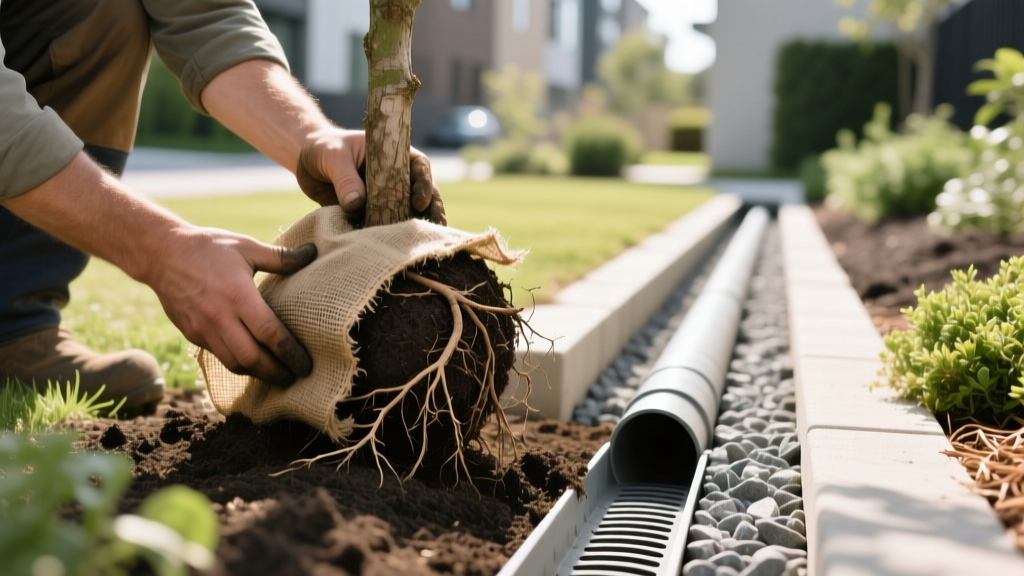
Root Ball Prep and Burlap Removal for French Drains 2026
Lisa ThompsonPublished
The Drainage Contractor’s Dilemma: Trees and Waterlogged Soil
As a drainage specialist focused on French drain installation, I frequently encounter landscapes where a new tree is needed precisely where water pools. Integrating a tree planting with a new French drain system is a brilliant way to manage stormwater and utilize the tree's natural transpiration. However, this intersection of hardscape drainage and arboriculture introduces a critical vulnerability: the tree's root ball. If you do not properly prepare the root ball and completely remove the burlap, your expensive 2026 drainage system will fail to save the tree from root rot. In this comprehensive guide, we will explore the exact steps for root ball preparation and burlap removal when planting trees in conjunction with modern French drain systems.
The Physics of Burlap: Why It Ruins French Drain Efficiency
When we install a French drain, our goal is to lower the local water table and provide a path of least resistance for excess water. We use advanced 2026 materials like NDS EZ-Flow and high-flow geotextiles to ensure water moves rapidly away from the landscape. However, nursery-grown trees are typically wrapped in burlap and secured in wire baskets. This burlap creates a severe textural interface between the root ball soil and the surrounding backfill or drain gravel.
Due to capillary action, water will not easily cross the boundary from the fine-textured root ball soil into the coarse-textured surrounding soil or gravel until the root ball is 100% saturated. This creates a "perched water table" inside the root ball. Even if your French drain is perfectly sloped and functioning flawlessly, the root ball remains a soggy, suffocating sponge. Complete burlap removal is absolutely non-negotiable when tying a tree planting into a drainage system.
Natural vs. Synthetic Burlap in 2026
Many homeowners and even some landscapers mistakenly believe that "natural" burlap will simply rot away. While untreated natural burlap does eventually decompose, the burlap used by most commercial nurseries in 2026 is treated with copper or other rot-resistant chemicals to extend its shelf life. Furthermore, synthetic burlap (often made from polypropylene) is incredibly common and will never break down. According to the University of Minnesota Extension, leaving any burlap on the root ball can severely restrict lateral root growth and lead to long-term tree decline, a risk that is magnified when the surrounding soil is heavily modified by drainage gravel.
Step-by-Step Root Ball Preparation for Drain-Integrated Planting
To ensure your newly planted tree can actually benefit from the French drain you just installed, follow this meticulous root ball preparation protocol.
Step 1: Excavation and Positioning
Dig your planting hole as you normally would, ensuring it is two to three times the width of the root ball but no deeper than the root ball's height. When planting near a French drain trench, position the tree so the trunk is at least 3 feet away from the edge of the gravel trench. This prevents the main structural roots from immediately disrupting the drainage pipe while allowing the finer, lateral feeder roots to eventually migrate into the moist, oxygen-rich gravel envelope.
Step 2: Complete Burlap and Wire Basket Extraction
Once the tree is lowered into the hole, do not just cut the ties and fold the burlap down. You must remove it entirely.
- Cut the Wire Basket: Use heavy-duty bolt cutters to sever the top two rings of the wire basket. Remove these rings completely.
- Peel the Burlap: Cut the twine and peel the burlap back. If the root ball is stable, gently tilt it to one side and pull the burlap out from underneath. If the soil is sandy and prone to crumbling, leave the bottom burlap in place but ensure the top and sides are 100% exposed.
- Remove the Bottom Ring: Cut and remove the bottom wire ring to prevent future root girdling as the tree matures.
Step 3: Root Ball Shaving (The Critical Step)
Trees grown in containers or tight wire baskets develop circling, girdling roots. If planted near a French drain, these circling roots will never push outward into the drain's gravel envelope to access the managed water supply. Using a sterilized pruning saw (such as a Silky Gomboy 240mm), shave off the outer 1/2 inch to 1 inch of the root ball on all sides and the bottom. This removes the circling roots and stimulates the growth of new, straight lateral roots that will eagerly grow toward the moisture gradient provided by your French drain system.
Integrating the Prepped Root Ball with the French Drain Trench
Once the root ball is shaved and completely free of burlap on its sides, you must backfill in a way that connects the tree to the drainage system without causing soil collapse. The Arbor Day Foundation emphasizes that proper backfilling is just as important as the hole itself. When working near a French drain, we use a specific soil-gravel transition method.
| Zone | Material | Purpose in Drain-Integrated Planting |
|---|---|---|
| Root Ball Core | Original Nursery Soil (Shaved) | Maintains core moisture; circling roots removed to encourage outward growth. |
| Backfill Zone | Native Soil + 20% Compost | Provides nutrients and a transitional textural bridge to the gravel. |
| Drainage Envelope | Washed 3/4" Gravel + Geotextile | The French drain trench; provides oxygen and a capillary break for excess water. |
By shaving the root ball and removing the burlap, the new lateral roots will easily push through the amended backfill and eventually reach the geotextile-wrapped gravel of the French drain. The gravel provides a highly oxygenated environment, which is crucial for root health, especially in heavy clay soils that necessitated the French drain in the first place.
2026 Material and Cost Breakdown for Drain-Integrated Planting
When budgeting for a combined French drain and tree planting project in 2026, it is important to account for both the drainage infrastructure and the specialized arboricultural tools and materials required for proper root ball prep.
- NDS EZ-Flow French Drain Pipe (10 ft): $45 - $60. Lightweight, fabric-wrapped, and eliminates the need for loose gravel fill inside the pipe itself, saving labor.
- Non-Woven Geotextile Fabric (300g/m²): $0.75 per square foot. Essential for wrapping the outer gravel envelope to prevent the shaved root ball's soil from washing into the drain and clogging it.
- Sterilized Pruning Saw (e.g., Silky Gomboy): $60 - $85. A mandatory investment for cleanly shaving the root ball without tearing the bark or damaging the vital cambium layer.
- Bolt Cutters (24-inch): $40 - $70. Required for cleanly severing modern, heavy-gauge nursery wire baskets.
- Professional Root Ball Washing/Prep Service: $150 - $300 per tree. If you are hiring a landscaping crew, ensure they are specifically trained in bare-rooting or root-shaving techniques, as traditional "drop and cover" planting crews will often skip this vital step.
Common Mistakes to Avoid
Even with a perfectly engineered French drain, tree health will rapidly decline if these common root ball mistakes are made:
- Folding Burlap into the Hole: Leaving folded burlap at the bottom of the hole creates a permanent moisture trap that will rot the taproot, entirely defeating the purpose of the adjacent French drain.
- Planting Too Deep: The root flare must be visible and sit 2 inches above grade. If you plant the tree too deep to "hide" the root ball near the drain trench, the trunk will rot.
- Skipping the Root Shave: Without shaving the outer layer of the root ball, the tree will remain "pot-bound" in its original soil, completely isolated from the benefits of your newly installed drainage system.
Conclusion
Integrating tree planting with French drain installation is a highly effective strategy for managing wet landscapes in 2026. However, the success of this hybrid approach relies entirely on the meticulous preparation of the root ball. By completely removing all burlap, cutting away wire baskets, and aggressively shaving circling roots, you break down the physical barriers that cause perched water tables. This allows the tree's root system to seamlessly integrate with the surrounding soil and the oxygen-rich gravel envelope of your French drain, ensuring a healthy, thriving tree and a dry, functional landscape for decades to come.