Tree Care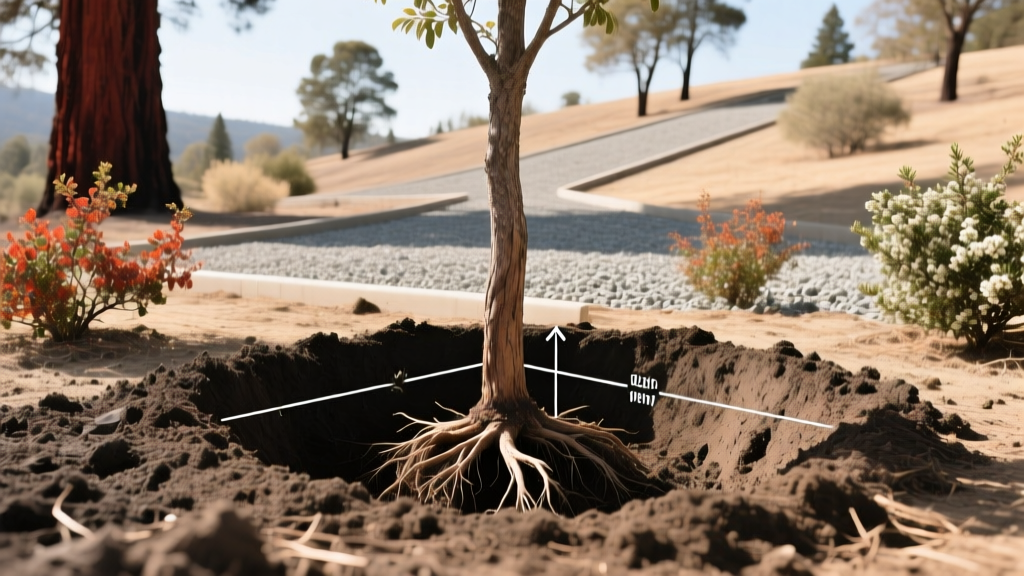
2026 Guide: Root Flare & Hole Depth for Fire-Resistant Trees
Robert HayesPublished
The Paradigm Shift in 2026 Fire-Resistant Landscaping
As we navigate the 2026 wildfire season, the approach to fire-resistant landscaping has evolved significantly. Homeowners and land managers in fire-prone regions are no longer relying solely on hardscaping and the removal of all vegetation. Instead, modern defensible space guidelines emphasize the strategic placement and meticulous care of fire-resistant tree species. However, selecting a fire-resistant tree like a Coast Live Oak, Honey Mesquite, or Kentucky Coffeetree is only the first step. The true foundation of a fire-resilient landscape lies beneath the soil surface. Proper tree planting hole width, depth, and root flare placement are critical, yet frequently overlooked, components of wildfire mitigation.
When trees are planted incorrectly, they suffer from chronic stress, making them highly susceptible to pests, diseases, and drought. In the context of wildfire behavior, a stressed tree is a dangerous tree. It accumulates deadwood, drops leaves prematurely, and loses its ability to retain moisture, effectively transforming from a fire-resistant asset into a volatile ladder fuel. According to the NFPA Firewise USA program, maintaining healthy, well-hydrated vegetation is a core principle of creating effective defensible space zones around structures.
The Hidden Link: Root Flares, Tree Stress, and Live Fuel Moisture
To understand why planting depth matters for fire resistance, we must look at Live Fuel Moisture Content (LFMC). LFMC is the ratio of water mass to dry biomass in living plants, and it is one of the primary metrics used by fire behavior analysts in 2026 to predict ignition probability. Trees with high LFMC are difficult to ignite and can actually act as heat sinks during a passing fire front.
The root flare—the area where the trunk expands and transitions into the structural root system—is the respiratory center of the tree. If the root flare is buried too deeply, the tree experiences hypoxia (oxygen deprivation). This leads to the development of girdling roots, which slowly strangle the tree's vascular system. A compromised vascular system cannot efficiently transport water from the soil to the canopy. Consequently, the tree's LFMC plummets. By ensuring the root flare is properly exposed and the planting hole is correctly dimensioned, you maximize the tree's hydration capabilities, directly enhancing its fire-resistant properties.
Step 1: Exposing and Measuring the True Root Flare
Before you even pick up a shovel, you must prepare the tree. Nursery-grown trees, whether in 15-gallon containers or 24-inch wooden boxes, are often planted too deeply in their nursery pots to stabilize them during transport. If you plant the tree at the soil level of the nursery pot, you are likely burying the root flare.
- Excavate the Root Ball: Gently brush away the top 2 to 4 inches of soil from the root ball using a hand trowel or a soft-bristled brush.
- Locate the Flare: Look for the distinct widening of the trunk where the first structural roots emerge. This is your true planting depth marker.
- Remove Obstructions: Cut away any burlap, twine, or wire cages. Leaving these materials in the ground will restrict root growth and eventually girdle the tree, undoing all your careful planting efforts.
For a comprehensive visual guide on identifying this crucial anatomical feature, the Arbor Day Foundation's tree planting resources provide excellent diagrams illustrating the difference between a properly exposed flare and a buried trunk.
Step 2: Digging the Hole – Width and Depth Specifications
Once the true root flare is identified, you must dig a hole that accommodates the tree's natural growth patterns while promoting the rapid establishment necessary for drought and fire resilience.
The Width Rule: Encouraging Lateral Anchorage
The width of your planting hole is arguably more important than its depth. In 2026, arborists universally recommend digging a hole that is 2 to 3 times wider than the root ball. For example, if you are planting a tree with a 20-inch wide root ball, your hole should be 40 to 60 inches across.
Why does width matter for fire-resistant landscaping? Wide holes allow lateral roots to establish quickly in the surrounding native soil. A robust, wide-spreading root system provides superior structural anchorage. During the extreme wind events that often accompany wildfires (such as the Santa Ana or Diablo winds), deeply anchored trees are less likely to suffer windthrow. A fallen tree in a defensible space zone creates an immediate, massive fuel load and can destroy the very structures the landscape was designed to protect.
The Depth Rule: Preventing Hypoxia and Rot
The most common and fatal mistake in tree planting is digging the hole too deep. The depth of the hole should be exactly equal to, or slightly less than, the height of the root ball from the bottom of the ball to the exposed root flare.
The tree should sit on undisturbed, solid native soil at the bottom of the hole. If you dig too deep and backfill with loose soil beneath the root ball, the tree will settle over time as the soil compacts. This settling will bury the root flare, triggering the hypoxia and stress cycle described earlier. When placed correctly, the root flare should sit 1 to 2 inches above the surrounding grade to account for natural settling and to ensure water drains away from the trunk, preventing collar rot.
Soil Amendments and Mulching in Defensible Space Zones
How you backfill and mulch the planting hole directly impacts both the tree's health and the landscape's fire rating. In 2026, many municipal fire codes in the Wildland-Urban Interface (WUI) strictly regulate the use of organic mulches within specific zones of the defensible space.
| Material | Moisture Retention Benefit | Fire Hazard Risk | Best Placement Zone |
|---|---|---|---|
| Native Soil Backfill | Moderate (promotes deep rooting) | None | Planting Hole (All Zones) |
| Mycorrhizal Inoculant | High (expands root absorption) | None | Directly on Roots during Planting |
| Inorganic Gravel / Rock | Low (reduces evaporation) | None (Non-combustible) | Zone 1 (0-5 feet from structure) |
| Composted Wood Chips | High (retains moisture well) | Low (when kept moist) | Zone 2 & 3 (5+ feet from structure) |
| Shredded Bark / "Gorilla Hair" | Low (dries out quickly) | Extreme (highly flammable) | Banned in WUI Fire Zones |
When backfilling the wide planting hole, use the native soil you just excavated. Amending the backfill heavily with peat moss or rich compost can create a "bathtub effect," where water pools in the loose amended soil rather than encouraging roots to push into the native earth. Instead, apply a high-quality mycorrhizal inoculant directly to the root ball before backfilling. This biological amendment forms a symbiotic relationship with the roots, vastly increasing their surface area for water absorption, which is vital for maintaining high LFMC during dry summer months.
Common Planting Mistakes That Create Fire Hazards
Even with the right tree species and correct hole dimensions, poor execution can ruin your fire-resistant landscape design. Avoid these critical errors:
Volcano Mulching
Piling mulch high against the trunk of the tree (volcano mulching) is detrimental to tree health and poses a severe fire risk. The decaying mulch keeps the bark constantly moist, inviting fungal pathogens and rot. Furthermore, as the mulch dries out in the late summer heat, it becomes a highly combustible wick positioned directly against the trunk. Always maintain a 3-to-4-inch mulch-free zone around the base of the trunk, ensuring the root flare remains exposed to the air. Keep mulch layers no deeper than 2 to 3 inches.
Leaving Burlap and Wire Cages
Many landscaping contractors leave the burlap and wire baskets on large box trees to save time. While the tree may survive initially, the wire will eventually girdle the expanding structural roots. A girdled tree will experience sudden canopy dieback years later, creating a massive accumulation of dead, dry wood in the upper canopy. This deadwood acts as prime ignition material for wind-blown embers. Always cut away the top half of the wire cage and remove all synthetic burlap and twine before backfilling the hole.
Conclusion: Building a Resilient Canopy
Fire-resistant landscaping in 2026 requires a holistic understanding of plant physiology and fire behavior. By adhering to strict guidelines for planting hole width and depth, and by ensuring the root flare is properly exposed, you set the stage for a robust, deeply rooted tree. A healthy tree with a high Live Fuel Moisture Content is one of the most effective, beautiful, and ecologically beneficial tools in your defensible space arsenal. For further reading on managing vegetation in fire-prone areas, consult the US Forest Service fire management resources to ensure your property meets the latest regional safety standards.