Tree Care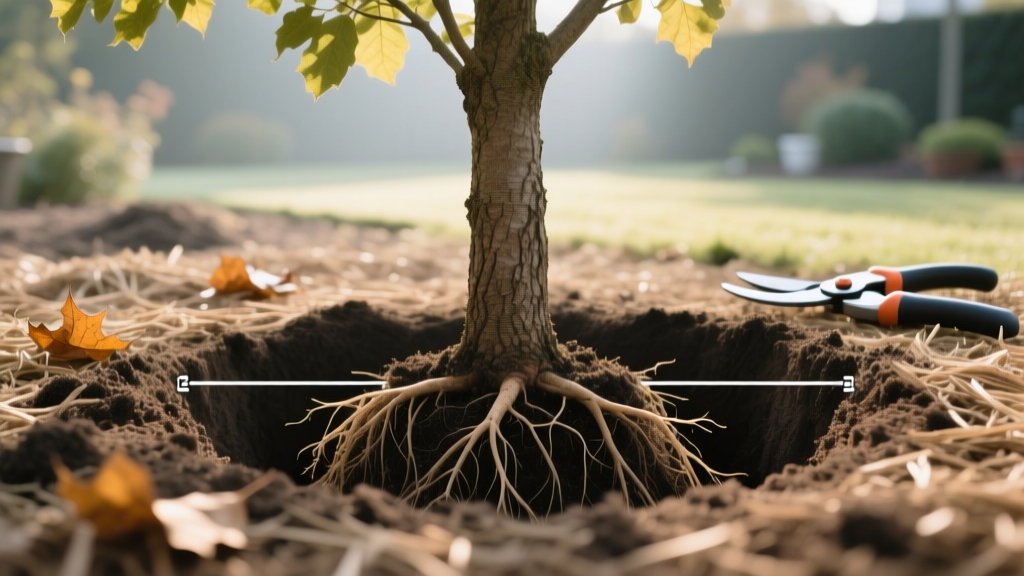
2026 Root Flare Planting: Hole Depth & Pruning Timing
James MillerPublished
The Critical Link Between Root Flare Depth and Pruning
When homeowners and landscapers think about tree care in 2026, pruning methods and timing usually take center stage. We obsess over the perfect bypass pruners, the ideal dormant season window, and the exact angle for a reduction cut. However, the most crucial pruning decision you will ever make happens before the tree even enters the ground. The dimensions of your planting hole—specifically the width and depth relative to the root flare—dictate the structural integrity of the tree for its entire lifespan. If you fail to establish the root flare correctly at planting, no amount of expert pruning later will save the tree from structural failure, girdling roots, and a shortened lifespan.
According to the International Society of Arboriculture (ISA), improper planting depth is the leading cause of premature tree decline in urban and suburban landscapes. By viewing planting through the lens of long-term pruning and structural training, we can set our trees up for success from day one.
Understanding the Root Flare: The Anchor of Tree Health
The root flare, also known as the root collar, is the vital transition zone where the trunk of the tree widens and merges into the primary root system. This area is designed to be exposed to the air and the elements. It contains specialized vascular tissues that require oxygen to function properly and facilitate the exchange of gases necessary for cellular respiration.
When a tree is planted too deeply, burying the root flare under inches of soil or heavy mulch, the tree reacts defensively. It will often spawn adventitious roots from the buried trunk tissue in a desperate attempt to access oxygen near the soil surface. These secondary roots eventually circle and choke the main vascular system, creating girdling roots. From a pruning perspective, a tree with a compromised root system cannot sustain a healthy, balanced canopy. You will be forced into heavy, reactive crown reduction pruning to compensate for the dying root system, rather than performing light, proactive structural pruning.
2026 Guidelines: Calculating Hole Width and Depth
Modern arboriculture standards have evolved significantly over the last decade. The old adage of digging a deep, narrow hole has been entirely debunked. Research championed by institutions like the University of Florida IFAS Extension confirms that tree roots grow horizontally, not vertically. Therefore, your planting hole must prioritize width over depth.
The Width Rule: 2 to 3 Times the Root Ball
The width of the planting hole should be at least two to three times the diameter of the root ball. This wide, saucer-shaped hole loosens the surrounding soil, allowing the delicate new feeder roots to expand outward rapidly without encountering compacted soil walls. A wider hole also improves drainage and oxygen infiltration, which keeps the root flare healthy and prevents the rot that leads to weak branch unions.
The Depth Rule: Expose the Flare
The depth of the hole is where most planting mistakes occur. The hole should actually be slightly shallower than the height of the root ball. The goal is to position the tree so that the root flare sits one to two inches above the surrounding grade. Once the tree is placed in the hole, you must brush away any nursery soil covering the flare before backfilling. The Arbor Day Foundation emphasizes that locating the true root flare before the shovel even hits the dirt is the single most important step in the planting process.
2026 Planting Dimensions Chart
| Tree Caliper (Trunk Diameter) | Root Ball Diameter | Recommended Hole Width | Target Flare Position |
|---|---|---|---|
| 1.5 inches | 18 inches | 45 - 54 inches | 1 inch above grade |
| 2.0 inches | 24 inches | 60 - 72 inches | 1.5 inches above grade |
| 3.0 inches | 32 inches | 80 - 96 inches | 2 inches above grade |
| 4.0 inches | 42 inches | 105 - 126 inches | 2 inches above grade |
How Planting Depth Dictates Pruning Methods and Timing
When you correctly establish the root flare and provide adequate hole width, you unlock the ability to follow the ANSI A300 standards for structural pruning. Here is how proper planting aligns with your pruning timeline over the first decade of the tree's life.
Phase 1: Planting Day (Year 0) - The Minimalist Approach
If the root flare is properly exposed and the hole is wide enough to prevent transplant shock, your pruning methods at planting should be strictly minimal. Only remove dead, diseased, or broken branches. Do not prune for shape, and do not remove the lower temporary branches. These lower branches produce essential auxins (growth hormones) that stimulate trunk caliper growth and help anchor the tree. Removing them forces the tree to push energy into new, weakly attached watersprouts, complicating your future pruning schedule.
Phase 2: Establishment (Years 1-3) - Subordination Pruning
A tree planted at the correct depth will establish its root system rapidly, usually within two to three years. During this window, your pruning timing should focus on late winter or early spring while the tree is dormant. The method of choice is subordination pruning. Subordination pruning involves identifying stems that are competing with the central leader for dominance. By making strategic reduction cuts on these competing leaders, you direct the tree's hormonal energy back to the main trunk. This method prevents the formation of included bark—a weak union where bark grows inward between two branches, creating a prime splitting hazard during high winds or heavy snow loads. Because the root flare is healthy and oxygenated, the tree will have the vigor to compartmentalize these pruning cuts quickly, preventing decay from entering the heartwood.
Phase 3: Structural Maintenance (Years 4+) - Crown Thinning and Cleaning
By year four, a properly planted tree requires standard maintenance pruning. This involves crown cleaning (removing deadwood and crossing branches) and light crown thinning to allow wind to pass through the canopy. If the tree had been planted too deeply, the stress from girdling roots would manifest as dieback in the upper canopy. You would be forced into aggressive deadwooding and hazard reduction pruning, rather than the aesthetic and health-focused maintenance pruning you originally planned.
Corrective Action: Excavating Buried Root Flares
What happens if you inherit a landscape with trees that were planted incorrectly? In 2026, the standard protocol for remediation is root collar excavation using compressed air tools, such as an AirSpade. This pneumatic tool safely blows away the compacted soil and mulch covering the root flare without damaging the delicate bark or feeder roots.
Once the flare is exposed, the pruning timeline must be adjusted. The tree has likely been under severe physiological stress. Heavy canopy pruning should be avoided immediately after excavation, as the tree needs all its foliage to generate the energy required to heal the root zone. Instead, limit pruning to the removal of deadwood and hazardous hanging limbs for the first 12 to 18 months post-excavation. Only after the tree shows signs of vigorous new growth should you resume a standard structural pruning schedule.
Essential 2026 Tools for Planting and Pruning
To execute these guidelines effectively, you need the right equipment. Here are the top tools recommended for modern tree establishment and subsequent pruning:
- Root Flare Excavation Knife: A specialized, serrated hori-hori knife is essential for carefully slicing away nursery soil to locate the true root flare before placing the tree in the hole.
- Wide-Spade Shovel: A trenching or wide-blade spade helps create the straight, rough walls of a wide planting hole, preventing the glazing effect that can trap roots in heavy clay soils.
- Silky Gomboy 240mm Pruning Saw: For making clean, precise reduction cuts during the subordination pruning phase in Years 1-3. Its impulse-hardened teeth leave a smooth finish that promotes rapid callus formation.
- Felco 2 Classic Bypass Pruners: The industry standard for making small heading cuts and removing temporary branches without crushing the cambium layer.
Conclusion
In the realm of tree care, pruning methods and timing are inextricably linked to the initial planting process. By adhering to the 2026 guidelines for planting hole width and depth, and ensuring the root flare is prominently exposed, you are essentially performing the first and most important prune of the tree's life. You are pruning away the risk of girdling roots, structural failure, and decades of corrective maintenance. Take the time to dig wide, plant shallow, and expose the flare—your future pruning schedule, and the tree itself, will thank you.
Remember that a tree is a long-term investment in your property's ecosystem and aesthetic value. The initial hours spent measuring the root ball, brushing away nursery soil, and digging a properly proportioned hole will yield decades of robust growth, vibrant seasonal color, and minimal structural hazards.