Tree Care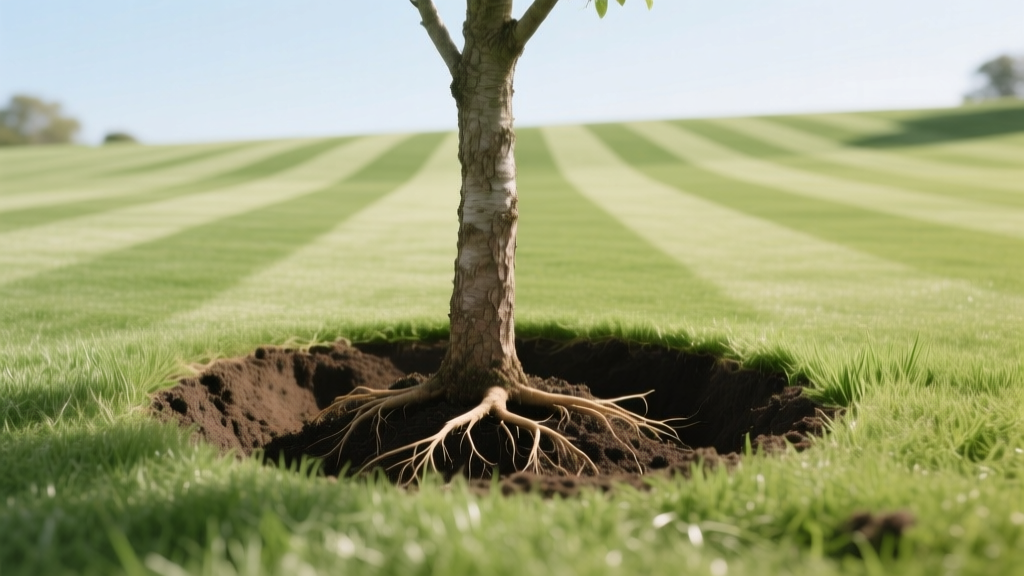
Root Flare And Planting Hole Guidelines For Lawn Art 2026
David ParkPublished
The Intersection of Lawn Aesthetics and Tree Health
When designing intricate lawn striping patterns—such as concentric circles, checkerboards, or sweeping diamond motifs—the trees in your landscape serve as the ultimate visual anchors. In 2026, landscape aesthetics demand high-definition contrast, vigorous turf health, and flawless symmetry. However, a beautifully striped lawn is only as striking as the structural elements that frame it. If your focal point trees are planted incorrectly, they will suffer from stunted growth, canopy dieback, or structural leaning. A leaning or dying tree completely disrupts the visual flow and symmetry of your carefully mowed aesthetic patterns.
The secret to a thriving, picture-perfect landscape lies beneath the soil, specifically in how you manage the tree planting hole width, depth, and the critical root flare. By mastering these arboricultural guidelines, you ensure your trees grow into majestic, stable specimens that perfectly complement the crisp, clean lines of your lawn striping art.
Understanding the Root Flare: The Anchor of Your Design
The root flare, also known as the trunk flare, is the area at the base of the tree where the trunk expands and transitions into the structural root system. In a properly planted tree, this flare should be slightly visible above the soil line, resembling the bell of a trumpet or the base of a wine glass. When landscape contractors or homeowners bury the root flare too deeply, the tree is essentially suffocated.
The bark at the base of the trunk is not designed to be constantly moist and buried; it will rot, and the tree will develop girdling roots that eventually strangle the trunk. For lawn care enthusiasts who spend hours perfecting their striping lines with modern 2026 striping kits, losing a focal point tree to girdling roots means a massive, unsightly gap in your landscape design. According to experts at the Clemson University Home and Garden Information Center, locating and exposing the root flare before digging your hole is the single most important step in the entire planting process.
Exact Planting Hole Width Guidelines for 2026
To ensure your trees grow straight and strong—maintaining the vertical symmetry required for formal garden designs and geometric lawn patterns—the planting hole must be wide enough to encourage lateral root expansion. A tree with a robust, wide-spreading root system will not lean during heavy storms, preserving the intentional sightlines of your landscape.
- The 2.5x to 3x Rule: The width of the planting hole should be 2.5 to 3 times the diameter of the root ball. For example, if you are planting a specimen oak with a 24-inch root ball to anchor the center of a spiral striping pattern, your hole must be at least 60 to 72 inches wide.
- Sloped Edges: In 2026, arborists highly recommend sloping the sides of the planting hole. Instead of digging a straight-walled cylinder, create a bowl-like shape. The top of the hole should be significantly wider than the bottom. This allows the upper lateral roots, which are responsible for the majority of water and nutrient uptake, to spread out effortlessly into the surrounding native soil.
- Roughing the Sides: If your soil is heavy clay, use a shovel or a mattock to score and roughen the sides of the hole. Glazed, smooth clay walls act like a container, causing roots to circle rather than radiate outward, which compromises the tree's stability and long-term health.
Precise Planting Hole Depth and Root Flare Placement
While width is generous, depth must be strictly controlled. The most common and fatal mistake in tree planting is digging the hole too deep. If a tree sinks below the grade after planting, water will pool around the trunk, leading to collar rot and inviting fungal pathogens that can quickly destroy your landscape's centerpiece.
- The Golden Rule of Depth: The depth of the planting hole should be slightly less than the height of the root ball. The tree must rest on undisturbed, solid soil at the bottom of the hole to prevent it from sinking over time.
- Elevating the Flare: The root flare must sit 1 to 2 inches above the final surrounding grade. This accounts for minor settling and ensures that the trunk remains dry and healthy.
- Finding the Flare: Before you even pick up a shovel, brush away the nursery soil from the top of the root ball until you see the first structural root diverge from the trunk. Measure from this exact point to the bottom of the root ball. This measurement is your maximum hole depth.
The Morton Arboretum emphasizes that planting even a few inches too deep can drastically reduce a tree's lifespan and vigor, robbing your lawn of the dappled shade necessary for certain cool-season turfgrasses to thrive and hold the deep green color required for high-contrast striping.
Root Ball Dimensions and Planting Hole Specifications
Use the following chart to ensure your digging dimensions are perfectly calibrated for the size of your focal point tree.
| Root Ball Diameter | Root Ball Height | Required Hole Width (3x) | Required Hole Depth |
|---|---|---|---|
| 18 inches | 14 inches | 54 inches | 12 to 13 inches |
| 24 inches | 18 inches | 72 inches | 16 to 17 inches |
| 30 inches | 22 inches | 90 inches | 20 to 21 inches |
| 36 inches | 26 inches | 108 inches | 24 to 25 inches |
Soil Preparation and Backfilling for Optimal Canopy Growth
A lush, full canopy is essential for casting the dynamic shadows that make lawn striping patterns pop during the golden hours of the day. To achieve this, proper backfilling is critical. In 2026, the consensus among soil scientists and arborists is to use the native soil you just dug out of the hole to backfill around the root ball. Amending the backfill with heavy compost or potting soil creates a 'bathtub effect,' where water pools in the loose amended soil rather than draining into the surrounding native earth.
Break up any large clods of dirt and remove rocks or debris as you shovel the native soil back into the wide, bowl-shaped hole. Tamp the soil gently with your hands or the handle of your shovel to eliminate large air pockets, but avoid compacting it so tightly that water cannot penetrate. Once the hole is half-filled, water it deeply to help the soil settle naturally around the root ball before adding the remaining soil.
Mulching Techniques That Complement Lawn Patterns
Mulch is not just for moisture retention; it is a vital design element that separates the manicured turf from the tree trunk, providing a clean, professional border for your lawn patterns. However, improper mulching can negate all your careful planting efforts.
- The Donut Method: Apply a 2 to 3-inch layer of organic hardwood mulch in a wide ring around the tree, extending out to the drip line if possible. This mimics the natural forest floor and protects the lateral roots from lawnmower damage.
- No Mulch Volcanoes: Never pile mulch against the trunk of the tree. Keep the mulch at least 3 to 4 inches away from the trunk flare. Piling mulch against the bark traps moisture, invites pests, and hides the beautiful root flare you worked so hard to expose and elevate.
- Crisp Edging: Use a manual half-moon edger or a motorized landscape edger to create a sharp, vertical trench between the mulch ring and your striped turf. This sharp boundary line enhances the geometric precision of your overall landscape design.
Post-Planting Care for Focal Point Trees
After the tree is planted and mulched, immediate and consistent care is required to establish the root system. A newly planted tree lacks the extensive root network needed to support its canopy, making it highly susceptible to drought stress.
For the first two growing seasons, water the tree deeply once or twice a week, depending on rainfall. Use a slow-release soaker hose or a tree watering bag to deliver 10 to 15 gallons of water directly to the root zone. Avoid frequent, shallow sprinkling, which encourages weak, surface-level roots that interfere with your turfgrass and disrupt the smooth surface needed for lawn striping.
Regarding staking, modern 2026 arboricultural guidelines suggest avoiding stakes unless the tree is in an extremely high-wind area or has a disproportionately large canopy for its root ball. If you must stake the tree, use wide, flexible straps that will not cut into the bark, and remove the stakes after one year to allow the trunk to develop natural taper and strength.
Conclusion
Creating breathtaking lawn striping patterns and aesthetic landscape designs requires more than just a premium mower and a striping kit. It requires a holistic approach to landscape health, where every element thrives in harmony. By adhering to strict guidelines for planting hole width, carefully managing depth, and ensuring the root flare is properly exposed and elevated, you guarantee that your focal point trees will grow into vigorous, stable, and beautiful anchors. When your trees are healthy and structurally sound, they elevate your lawn art from a simple mowing pattern to a masterful, enduring landscape design.