Tree Care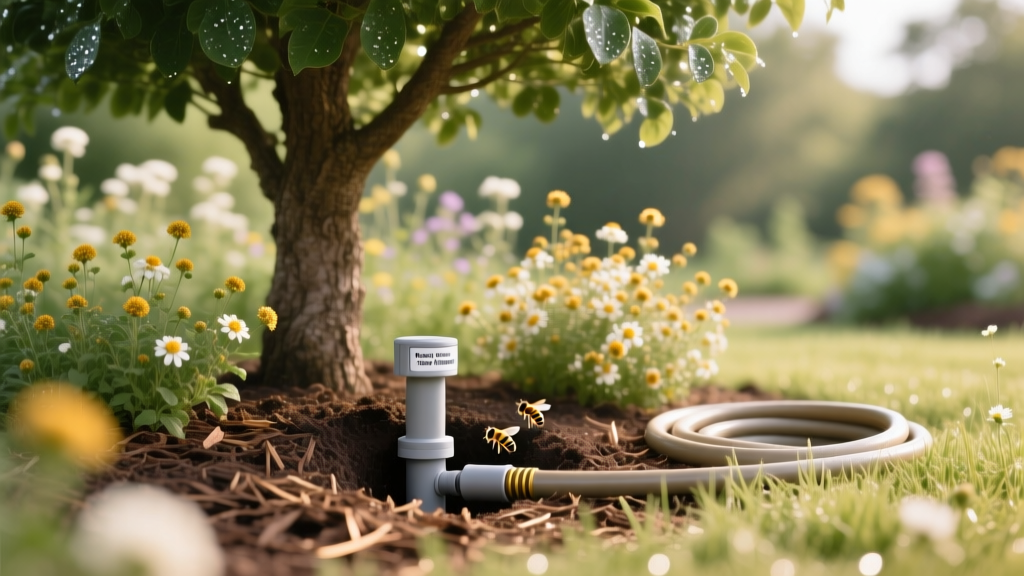
2026 Tree Watering: Ross Root Feeder vs Soaker Hose for Pollinators
Mike RodriguezPublished
The Backbone of the Pollinator Garden: Trees and Soil Ecology
When designing a thriving, pollinator-friendly landscape in 2026, most gardeners immediately think of native wildflowers, milkweed, and flowering shrubs. However, the true anchors of any resilient ecosystem are your trees. Species like the Eastern Redbud, American Linden, and native Maples provide critical early-spring nectar and pollen when ground-level blooms are scarce. Furthermore, trees offer essential nesting habitats, overwintering sites, and host foliage for countless butterfly and moth caterpillars. Yet, maintaining tree health without disrupting the delicate micro-habitats at the base of the trunk requires a strategic approach to irrigation.
The most pressing challenge for eco-conscious gardeners is balancing deep tree hydration with the preservation of ground-nesting native bees. According to entomologists, approximately 70% of native bee species, including vital early-season pollinators like Andrenid and Halictid bees, nest underground in bare or sparsely vegetated soil. As noted by Penn State Extension, these bees excavate delicate subterranean tunnels that are highly susceptible to collapse and fungal infections if the topsoil becomes waterlogged. This brings us to a critical debate in modern arboriculture and garden design: when it comes to deep root watering, should you use a Ross Root Feeder or a traditional soaker hose?
Ross Root Feeder: Precision Deep Injection
The Ross Root Feeder is a specialized tool that attaches directly to your garden hose and utilizes a hollow metal probe to inject water, and optionally liquid fertilizer, directly into the subsoil. In 2026, the classic heavy-duty steel probe models remain a staple for serious horticulturists who prioritize soil ecology.
How It Works for Pollinator Habitats
By inserting the probe 12 to 18 inches into the ground along the tree's drip line, the Ross Root Feeder bypasses the topsoil entirely. Water is delivered exactly where the tree's fine, absorbing root hairs are located. For the pollinator garden, this is a massive advantage. Because the water is deposited deep underground, the top 3 to 4 inches of soil remain completely dry and structurally intact. Ground-nesting bees can continue to excavate and maintain their brood chambers without the risk of their tunnels flooding or collapsing from surface saturation.
Pros and Cons
- Pro: Keeps the surface dry, protecting 70% of native ground-nesting bee populations.
- Pro: Allows for the targeted application of organic liquid fertilizers (like fish emulsion or kelp extract) directly to the root zone without attracting surface scavengers or disrupting the soil food web.
- Pro: Prevents the germination of opportunistic weeds on the soil surface that might otherwise outcompete low-growing native pollinator plants.
- Con: Highly labor-intensive. You must manually insert the probe every 12 to 18 inches around the entire drip line of the tree, which can be physically demanding for large, mature shade trees.
- Con: If used in heavy, compacted clay soils, the forceful injection of water can sometimes create localized subsurface pockets that may interfere with deep-burrowing beneficial insects if not done carefully.
Soaker Hoses: Broad Spectrum Surface Moisture
Soaker hoses are made from porous recycled rubber or canvas that 'weeps' water slowly along their entire length. They are typically laid out in a spiral pattern from the base of the tree outward to the drip line and covered by a layer of mulch.
How It Works for Pollinator Habitats
Soaker hoses provide a slow, steady drip that encourages deep root growth over time by allowing water to percolate downward gradually. However, the immediate effect is a thoroughly saturated topsoil layer. For a pollinator garden, this presents a complex trade-off. While the steady moisture is excellent for shallow-rooted understory plants—such as native ferns, wild ginger, and asters planted beneath the tree canopy—it creates a hostile environment for ground-nesting bees. The Xerces Society frequently emphasizes that leaving patches of bare, undisturbed, and well-draining soil is paramount for native bee conservation. A soaker hose, by design, eliminates the 'well-draining surface' requirement in the immediate vicinity of the tree.
Pros and Cons
- Pro: 'Set it and forget it' convenience. You can put the hose on a smart timer and water the tree and the surrounding understory pollinator plants simultaneously.
- Pro: Excellent for establishing newly planted saplings that require consistent, broad moisture across the entire root ball during their first two years.
- Con: Keeps the topsoil wet for extended periods, drowning ground-nesting bee larvae and promoting fungal pathogens that can harm both the tree and nearby native flora.
- Con: Hoses degrade over time, especially when exposed to UV light and freezing winter temperatures, requiring replacement every few seasons to prevent micro-plastic pollution in your garden beds.
Head-to-Head Comparison: 2026 Eco-Garden Metrics
| Feature | Ross Root Feeder (Probe) | Soaker Hose (Drip Line) |
|---|---|---|
| Primary Water Depth | 12 - 18 inches (Deep Subsoil) | 2 - 6 inches (Topsoil percolation) |
| Impact on Ground-Nesting Bees | Minimal (Surface remains dry) | High Risk (Tunnel collapse/flooding) |
| Understory Plant Hydration | Low (Requires separate watering) | High (Waters surrounding flora) |
| Labor Requirement | High (Manual insertion required) | Low (Automated with timer) |
| Water Efficiency (Evaporation) | Excellent (Zero surface evaporation) | Good (Reduced by mulch cover) |
| Estimated Cost (2026) | $35 - $55 (One-time tool purchase) | $25 - $40 (Per hose, recurring) |
Strategic Watering Schedule for the Pollinator Garden
To maximize tree health while fiercely protecting your local pollinator populations, the most effective strategy in 2026 is not to choose one tool exclusively, but to deploy them seasonally based on the life cycles of native insects and regional weather patterns. The University of Minnesota Extension recommends adjusting tree watering based on seasonal soil moisture levels, which aligns perfectly with pollinator emergence schedules.
Early Spring (March - May): The Soaker Hose Phase
In early spring, most ground-nesting bees are still dormant or have not yet begun their primary excavation phases. The soil is naturally thawing and shifting. During this window, using a soaker hose is highly beneficial. It helps push water deep into the root zone to support the explosive spring bloom of trees like the Redbud and Serviceberry, which are critical early nectar sources for emerging queen bumblebees and honeybees. Ensure the hose is covered by 2 inches of arborist wood chips to slow evaporation and protect the soil structure.
Peak Summer (June - August): The Ross Root Feeder Phase
As summer heat sets in and drought conditions typically peak, ground-nesting bees are at their most active, rearing broods in shallow subterranean cells. During this critical window, put the soaker hose away. Switch entirely to the Ross Root Feeder. By injecting water deeply along the drip line every 10 to 14 days, you provide the tree with the massive volume of water it needs to survive the summer heat without turning the surface into a muddy trap for native bees. This is also the ideal time to inject organic, pollinator-safe liquid soil conditioners, such as humic acid, to improve soil structure without synthetic chemicals.
Autumn (September - November): Pre-Winter Deep Soak
Before the ground freezes, trees require a massive, deep soaking to prevent winter desiccation (winter burn). At this stage, native bees have sealed their nests for the winter. You can safely return to using a soaker hose or even a standard sprinkler to provide a slow, 4-hour deep soak across the entire root zone, ensuring the tree enters dormancy fully hydrated.
Mulching and Bare Soil Management
No discussion of tree watering in a pollinator garden is complete without addressing mulch. While standard gardening advice often dictates a thick 'donut' of mulch around the tree base to retain moisture, this practice is detrimental to pollinators. Thick layers of wood chips or bark prevent ground-nesting bees from accessing the soil.
For 2026, adopt a modified approach: apply a thin layer (1 to 2 inches) of coarse arborist chips strictly under the tree's drip line to retain the moisture delivered by your soaker hose or root feeder. However, leave intentional, unmulched patches of bare, well-draining soil in sunny spots near the tree's perimeter. These 'bee banks' provide the necessary nesting real estate for native species while allowing your deep-root watering techniques to function unimpeded.
Conclusion
Designing a truly sustainable, pollinator-friendly landscape requires looking beyond the flowers and considering the entire soil ecosystem. While the soaker hose offers undeniable convenience and benefits for understory plantings, the Ross Root Feeder emerges as the superior tool for mid-summer tree hydration in habitats where ground-nesting bees are present. By understanding the mechanics of both tools and aligning your watering schedule with the life cycles of native pollinators, you can cultivate majestic, healthy trees that serve as the foundation of a thriving, buzzing garden for decades to come.