Tree Care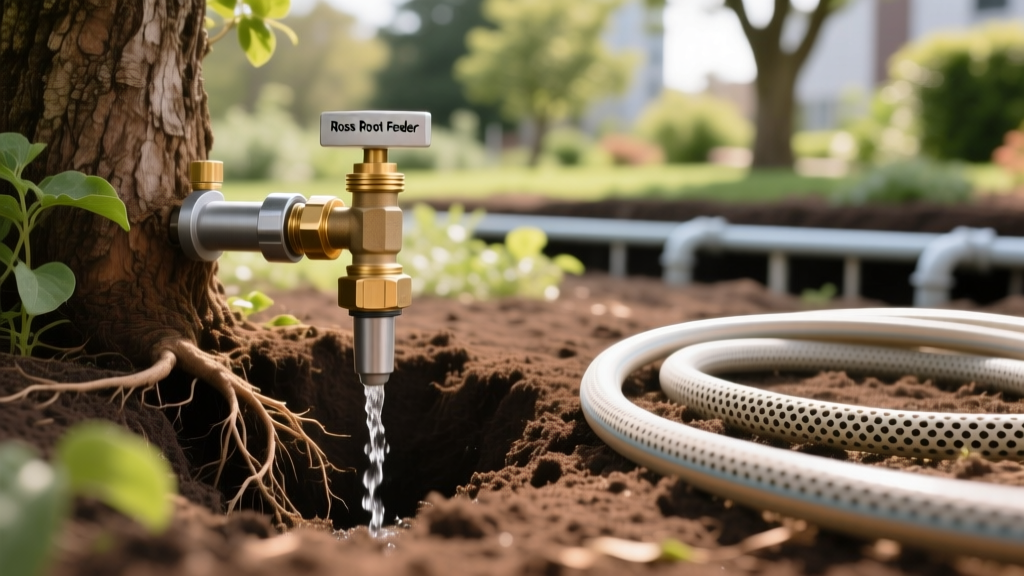
Ross Root Feeder vs Soaker Hose: 2026 Tree Watering Guide
Mike RodriguezPublished
The Challenge of Tree Hydration in Yards with Landscape Drainage Pipes
As we navigate the 2026 landscaping season, extreme weather patterns and stringent municipal water restrictions have made efficient tree watering more critical than ever. For homeowners who have invested in comprehensive subsurface drainage systems—such as French drains, catch basins, and corrugated landscape drainage pipes—managing soil moisture around mature trees presents a unique hydrological challenge. While landscape drainage pipes are essential for protecting your home's foundation and preventing yard flooding, they fundamentally alter the natural percolation of water through your soil profile.
When you install a 4-inch corrugated or rigid PVC landscape drainage pipe wrapped in geotextile fabric and surrounded by a gravel envelope, you create a subsurface 'highway' for water. This system is designed to capture surface and shallow subsurface water and whisk it away from your property. However, this same mechanism can inadvertently starve your trees of the deep hydration they need to survive summer droughts. To combat this, arborists and landscaping professionals frequently debate two primary deep root watering methods: the traditional soaker hose and the targeted Ross Root Feeder probe. In this guide, we will evaluate both methods specifically through the lens of properties equipped with extensive landscape drainage pipe networks.
Understanding Soil Hydrology and Drainage Pipe Interception
Before comparing watering tools, it is vital to understand how landscape drainage pipes interact with soil moisture. Tree roots, particularly the fine feeder roots responsible for water uptake, typically reside in the top 12 to 36 inches of soil. According to the Arbor Day Foundation, slow, deep watering is the gold standard for encouraging deep root growth and drought resistance.
However, when surface water is applied via traditional methods, it percolates downward until it hits a change in soil density or a subsurface structure. If a French drain trench is located between the tree and the water source, or if the drainage pipe network is installed at a depth of 18 inches, the gravel trench acts as a massive capillary break and a preferential flow path. Instead of continuing downward into the tree's deep root zone, the water is intercepted by the drainage aggregate and diverted into the perforated landscape drainage pipe, ultimately exiting into the storm sewer or a dry well. This phenomenon renders many surface-level watering strategies highly inefficient in heavily drained yards.
Soaker Hoses: Surface Hydration vs. Subsurface Interception
The soaker hose has long been a staple of garden irrigation. Made from porous recycled rubber or vinyl, these hoses 'sweat' water along their entire length, typically delivering about 1 gallon of water per foot per hour at standard residential water pressure. In a flat, un-drained garden bed, a soaker hose laid in a spiral pattern around the tree's dripline is an excellent, low-effort watering solution.
The Drawbacks Near Landscape Drainage Pipes
When your yard relies on landscape drainage pipes to manage runoff, soaker hoses face significant limitations:
- Drainage Interception: Because soaker hoses rely on slow surface percolation, the water rarely penetrates deeper than 6 to 10 inches before it encounters the gravel envelope of a nearby drainage pipe. The water is then siphoned away, leaving the 18-to-36-inch deep root zone completely dry.
- Evaporation and Wind Drift: Even with a layer of mulch, surface-applied water is subject to evaporation, which is exacerbated by the increased heat island effects observed in the summer of 2026.
- Uneven Distribution on Graded Yards: Yards with drainage pipes are often graded to encourage surface runoff toward catch basins. Soaker hoses struggle to maintain even pressure and distribution on sloped terrain, leading to dry spots on the high side of the tree's root plate.
While soaker hoses are inexpensive (averaging $25 to $40 for a 50-foot hose in 2026), their inefficiency in yards with aggressive subsurface drainage makes them a poor choice for deep root watering in these specific environments.
The Ross Root Feeder: Bypassing the Drainage Layer
The Ross Root Feeder (and similar probe-style deep root irrigators) operates on an entirely different principle. Connected directly to your garden hose, the Ross Root Feeder utilizes a hollow, 14-inch to 24-inch stainless steel probe that you physically push into the soil. By releasing a trigger, water is injected under pressure directly into the subsoil, entirely bypassing the surface layer and any shallow landscape drainage pipe trenches.
Advantages for Drained Landscapes
- Targeted Depth Delivery: By inserting the probe at a 45-degree angle and pushing it 14 to 18 inches deep, you deliver water directly to the active root zone. This completely circumvents the gravel envelope of shallow French drains, ensuring the water stays where the tree can access it.
- Overcoming Capillary Breaks: The pressurized injection forces water into dense clay subsoils that surface water might never reach, especially when the topsoil has been hydrologically disconnected by drainage pipe installations.
- Fertilizer Integration: The Ross Root Feeder features a specialized cartridge chamber that allows you to inject water-soluble tree fertilizers directly into the root zone, preventing nutrient runoff into your landscape drainage pipes and local waterways.
The primary drawback is the labor involved. Manually probing the soil around a large mature oak or maple every two weeks requires physical effort. Furthermore, the initial cost for a high-quality metal probe system is higher, with premium models retailing around $60 to $85 in 2026. However, the water savings and improved tree vitality easily justify the investment.
Head-to-Head Comparison: Ross Root Feeder vs. Soaker Hose
The following table breaks down how these two methods perform specifically in yards equipped with subsurface landscape drainage pipes.
| Feature | Soaker Hose | Ross Root Feeder Probe |
|---|---|---|
| Water Delivery Depth | Surface to 8 inches (Highly variable) | 14 to 24 inches (Targeted) |
| Interaction with Drainage Pipes | Water intercepted by gravel trenches; lost to drainage system | Bypasses shallow drainage layers; delivers directly to subsoil |
| Water Efficiency (2026 Standards) | Moderate (High evaporation and runoff loss) | Excellent (Near 100% root zone delivery) |
| Labor Requirement | Low (Set and forget) | High (Manual probing required) |
| Average Cost (2026) | $25 - $40 per 50ft hose | $60 - $85 per probe unit |
| Fertilizer Application | Surface broadcast (Prone to washing into drain pipes) | Direct subsoil injection (Zero runoff) |
Best Practices for Integrating Tree Care with Drainage Systems
If you are planning to install or upgrade your landscape drainage pipe network in 2026, proper planning can mitigate tree watering issues before they start. The EPA WaterSense program emphasizes the importance of efficient outdoor water use, which begins with intelligent landscape design.
Strategic Pipe Routing and Root Barriers
Never route perforated landscape drainage pipes directly through a tree's structural root plate (the critical root zone extending from the trunk to the dripline). Trenching through this area severs vital anchoring roots and creates a permanent dry zone. Instead, route your main drainage lines around the perimeter of the tree's dripline. If you must pass near a tree, use solid (non-perforated) PVC pipe for that specific section to prevent the pipe from actively drawing moisture out of the surrounding soil.
Utilizing Deep Root Watering Tubes During Installation
When installing new trees in yards with extensive drainage, consider burying vertical deep root watering tubes (such as the Rootwell or similar PVC pipe systems) outside the root ball but inside the dripline during the planting process. These tubes allow you to drop a hose directly into the subsoil, bypassing the need for a Ross Root Feeder probe while still avoiding the interception issues of soaker hoses and landscape drainage pipes.
Pro Tip for 2026: If your yard has heavy clay soil and a high water table requiring aggressive drainage, combine a Ross Root Feeder with a soil surfactant. Injecting a wetting agent deep into the soil helps the water spread laterally through the dense clay subsoil, maximizing the hydration footprint of each probe insertion without triggering your landscape drainage pipes.
Conclusion
Managing tree health in a yard optimized for water evacuation requires a strategic approach to irrigation. While soaker hoses remain a viable option for flat, un-drained garden beds, they are fundamentally incompatible with the hydrological realities of yards dominated by landscape drainage pipes. The gravel envelopes and perforated corrugated pipes designed to protect your home will inadvertently steal the water intended for your trees. By utilizing a Ross Root Feeder, you take control of the soil moisture profile, bypassing the drainage layer and delivering vital hydration directly to the deep root zone. As water conservation mandates continue to tighten in 2026, investing in targeted deep root watering is not just an arboricultural best practice—it is an essential strategy for preserving your landscape's most valuable assets.