Tree Care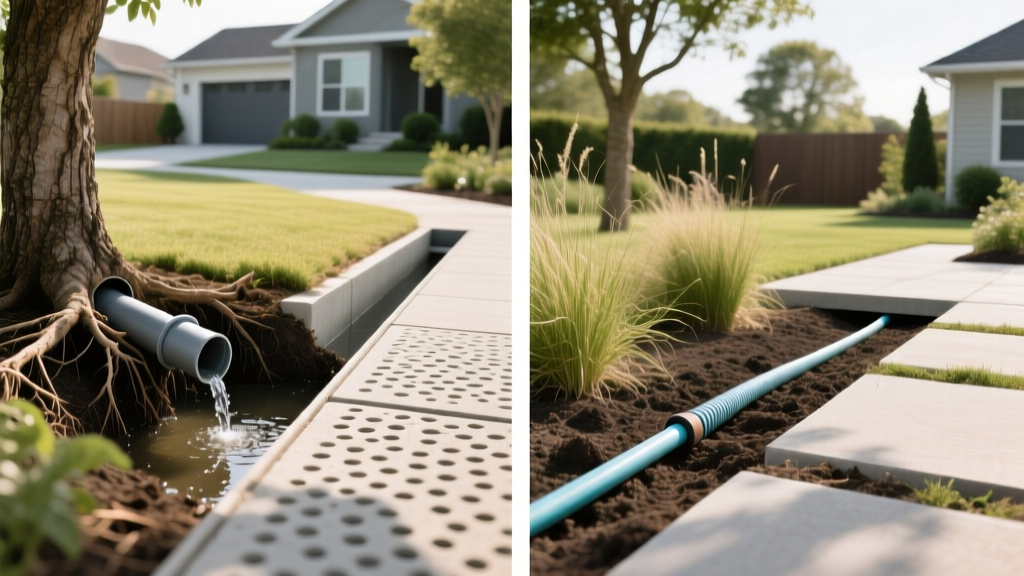
Deep Root Watering 2026: Ross Root Feeder vs Soaker Hose Near Drains
James MillerPublished
The Intersection of French Drains and Tree Health in 2026
Installing a French drain is one of the most effective ways to combat yard waterlogging, protect your home's foundation, and preserve your hardscaping. In 2026, the average cost of professional French drain installation ranges from $35 to $65 per linear foot, making it a significant financial investment in your property. However, altering your yard's hydrology creates a hidden, long-term challenge: keeping nearby established trees hydrated without encouraging their roots to destroy your new drainage system.
When you dig a trench and fill it with gravel and a perforated pipe, you fundamentally change how water moves through your soil. Trees are opportunistic; their roots follow the path of least resistance toward moisture and oxygen. If you use the wrong watering method near a French drain, you risk turning your expensive drainage system into a magnet for invasive tree roots. In this guide, we compare two popular irrigation methods—the Ross Root Feeder and the traditional soaker hose—to determine which is best for protecting your French drain while maintaining optimal tree health in 2026.
The French Drain Dilemma: Gravel Beds and Moisture Sinks
A standard French drain consists of a perforated corrugated or PVC pipe wrapped in landscape fabric, buried in a trench filled with washed drainage gravel. This gravel bed acts as a massive moisture sink. During heavy rains, water pools in the gravel and slowly percolates into the surrounding soil or travels to the discharge point.
If you rely on surface-level watering methods near the drain, the topsoil becomes saturated while the deeper soil remains dry. Tree roots will naturally migrate laterally toward the moist, oxygen-rich gravel bed of the French drain. Once roots reach the pipe joints or perforations, they can infiltrate the system, causing catastrophic clogs that require expensive excavation to repair. According to Penn State Extension, careful planning of irrigation and drainage zones is essential to ensure tree roots do not compromise subsurface infrastructure during and after landscape construction.
Deep Dive: The Ross Root Feeder
The Ross Root Feeder (specifically the classic Model 0410B, retailing around $42 to $48 in 2026) is a hollow metal probe that attaches directly to your garden hose. You push the 24-inch metal spike deep into the soil, delivering water and liquid fertilizer directly to the deep root zone, bypassing the surface entirely.
Why It Works Near French Drains
By injecting water 12 to 24 inches below the surface—and strategically angling the probe away from the French drain trench—you train the tree's roots to grow downward rather than laterally. Deep, infrequent watering encourages roots to anchor deeply, making trees more drought-resistant and significantly less likely to seek out the shallow moisture of a French drain gravel bed. The University of Minnesota Extension notes that deep watering is critical for establishing drought-tolerant root architectures that avoid surface-level hardscaping and drainage infrastructure.
Pros and Cons
- Pros: Near 0% water evaporation loss; drives roots deep and away from drain pipes; allows for targeted fertilizer application.
- Pros: Prevents surface soil compaction and fungal issues near the tree base.
- Cons: High labor intensity; requires physical effort to push the probe into hard or clay-heavy soils.
Deep Dive: Soaker Hoses
A soaker hose is a porous tube that weeps water slowly along its entire length. While they are a staple of 2026 water conservation guidelines for vegetable gardens and flower beds, their use near French drains is highly problematic.
The Danger of Surface Saturation
Soaker hoses saturate the top 4 to 8 inches of soil. Because the water never penetrates deeply, the tree's feeder roots will remain near the surface. Worse, the lateral spread of surface moisture acts as a breadcrumb trail leading directly to the French drain trench. The roots will follow the wet surface soil right into the gravel bed, eventually clogging the landscape fabric and perforated pipe.
Pros and Cons
- Pros: Low labor intensity; easy to automate with a smart hose timer; inexpensive (premium flat soaker hoses cost around $25 to $40 per 50ft).
- Cons: High risk of root intrusion into French drains; 10% to 20% water loss to evaporation; encourages shallow, unstable root plates that are prone to windthrow during storms.
2026 Comparison Chart: Ross Root Feeder vs. Soaker Hose
| Feature | Ross Root Feeder | Soaker Hose |
|---|---|---|
| Water Delivery Depth | 12 - 24 inches | Surface (1 - 6 inches) |
| Root Intrusion Risk to Drains | Low (drives roots deep) | High (encourages lateral spread) |
| 2026 Average Equipment Cost | $42 - $55 | $25 - $40 per 50ft |
| Labor Intensity | High (manual probing) | Low (lay and turn on) |
| Water Evaporation Loss | Near 0% | 10% - 20% |
| Best Soil Type | Heavy Clay / Compacted | Loamy / Raised Beds |
Soil Type Considerations for Drainage and Watering
Your soil type dictates how both your French drain and your watering method will perform. In heavy clay soils, which are common in many residential developments, water percolates very slowly. A French drain in clay soil relies entirely on the gravel trench to move water, as the surrounding earth will not absorb it quickly. If you use a soaker hose on clay, the water pools on the surface, creating mud and forcing roots to stay shallow. The Ross Root Feeder is highly effective in clay because the metal probe fractures the compacted soil, delivering water below the hardpan layer where roots can thrive without migrating toward the drain.
Conversely, in sandy soils, water drains rapidly. A French drain may be less necessary unless there is a high water table. In sandy soils, soaker hoses lose water to deep percolation before it can spread laterally, but the Ross Root Feeder remains the superior choice for tree health, as it places water exactly where the deep anchor roots reside.
Step-by-Step Watering Protocol Near French Drains
To protect your drainage investment and keep your trees thriving, follow this actionable protocol during the 2026 growing season:
- Map the Drain Line: Before watering, mark the exact path of your French drain trench with landscaping flags. Identify the tree's drip line (the outer edge of the canopy).
- Establish a Buffer Zone: Never insert the Ross Root Feeder probe within 3 feet of the French drain trench. This prevents accidental puncture of the landscape fabric or pipe.
- Target the Drip Line: Trees do not drink through their trunks. The most active water-absorbing roots are located at and just inside the drip line. Insert the probe at a 45-degree angle, pointing away from the drain trench.
- Time the Flow: Turn on the water to a medium flow. Leave the probe in each spot for 10 to 15 minutes. For a mature oak or maple, you may need 6 to 8 probe insertions around the drip line.
- Monitor Soil Moisture: According to experts at Michigan State University Extension, maintaining proper soil moisture balance is critical to prevent tree stress and aggressive root foraging. Use a 12-inch soil moisture meter to ensure the deep root zone is adequately hydrated without saturating the drain bed.
Signs Your Drain is Suffering from Root Intrusion
If you have historically used soaker hoses or shallow sprinklers near your trees, your French drain may already be at risk. Watch for these warning signs during heavy spring and summer storms:
- Slow Drainage: Water pools in the yard for more than 24 hours after a storm, indicating the gravel bed or pipe is clogged with root masses.
- Gurgling Sounds: If you hear gurgling from the discharge pipe or cleanout access, roots may be restricting the flow of water inside the corrugated pipe.
- Sinkholes or Depressions: If the soil above the French drain trench begins to sink, it may indicate that roots have breached the pipe, causing soil to wash into the compromised drainage line.
Final Verdict for 2026 Landscaping
When managing the delicate balance between tree health and subsurface drainage infrastructure, the Ross Root Feeder is the undisputed winner over the soaker hose. While a soaker hose offers convenience, its tendency to promote shallow, lateral root growth poses a severe threat to the structural integrity of your French drain. By investing the physical effort required to deep-water with a root feeder probe, you train your trees to develop deep, resilient root systems that bypass your drainage trench entirely. This proactive approach saves thousands of dollars in potential drain excavation and repair costs, ensuring both your trees and your yard's drainage system thrive in 2026 and beyond.