Tree Care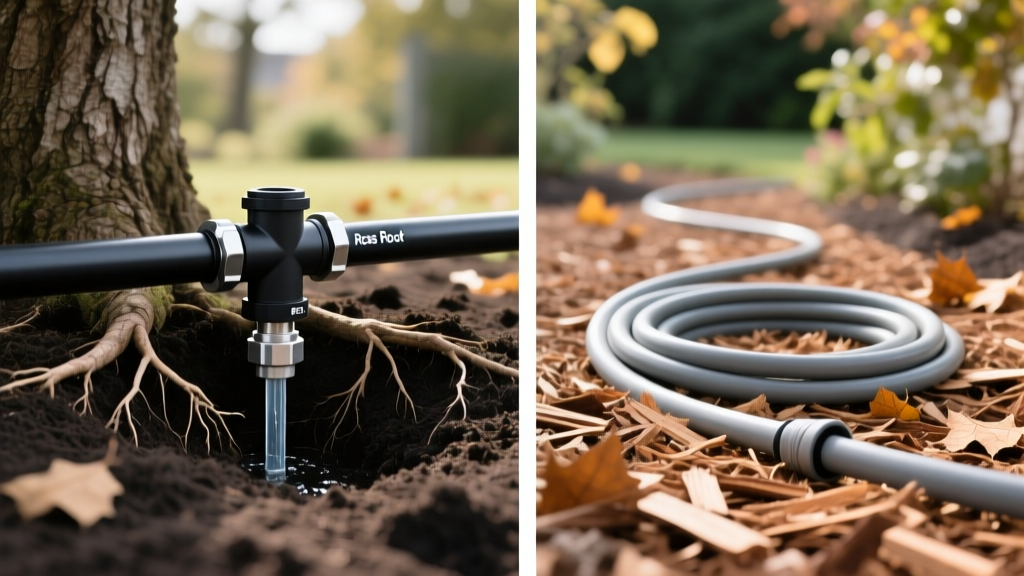
Ross Root Feeder vs Soaker Hose: 2026 Tree Watering Guide
Mike RodriguezPublished
The Intersection of Mulch Materials and Deep Root Watering
As we navigate the shifting climate patterns and tightening municipal water restrictions of 2026, efficient tree hydration has never been more critical. Homeowners and arborists alike are constantly debating the best tools for the job, with the Ross Root Feeder and the soaker hose emerging as the two dominant contenders. However, evaluating these watering tools in a vacuum is a fundamental mistake. To truly optimize tree health, we must view deep root watering through the lens of mulching methods and materials. The type of mulch you use, how deeply it is applied, and its physical structure will directly dictate whether a root probe or a drip hose is the superior choice for your landscape.
Mulch acts as the vital interface between the atmosphere and the tree's root zone. It regulates soil temperature, suppresses weeds, and retains moisture. Yet, if your watering technique conflicts with your mulching strategy, you risk creating hydrophobic barriers, promoting stem-girdling roots, or encouraging fungal pathogens. In this comprehensive 2026 guide, we will break down exactly how the Ross Root Feeder and soaker hoses interact with various mulching materials, helping you choose the right combination for your specific soil and tree species.
The Ross Root Feeder: Precision Hydration Through the Mulch Layer
The Ross Root Feeder is a specialized metal probe that attaches to your garden hose, designed to inject water and liquid fertilizers directly into the subsoil, bypassing the surface layer entirely. In 2026, updated models feature improved flow valves and ergonomic grips, making them a staple for targeted tree care.
How It Interacts with Mulch
The primary advantage of the Ross Root Feeder is its ability to penetrate through thick, chunky mulch materials that would otherwise deflect surface water. When you are using large arborist wood chips or pine bark nuggets—materials highly recommended by the Colorado State University Extension for their longevity and air circulation—surface watering can be frustrating. Water often runs off the tops of large wood chunks before reaching the soil. The root feeder solves this by punching directly through the mulch canopy and depositing moisture exactly where the absorbing roots live (typically 6 to 12 inches below the soil surface).
The Mulch Volcano Hazard
While the root feeder bypasses the mulch, it can be rendered useless—or even harmful—if the tree suffers from a 'mulch volcano.' If mulch is piled high against the trunk, inserting the root feeder near the base will inject water directly into the mulch mound rather than the mineral soil. This keeps the trunk flare perpetually wet, leading to bark rot and inviting secondary pests. Always ensure your mulch is pulled back 3 to 5 inches from the trunk flare before inserting the root probe.
Soaker Hoses: Slow-Release Irrigation Under the Mulch Canopy
Soaker hoses are porous or laser-perforated tubes that 'weep' water slowly along their entire length. When laid out in concentric circles around a tree's drip line, they provide a broad, uniform soaking that mimics a gentle, all-day rainstorm.
How It Interacts with Mulch
Unlike the root feeder, the soaker hose is designed to work with the mulch layer. Best practices dictate that the soaker hose should be laid directly on the mineral soil, and then covered with 2 to 3 inches of organic mulch. This mulch layer prevents the sun and wind from evaporating the weeping water before it can percolate downward. According to the University of Minnesota Extension, covering drip irrigation with mulch can reduce water loss to evaporation by up to 70% during peak summer heat.
Material Compatibility
Soaker hoses perform best under finely shredded hardwood mulch or composted leaf mold. These finer materials settle gently over the hose, ensuring even water distribution. However, if you use large, jagged pine bark nuggets, they can pinch the hose, restrict water flow, or even puncture the porous rubber over time. Furthermore, if a soaker hose is left on top of the mulch rather than underneath it, the constant surface moisture will accelerate the decomposition of the mulch and create a breeding ground for artillery fungus and slime molds.
2026 Feature Comparison: Root Feeder vs. Soaker Hose
To help you decide which tool aligns with your current mulching strategy, consult the comparison table below.
| Feature | Ross Root Feeder | Soaker Hose |
|---|---|---|
| Water Delivery Depth | Deep (6-12 inches directly) | Surface to Mid-Soil (Slow percolation) |
| Best Mulch Compatibility | Large Arborist Chips, Pine Bark Nuggets | Shredded Hardwood, Pine Straw, Leaf Mold |
| Mulch Placement Requirement | Probe punches through; mulch stays on top | Hose on soil; mulch must cover the hose |
| Time Investment | High (Manual insertion every 12-18 inches) | Low (Set it, turn on spigot, walk away) |
| Fertilizer Integration | Excellent (Uses dissolving cartridges) | Poor (Requires separate fertigation system) |
| Soil Type Preference | Heavy Clay (Bypasses surface crusting) | Sandy Loam (Allows lateral spread) |
Mulching Methods for Optimal Deep Watering
Choosing the right tool is only half the battle; applying the mulch correctly is what ensures the water actually benefits the tree. The Arbor Day Foundation consistently emphasizes the 'donut' method over the 'volcano' method, but let us look deeper into the structural mechanics of the mulch ring in relation to watering.
The 3-3-3 Rule Updated for 2026
The traditional 3-3-3 rule (3 inches deep, 3 feet wide, 3 inches away from the trunk) remains the gold standard, but modern arboriculture suggests expanding the width. Because a tree's absorbing roots extend well past the drip line, your mulch ring—and your watering zone—should ideally extend 1.5 times the diameter of the tree's canopy. When using a soaker hose, this means purchasing enough hose to create wide, sweeping spirals rather than tight circles near the trunk. When using a Ross Root Feeder, it means committing to a grid pattern of insertions that covers the entire extended root zone.
Preventing Hydrophobic Mulch Layers
One of the most common failures in deep root watering occurs when organic mulch dries out completely and becomes hydrophobic (water-repellent). This is especially common with aged pine bark and peat-heavy mulch mixes. If you are using a soaker hose, the slow weep rate might be entirely absorbed by the dry mulch layer, never reaching the soil below. To combat this, lightly scarify the top inch of your mulch with a steel rake before turning on the soaker hose. If you are using a Ross Root Feeder, you bypass this issue entirely, which is why root feeders are highly recommended for trees surrounded by neglected, heavily compacted mulch beds.
Step-by-Step Integration: Watering and Mulching Schedule
Follow this actionable workflow to integrate your watering tools with your mulching materials this season:
- Assess the Existing Mulch: Rake back any mulch piled against the trunk flare. Ensure the depth is no more than 3 to 4 inches. If the mulch is matted and hydrophobic, break up the crust with a cultivator.
- Choose Your Tool Based on Soil and Mulch: If you have heavy clay soil and use large wood chips, deploy the Ross Root Feeder. If you have sandy soil and use shredded hardwood, lay out the soaker hose.
- Execute the Watering: For the root feeder, insert the probe at a 45-degree angle pointing toward the trunk, spacing insertions 18 inches apart in a grid. Run the water for 15-20 seconds per hole. For the soaker hose, lay it in a spiral pattern starting 12 inches from the trunk and extending to the drip line. Run it on low pressure for 4 to 6 hours.
- Restore the Mulch Canopy: If you displaced mulch while using the root feeder, gently rake it back into place. If you just laid a soaker hose, cover it completely with 2 inches of fresh organic mulch to lock in the moisture and protect the hose from UV degradation.
Conclusion
There is no single 'best' watering tool for every tree; the decision relies heavily on your chosen mulching materials and soil composition. The Ross Root Feeder excels in heavy soils and chunky mulch environments where surface penetration is poor, while the soaker hose is the ultimate low-effort solution for sandy soils blanketed in fine, water-retentive shredded mulch. By aligning your watering technology with proper mulching methods, you will build a resilient, deeply rooted landscape capable of thriving through the environmental challenges of 2026 and beyond.