Tree Care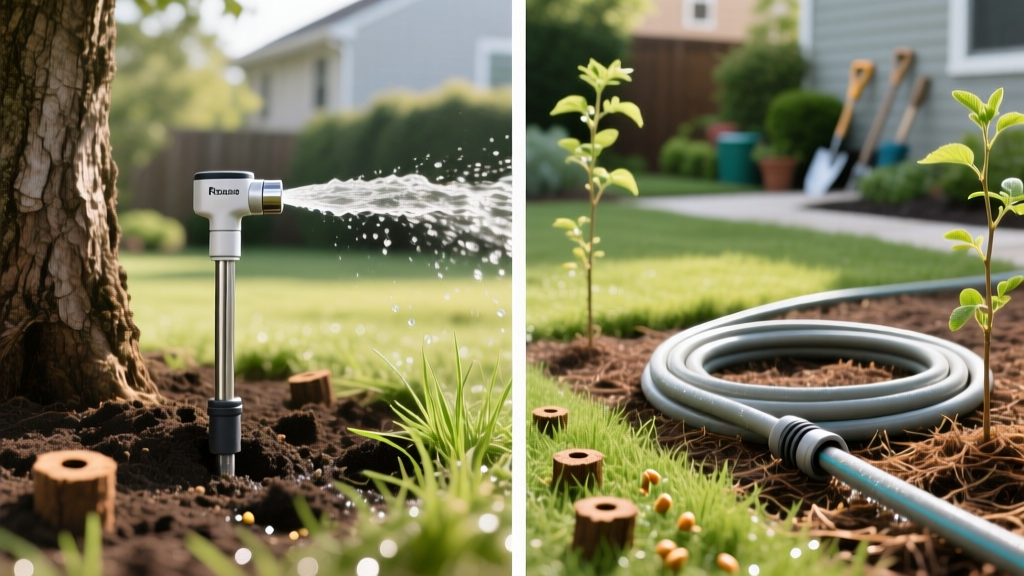
Ross Root Feeder vs Soaker Hose: Deep Root Watering 2026
Robert HayesPublished
The 2026 Landscaping Dilemma: New Grass Seed vs. Established Trees
As homeowners embrace sustainable, dense turfgrass varieties in 2026, lawn aeration and overseeding have become essential seasonal rituals. However, a major conflict arises when your lawn care calendar overlaps with the hydration needs of your mature shade trees. When you aerate and seed a lawn, the standard protocol requires frequent, shallow watering—often two to three times a day—to keep the delicate new grass seed moist. While this is perfect for turfgrass germination, it is highly detrimental to established trees.
Shallow surface watering encourages tree roots to grow upward toward the moisture, leading to structural instability, surface root heaving, and increased vulnerability to drought stress. To maintain deep, resilient tree root systems while simultaneously nurturing new grass seed, you must decouple your tree watering strategy from your lawn watering strategy. This brings us to a critical debate in modern arboriculture and lawn care: should you use a targeted sub-surface injection tool like the Ross Root Feeder, or rely on the traditional soaker hose?
The Science of Root Zones During Core Aeration
Core aeration is designed to alleviate soil compaction by pulling small plugs of earth from the ground, creating macro-pores that allow oxygen, water, and nutrients to penetrate the soil profile. While this is a miracle for compacted lawn soils, the heavy machinery and foot traffic involved can temporarily stress the fine feeder roots of nearby trees. According to The Morton Arboretum, the majority of a tree's absorbing roots are located in the top 12 to 18 inches of soil, extending well beyond the drip line.
When you lay a soaker hose over a freshly aerated and seeded lawn, the slow surface drip can easily wash away newly sown grass seed, create muddy trenches in the aeration holes, and promote fungal diseases like Pythium blight in the damp turf. Conversely, bypassing the surface entirely to deliver water directly to the 12-inch depth ensures the tree receives the deep hydration it needs to recover from aeration stress, without disturbing the fragile seedbed above.
Ross Root Feeder: The Sub-Surface Injection Method
The Ross Root Feeder (specifically the Model 1055A, which remains an industry staple in 2026, retailing for approximately $38 to $45) is a specialized probe that attaches directly to your standard garden hose. It features a metal spike that you push into the soil, a control valve, and a unique siphon chamber designed to hold water-soluble fertilizer tablets.
How It Works with Aeration and Seeding
- Targeted Depth: You insert the probe 10 to 12 inches into the soil, completely bypassing the newly seeded surface layer and the thatch.
- Zero Surface Disruption: Because the water is injected underground, there is zero surface runoff. Your new grass seed remains undisturbed, and the aeration plugs are left intact to break down naturally.
- Nutrient Delivery: Post-aeration is the ideal time to fertilize trees. The Ross Root Feeder's siphon tube dissolves tree-specific fertilizer tablets directly into the root zone, taking advantage of the newly opened soil macro-pores created by your lawn aerator.
The primary drawback is labor. Deep root watering with a probe requires you to manually insert the tool every 18 to 24 inches in a grid pattern around the tree's drip line, turning the water on for 30 to 60 seconds per insertion.
Soaker Hoses: The Surface Drip Method
Soaker hoses are made from porous materials (often recycled rubber or polyurethane) that 'weep' water slowly along their entire length. In 2026, premium kink-resistant polyurethane soaker hoses cost between $25 and $40 for a 50-foot length. They are traditionally laid out in a spiral pattern starting a few feet from the tree trunk and extending just past the drip line.
The Problem During Lawn Seeding
While soaker hoses are highly water-efficient in dedicated garden beds, they become problematic when routed across an active lawn seeding zone. To keep grass seed viable, the top half-inch of soil must remain constantly moist. If a soaker hose is running for hours to deeply water a tree, the immediate surface area around the hose becomes waterlogged. This drowns the new grass seedlings, causes seed washout, and creates a haven for turf pathogens. Furthermore, soaker hoses are easily damaged by the tines of core aerators if left on the lawn during the aeration process.
Feature Comparison: Ross Root Feeder vs. Soaker Hose
| Feature | Ross Root Feeder (Probe) | Soaker Hose |
|---|---|---|
| Watering Depth | 10 - 18 inches (Sub-surface) | Surface to 4 inches (Gravity dependent) |
| Impact on Grass Seed | None (Bypasses surface) | High (Causes washout and waterlogging) |
| Core Aeration Synergy | Excellent (Injects into macro-pores) | Poor (Hoses block aerators, surface mud) |
| Fertilizer Delivery | Built-in siphon for tablets | None (Requires separate application) |
| Labor Intensity | High (Manual probing required) | Low (Set and forget) |
| 2026 Avg. Cost | $38 - $45 | $25 - $40 (per 50 ft) |
Step-by-Step Strategy for Fall and Spring Seeding Seasons
To achieve a pristine, thick lawn while preserving the structural integrity and health of your canopy trees, follow this integrated aeration, seeding, and deep-watering protocol:
- Pre-Aeration Tree Hydration: Two days before your scheduled core aeration, use the Ross Root Feeder to deeply water the trees in the work zone. This reduces tree stress and softens the soil, making the aeration tines more effective.
- Aerate and Seed: Perform your core aeration, remove the plugs (or let them decompose), and apply your 2026 turfgrass seed mix and starter fertilizer.
- Establish the Surface Schedule: Set your sprinkler system to water the lawn lightly 2 to 3 times daily for the first 14 to 21 days to ensure seed germination.
- Deploy the Root Feeder: Once a week during the germination period, use the Ross Root Feeder to deliver 10 to 15 gallons of water per inch of tree trunk diameter directly into the 12-inch sub-surface zone. This ensures the tree is not relying on the shallow lawn sprinklers.
- Post-Germination Transition: Once the new grass is established (usually after 4 weeks), transition the lawn to deep, infrequent watering. At this stage, you can retire the Ross Root Feeder until the next drought period or seasonal transition.
Expert Tips for 2026 Tree and Lawn Co-Care
According to the Arbor Day Foundation, proper mulching and watering are the two most critical factors in urban tree survival. However, when mulching trees in a newly seeded lawn, be careful not to create 'volcano mulching' mounds that smother the trunk and invite rot. Keep mulch 3 inches away from the trunk and no deeper than 3 inches.
Furthermore, soil compaction remains a leading cause of tree decline in suburban landscapes. If you are unable to use a core aerator near the delicate surface roots of mature oaks or maples, the Ross Root Feeder serves as a mini-aeration tool. The physical act of pushing the metal probe into the earth creates small channels that relieve localized compaction and allow vital oxygen to reach the mycorrhizal fungi networks that support tree health.
Ultimately, while soaker hoses have their place in dedicated perennial beds and shrub borders, the Ross Root Feeder is the undisputed champion for maintaining tree health during the intensive, surface-focused cycles of lawn aeration and overseeding. By separating your sub-surface tree hydration from your surface-level turf irrigation, you ensure both your lawn and your canopy thrive in the challenging climate conditions of 2026.