Tree Care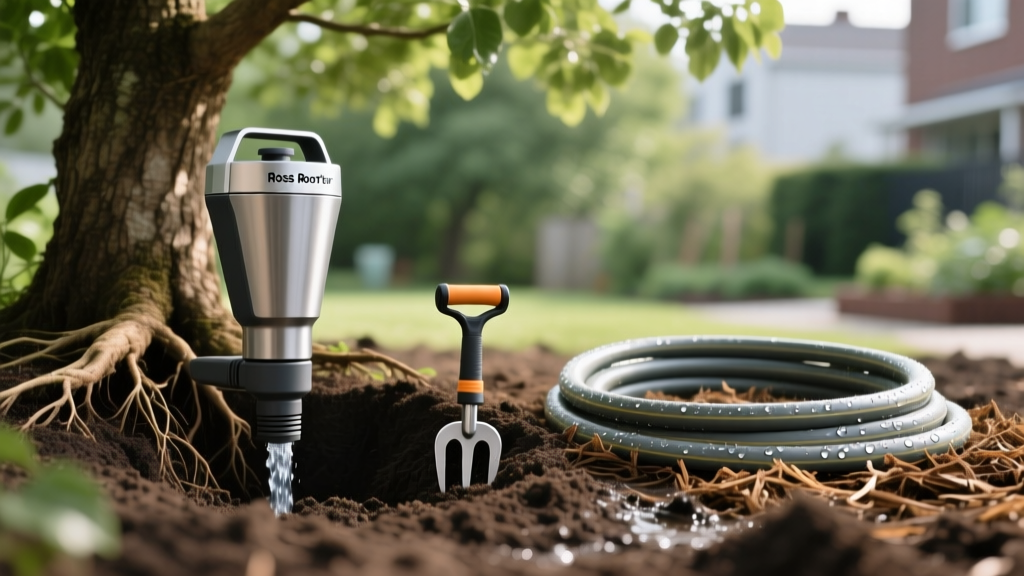
Ross Root Feeder vs Soaker Hose: 2026 Tree Guide
Mike RodriguezPublished
Introduction to Tree Hydration and Soil Compaction in 2026
As we navigate the increasingly erratic climate patterns of 2026, maintaining the health of mature and newly planted trees requires a strategic approach to irrigation. Surface watering is no longer sufficient to sustain deep root systems during prolonged summer droughts and intense heat waves. Homeowners and arborists alike are turning to deep root watering techniques to ensure survival and vitality. However, the debate often centers on the tools of the trade: specifically, the Ross Root Feeder versus the traditional soaker hose. While both methods have their merits, their effectiveness is fundamentally dictated by the condition of your soil. This is where the often-overlooked practice of tree zone core aeration becomes the ultimate game-changer.
The Foundation: Core Aeration in the Critical Root Zone
Before comparing watering tools, we must address the physical barrier to deep hydration: soil compaction. In urban and suburban landscapes, foot traffic, construction, and heavy mowing equipment compress the soil within a tree's dripline. This compaction collapses soil pores, severely restricting the downward movement of water and oxygen. If you attempt to deep water heavily compacted clay soil, the water will simply pool on the surface or run off into the street.
Core aeration in the critical root zone involves using a mechanical core aerator or manual deep-probing tools to pull plugs of soil or create vertical channels in the dripline. According to University of Minnesota Extension, alleviating soil compaction is one of the most vital steps in urban tree care. By opening up the soil profile through core aeration, you create direct pathways for water to reach the absorbing roots located 12 to 18 inches below the surface. Once the soil is properly aerated, the choice between a Ross Root Feeder and a soaker hose shifts from a battle against runoff to a question of efficiency, labor, and precision.
Ross Root Feeder: Deep Injection Watering
The Ross Root Feeder is a specialized probe that attaches directly to your garden hose. It features a hollow metal spike with side-ports that inject water (and optionally, liquid fertilizer) directly into the subsoil. In 2026, the latest models feature improved flow-control valves and ergonomic T-handles, making it easier to push the probe into aerated soil without excessive strain.
Pros of the Ross Root Feeder
- Bypasses Surface Evaporation: By delivering water 12 to 18 inches deep, zero water is lost to the hot 2026 summer air or stolen by shallow turfgrass roots.
- Targeted Nutrient Delivery: The integrated fertilizer chamber allows you to inject liquid tree spikes or root stimulants exactly where the feeder roots can absorb them.
- Synergy with Core Aeration: When used in conjunction with core aeration holes, the Ross probe slides in effortlessly, and the injected water rapidly disperses through the newly created soil channels without creating mud boils.
Cons of the Ross Root Feeder
- Labor Intensive: You must manually insert the probe every 18 to 24 inches in a grid pattern around the dripline. For a large, mature oak, this can take over an hour.
- Requires Monitoring: You must move the probe every few minutes to prevent over-saturating a single pocket of soil.
Soaker Hoses: Slow-Drip Surface Hydration
Soaker hoses are porous tubes made from recycled rubber or vinyl that 'sweat' water slowly along their entire length. When laid out in concentric circles around a tree's dripline, they provide a broad, slow-release application of moisture. In 2026, advanced soaker hoses feature reinforced mesh layers to prevent kinking and UV degradation.
Pros of the Soaker Hose
- Set-It-and-Forget-It: Once laid out and connected to a smart hose timer, the system requires virtually zero physical labor during the watering session.
- Wide Area Coverage: A 50-foot soaker hose can easily encircle a large mature tree, ensuring the entire peripheral root zone receives moisture.
- Gentle Soil Infiltration: The slow drip rate prevents soil structure destruction and allows water to gradually seep downward.
Cons of the Soaker Hose
- High Evaporation Rates: If left exposed to the sun, a significant percentage of water is lost to evaporation before it penetrates the soil.
- Dependent on Aeration: In heavy, compacted soils, the slow drip will simply pool and run off unless the soil has been core aerated or heavily mulched.
Head-to-Head Comparison: 2026 Data
To help you decide which method best suits your landscape, review this comprehensive comparison based on 2026 arboricultural standards and current market pricing.
| Feature | Ross Root Feeder | Soaker Hose |
|---|---|---|
| Water Delivery Depth | 12 to 18 inches (Subsoil) | Surface to 6 inches (without aeration) |
| Labor Required | High (Manual probing) | Low (Initial layout only) |
| Water Efficiency | Excellent (Near 100% root delivery) | Good (Moderate evaporation loss) |
| 2026 Average Cost | $35 - $45 (Tool only) | $30 - $50 (50ft hose + timer) |
| Best Soil Type | Heavy Clay (when aerated) | Loam / Sandy Loam |
| Synergy with Aeration | Prevents mud boils, speeds injection | Allows surface drip to penetrate deep |
| Fertilizer Capability | Yes (Built-in chamber) | No (Requires separate application) |
How Core Aeration Changes the Game for Both Methods
When you view these tools through the lens of core aeration, their limitations are drastically minimized. If you use a soaker hose on compacted clay, the water never reaches the deep roots. However, if you core aerate the dripline first—pulling 3-inch plugs and leaving them on the surface to break down—the soaker hose's slow drip will follow those aeration channels straight down to the root zone. Experts at The Morton Arboretum emphasize that proper soil structure and mulching are just as critical as the volume of water applied.
Conversely, using a Ross Root Feeder on non-aerated, rock-hard soil often results in bent probes and water erupting back up the hole (mud boils). Core aeration softens the soil matrix, allowing the Ross probe to glide in smoothly and the injected water to laterally disperse through the aerated pathways, creating a massive, evenly moistened root ball.
Your 2026 Step-by-Step Deep Watering Protocol
To maximize tree health this season, follow this integrated aeration and watering protocol:
Step 1: Core Aerate the Dripline
In early spring or late fall, use a manual or walk-behind core aerator to pull plugs within the tree's dripline. Avoid the trunk flare and major surface roots (those thicker than 2 inches). Aim for a grid pattern with plugs spaced 12 inches apart.
Step 2: Apply Organic Matter
Top-dress the aerated area with a thin layer of compost. This will wash into the aeration holes, improving soil structure and water retention for the seasons to come.
Step 3: Choose and Apply Water
- For the Ross Root Feeder: Insert the probe 12 inches deep, spacing insertions 2 feet apart in a circle around the dripline. Turn on the water and leave the probe in each hole for 2 to 3 minutes. Move systematically until the entire circle is complete.
- For the Soaker Hose: Lay the hose in concentric circles starting 2 feet from the trunk and extending to the dripline. Cover the hose with 2 to 3 inches of organic wood mulch to eliminate evaporation. Connect to a 2026 smart Wi-Fi hose timer and run the system for 3 to 4 hours on a low-flow setting to ensure deep penetration through the aeration channels.
Step 4: Monitor Soil Moisture
Use a digital soil moisture probe to verify that water has penetrated at least 12 inches deep 24 hours after your watering session. Adjust your timing based on the results.
Conclusion
The choice between a Ross Root Feeder and a soaker hose in 2026 ultimately comes down to your available time, physical ability, and the specific needs of your trees. The Ross Root Feeder is unmatched for targeted, deep hydration and simultaneous fertilization, making it ideal for high-value specimen trees or those showing signs of acute stress. The soaker hose is the undisputed champion of convenience and broad coverage, perfect for maintaining large groves or windbreaks. However, neither tool will reach its full potential if the soil remains a hardened, impermeable block. By integrating core aeration into your annual tree care routine, you unlock the soil's capacity to receive, hold, and distribute water, ensuring your trees remain resilient and vibrant for decades to come.