Tree Care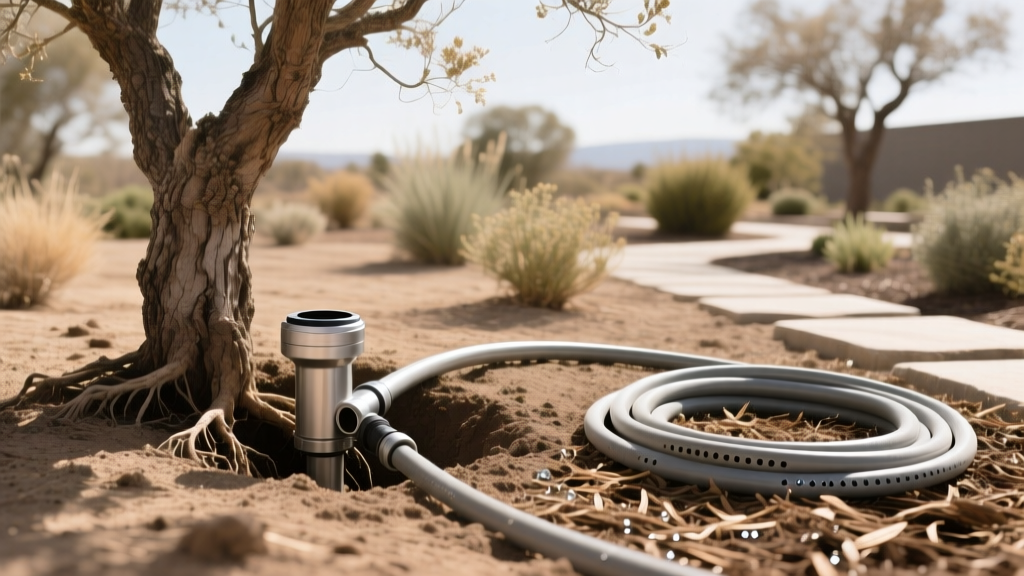
Ross Root Feeder vs Soaker Hose for Xeriscape Trees 2026
Anna KowalskiPublished
The Xeriscaping Imperative in 2026
As we navigate the shifting climate realities of 2026, xeriscaping has transitioned from a niche landscaping trend to a vital necessity for homeowners across arid and semi-arid regions. With municipal water restrictions tightening and prolonged droughts becoming the norm, establishing and maintaining trees in a low-water landscape requires precision, patience, and the right irrigation tools. Trees are the backbone of any xeriscape, providing essential shade that reduces soil evaporation and cools the surrounding microclimate. However, keeping them healthy on a restricted water budget presents a unique challenge.
The cornerstone of xeriscape tree care is encouraging deep, expansive root systems that can scavenge for moisture far below the sun-baked surface. Shallow watering leads to shallow roots, making trees highly susceptible to drought stress, windthrow, and pest infestations. When it comes to delivering water directly to the root zone while minimizing waste, two popular methods dominate the conversation: the Ross Root Feeder and the traditional soaker hose. Both have distinct advantages, but their effectiveness varies wildly depending on your soil type, tree species, and specific water conservation goals. In this comprehensive guide, we break down how these two irrigation methods compare for xeriscaping in 2026.
The Science of Xeriscape Tree Hydration
According to the EPA WaterSense program, outdoor water use can account for up to 30% of total household consumption, a number that spikes dramatically in dry climates. Xeriscaping aims to reduce this footprint by utilizing drought-tolerant native and adapted species, improving soil health, and employing highly efficient irrigation techniques. For trees, the goal is to simulate natural, infrequent desert rainstorms: deep, soaking hydration followed by periods of drying that force roots to grow downward in search of moisture.
Surface evaporation is the enemy of low-water landscaping. In the peak heat of summer, up to 40% of water applied via standard sprinklers or surface flooding can evaporate before it ever penetrates the soil crust. To combat this, xeriscape experts advocate for subsurface or low-volume delivery systems. This is where the debate between targeted injection (Ross Root Feeder) and slow-surface weeping (soaker hoses) becomes critical for homeowners looking to optimize every drop.
Ross Root Feeder: Targeted Deep Hydration
The Ross Root Feeder is a specialized, manual irrigation tool consisting of a long metal spike attached to a standard garden hose via a dedicated siphon chamber. The chamber holds fertilizer or soil-conditioning cartridges, allowing you to inject water and nutrients directly into the root zone, typically 12 to 18 inches below the surface. The 2026 models of the Ross Root Feeder feature upgraded brass fittings and ergonomic T-handles, making it easier to penetrate the hard, compacted clay soils often found in xeriscape environments.
Pros for Xeriscaping
- Zero Surface Evaporation: By bypassing the top few inches of soil and mulch, 100% of the delivered water reaches the active root zone.
- Soil Aeration: The physical act of pushing the spike into the ground creates micro-channels that relieve soil compaction and allow oxygen to reach deep roots, which is vital for tree health in heavy soils.
- Targeted Nutrient Delivery: You can use the siphon chamber to deliver mycorrhizal inoculants or deep-root liquid fertilizers directly where the tree can absorb them, preventing weed growth on the surface.
Cons for Xeriscaping
- Labor Intensive: This is a manual process. You must probe the soil every 18 to 24 inches around the tree's drip line, spending 30 to 60 seconds per insertion. For a large property with multiple mature trees, this is a significant time commitment.
- Water Pressure Dependent: The siphon and injection mechanism requires adequate municipal water pressure to function correctly, which can be an issue in some rural or low-pressure xeriscape setups.
- Root Damage Risk: Repeatedly stabbing the soil in the exact same spots can sever fine feeder roots. Users must vary their insertion points with each watering session.
Soaker Hoses: The Low-Pressure Xeriscape Staple
Soaker hoses are porous tubes, typically made from recycled rubber or specialized vinyl, that 'weep' water slowly along their entire length. When laid out on the soil surface and covered by a thick layer of organic or inorganic mulch, they provide a slow, steady drip that percolates deeply into the soil profile over several hours. In 2026, modern soaker hoses are often paired with smart irrigation controllers and inline pressure regulators to ensure uniform distribution even on sloped xeriscape terrains.
Pros for Xeriscaping
- Set-It-and-Forget-It: Once laid out and mulched, soaker hoses can be connected to a smart timer. They require minimal physical labor during the watering season.
- Wide Coverage: A single 50-foot hose can be arranged in concentric circles to cover the entire critical root zone of a large, mature shade tree.
- Low Pressure Compatibility: Soaker hoses operate best at low PSI (around 10-15 PSI), making them highly compatible with rain barrel systems and low-flow xeriscape zones.
Cons for Xeriscaping
- Evaporation and Runoff: If left exposed to the sun, soaker hoses lose a significant amount of water to evaporation. They must be strictly covered by 3 to 4 inches of mulch to be efficient.
- Mineral Clogging: In areas with hard water—a common trait in xeriscape regions like the American Southwest—the tiny pores of the hose can quickly calcify and clog, requiring regular flushing or vinegar soaks.
- Uneven Distribution: On sloped landscapes, gravity can cause the lower end of the hose to weep more heavily than the upper end, leading to uneven soil saturation.
Head-to-Head Comparison: Root Feeder vs. Soaker Hose
To help you decide which tool belongs in your 2026 xeriscaping arsenal, we have broken down their performance across key low-water landscaping metrics.
| Feature | Ross Root Feeder | Soaker Hose |
|---|---|---|
| Water Delivery Depth | 12 - 18 inches (Subsurface) | Surface (Requires mulch to penetrate deep) |
| Evaporation Loss | Negligible (Near 0%) | Low (if mulched) to High (if exposed) |
| Labor Intensity | High (Manual probing required) | Low (Automated via timers) |
| Soil Aeration Benefit | Excellent (Physical soil fracturing) | None |
| Hard Water Tolerance | High (Large orifice, no clogging) | Low (Pores calcify easily) |
| Ideal Tree Stage | Mature trees, stressed trees | Newly planted, establishing trees |
| Estimated 2026 Cost | $35 - $50 (Initial tool cost) | $15 - $30 (Per 50ft hose) |
Strategic Implementation for Drought-Tolerant Trees
Experts at the Water – Use It Wisely campaign emphasize that deep, infrequent watering is the golden rule for desert-adapted and xeriscape trees. Regardless of whether you choose a root feeder or a soaker hose, the timing and volume of your irrigation matter more than the tool itself. Here is how to implement these tools effectively in a low-water landscape.
Using the Ross Root Feeder in Xeriscapes
Reserve the Ross Root Feeder for mature, established trees that are showing signs of drought stress, or for trees planted in heavy, impenetrable clay soils where surface water simply refuses to percolate. During the peak of summer, insert the probe at the drip line (the outer edge of the tree's canopy) and work your way inward, spacing insertions about two feet apart. Turn the water on for 30 to 45 seconds per hole. This method is also invaluable in late autumn; using the root feeder to deliver a deep soak before the ground freezes helps evergreens survive dry, windy winters without desiccating.
Optimizing Soaker Hoses for New Plantings
Soaker hoses are the undisputed champions for newly planted xeriscape trees. When a tree is first installed, its root ball is confined to a small area. Wrap a soaker hose in a spiral pattern starting 6 inches from the trunk and expanding outward to the edge of the planting hole. Cover the hose with 3 inches of wood chip or gravel mulch. Connect the hose to a smart irrigation controller equipped with a soil moisture sensor. This ensures the tree receives a slow, 4-hour drip only when the soil moisture drops below the optimal threshold, preventing the fatal xeriscaping mistake of overwatering drought-tolerant species like Desert Willow or Palo Verde.
Final Verdict for Low-Water Landscapes
There is no single 'best' tool for xeriscaping; rather, the Ross Root Feeder and the soaker hose serve complementary roles in a holistic 2026 water conservation strategy. The Arbor Day Foundation consistently advocates for matching your watering method to the tree's life stage and soil conditions.
Choose the soaker hose as your primary, automated irrigation method for establishing new trees, covering wide root zones, and maintaining consistent, low-effort moisture levels beneath a thick layer of mulch. It is the backbone of a modern, smart-controller-driven xeriscape. Conversely, keep a Ross Root Feeder in your garden shed as a tactical intervention tool. Use it to break up compacted soil, deliver targeted liquid nutrition, and provide emergency deep-soaks to mature trees during severe heat domes when surface-applied water simply cannot reach the deep taproots. By leveraging both tools, you can cultivate a resilient, thriving tree canopy that honors the principles of xeriscaping and conserves our most precious natural resource.