
Landscaping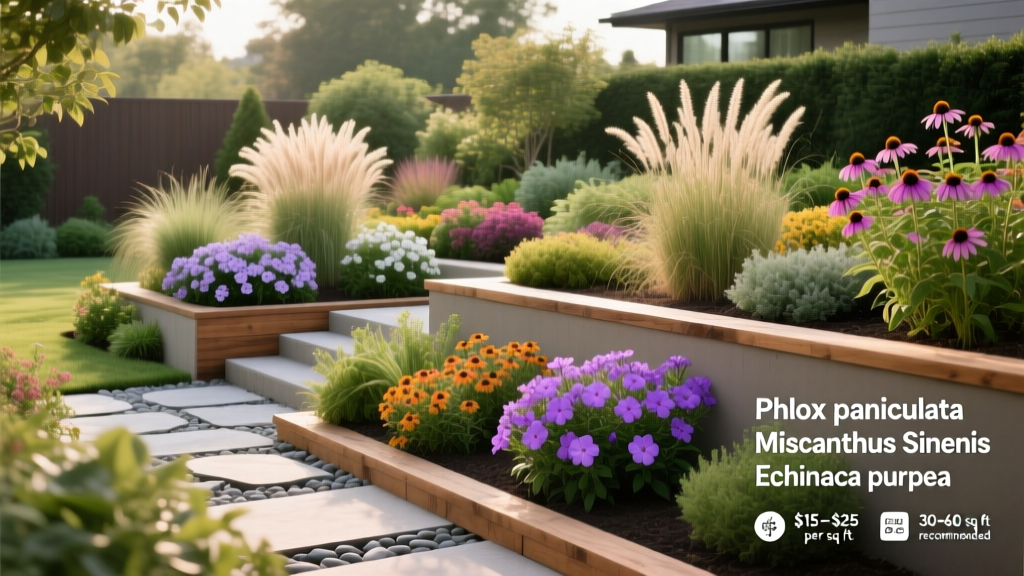
Seasonal Flower Bed Planting Guide
Planning Your Seasonal Flower Bed
A well-designed seasonal flower bed adds color to a yard — and it also brings rhythm, structure, and ecological value across the year. Whether you're working with a compact 50-square-foot border or a sprawling 400-square-foot island bed, good landscape design follows the same basics: layer plants by height, space out bloom times, and pick species that match your hardiness zone and soil.
The American Society of Landscape Architects (ASLA) says residential planting should balance looks with function. That means choosing plants that support pollinators, help manage rainwater, and get easier to care for over time — not just ones that look good in a catalog photo.
Before buying any plants, spend some time watching your site. Note how many hours of direct sun each spot gets, where water pools after rain, and which way the wind usually blows. A spot that gets fewer than 4 hours of direct sun daily is a shade bed, even if the rest of the yard feels sunny.
Spring Planting: Cool-Season Annuals and Early Perennials
Spring is the most forgiving season for starting new flower beds. Soil temperatures between 50°F and 65°F encourage root growth without the stress of summer heat. Cool-season annuals like Viola tricolor (Johnny-jump-up) and Lobularia maritima (sweet alyssum) can go into the ground 2–4 weeks before the last frost date in most USDA zones 5–8.
For a 100-square-foot spring bed, a practical planting plan might include:
- Tulipa spp. (tulips) — planted the previous fall at a depth of 6–8 inches, spaced 4–6 inches apart; budget approximately $0.50–$1.50 per bulb
- Narcissus spp. (daffodils) — deer-resistant, planted at 6-inch depth; $0.40–$0.80 per bulb
- Myosotis sylvatica (forget-me-not) — excellent filler between bulbs; $2–$4 per six-pack of transplants
- Helleborus orientalis (Lenten rose) — a perennial that blooms February through April; $8–$15 per gallon container
- Phlox subulata (creeping phlox) — low-growing groundcover for bed edges; $5–$9 per quart pot
Total material cost for a 100-square-foot spring bed typically runs $80–$180, depending on how densely you plant and local prices. Preparing the bed — including adding 3–4 inches of compost to the soil — costs another $50–$120 if you hire someone.
Soil Preparation for Spring Beds
The University of Minnesota Extension recommends mixing organic matter into native soil to reach a loam texture with a pH between 6.0 and 7.0 for most flowering annuals and perennials. A soil test, available through most county extension offices for $15–$25, will show whether your soil is low in nitrogen, phosphorus, or potassium before you start planting.
Till or loosen the top 10–12 inches of soil, mix in 3–4 inches of compost, and rake it smooth. Don’t work the soil when it’s wet enough to form a ball that won’t crumble — that kind of compaction hurts root growth all season.
Summer Planting: Heat-Tolerant Annuals and Perennial Anchors
Summer flower beds need plants that handle steady heat, occasional dry spells, and strong sun. The goal shifts from “what blooms first” to “what holds its color from June through September without constant deadheading.”
Zinnia elegans (common zinnia) remains one of the most reliable summer annuals, thriving in full sun and heat while producing flowers from 12 to 36 inches tall. Sow seeds directly after the last frost for about $2–$4 per packet, which covers 25–30 square feet. Echinacea purpurea (purple coneflower) works as a sturdy perennial anchor, growing 2–4 feet tall and drawing goldfinches to its seed heads in late summer.
For beds larger than 200 square feet, many landscape architects use the “thriller, filler, spiller” idea — first shared by horticulturist Steve Silk and now common in extension guides. A thriller like Canna indica (Indian shot) gives height at 4–6 feet; a filler like Impatiens walleriana (busy Lizzie) fills space between taller plants; a spiller like Lobelia erinus (edging lobelia) trails over the edge.
"Planting design is not decoration. It is the organization of living material in space and time to serve human needs and ecological functions simultaneously." — Adapted from ASLA Professional Practice Guidelines, 2022
Irrigation Considerations for Summer Beds
Summer beds in USDA zones 6–9 usually need 1–1.5 inches of water per week. Drip irrigation sends water straight to the roots, cutting evaporation by 30–50% compared to overhead sprinklers, according to the Irrigation Association (2021). For a 150-square-foot bed, a basic drip system with emitters, tubing, and a timer costs $40–$90 in materials and takes 2–3 hours to set up.
Mulching with 2–3 inches of shredded hardwood or pine bark helps hold moisture, keeps roots cooler, and slows down weed growth. Bagged mulch runs $3–$6 per cubic foot, or $25–$45 per cubic yard if you order in bulk.
Fall Planting: Extending the Season and Preparing for Spring
Fall is an underused planting window. Soil stays warm enough for roots to settle in, while cooler air reduces transplant shock. Chrysanthemum spp. (garden mums) are the usual fall choice, but they’re just one option.
Aster novae-angliae (New England aster) blooms September through October in shades of purple, pink, and white, growing 3–6 feet tall and giving late-season nectar to migrating monarch butterflies. The Chicago Botanic Garden lists it among its top-recommended native plants for Midwest landscapes. Sedum spectabile (showy stonecrop) offers flat-topped pink flower clusters that last into November and add shape to the garden after frost.
Fall is also the right time to plant spring-blooming bulbs. General rule: plant when soil temps drop below 60°F but before the ground freezes. In zone 6, that’s usually mid-October through late November.
Overwintering Tender Perennials
Some summer favorites — Dahlia spp., Gladiolus spp., and Canna spp. — don’t survive cold winters unless you dig them up. Dahlias, for example, only tolerate zone 8 winters but are grown in zones 5–7 either as annuals or with winter storage. After the first frost turns the foliage black, cut stems to 4–6 inches, dig tubers carefully, let them dry for 24–48 hours, then store in barely moist peat moss or vermiculite at 40–50°F.
Seasonal Planting Cost and Coverage Reference
Budgeting for a seasonal flower bed means accounting for plants, soil amendments, mulch, and irrigation. The table below shows typical costs and coverage for common seasonal plantings in a temperate climate (USDA zones 5–7).
| Season | Representative Species | Spacing | Plants per 100 sq ft | Estimated Material Cost |
|---|---|---|---|---|
| Spring | Tulipa spp., Myosotis sylvatica | 4–6 in (bulbs), 6–8 in (annuals) | 60–80 bulbs + 20–25 annuals | $60–$120 |
| Summer | Zinnia elegans, Echinacea purpurea | 12–18 in | 40–55 plants | $80–$160 |
| Fall | Aster novae-angliae, Sedum spectabile | 18–24 in | 25–35 plants | $70–$140 |
| Winter interest | Helleborus spp., ornamental grasses | 18–30 in | 15–25 plants | $90–$200 |
Integrating Hardscape Elements with Planting Beds
Flower beds rarely stand alone. Edging, pathways, retaining walls, and decorative borders shape the bed and affect how plants look. ASLA's Residential Landscape Design guidelines suggest hardscape elements take up no more than 30–40% of a residential landscape’s total area to keep things ecologically functional and visually balanced.
Steel edging, buried 3–4 inches deep, cleanly separates lawn and bed and stops grass roots from creeping in. Installation runs $3–$6 per linear foot. Flagstone or decomposed granite paths through larger beds (over 5 feet wide) let you tend the garden without stepping on the soil. A 3-foot-wide decomposed granite path costs about $4–$8 per square foot installed.
The Longwood Gardens in Kennett Square, Pennsylvania, and the Brooklyn Botanic Garden in New York City both show how repeating path widths, edging materials, and bed shapes creates visual flow across large planting areas. You don’t need to visit in person — even browsing their online photos gives useful ideas for home gardens.
When shaping beds, skip overly tight curves that make mowing awkward. A minimum radius of 3 feet keeps maintenance manageable. Rectangular or gently curved beds also make it easier to calculate square footage for ordering plants and mulch.
- Measure the bed perimeter and calculate total square footage before ordering any materials.
- Subtract 10–15% for pathways, stepping stones, or hardscape features within the bed.
- Divide remaining square footage by the per-plant spacing area to determine plant quantities.
- Add 10% overage to account for transplant losses and gaps that appear after establishment.
- Order mulch last, after plants are in the ground, to get an accurate coverage calculation.
Seasonal flower beds reward planning and patience. The most successful residential landscapes grow slowly — adding a new season’s worth of interest each year instead of trying to do everything at once. Start with one well-prepared 50–100-square-foot bed, watch how it does over a full year, and let that experience guide your next move.

