Gardening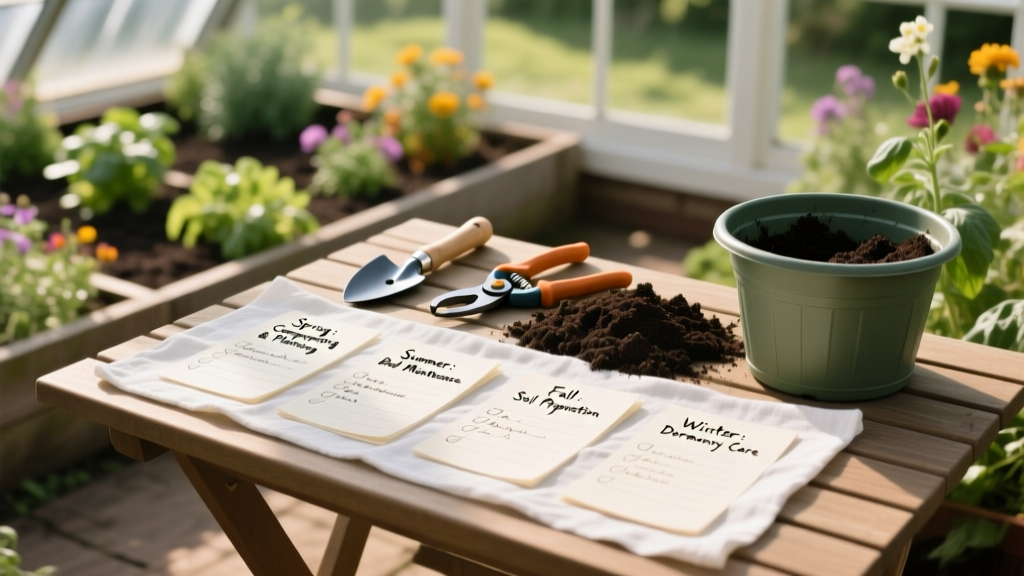
Complete Seasonal Garden Bed Care Checklist And Schedule
Anna KowalskiPublished
The Ultimate Seasonal Garden Bed Care Checklist and Schedule
While lawn care schedules often dominate the weekend chore list, a thriving vegetable and flower garden requires an equally rigorous, season-specific maintenance schedule. Unlike turfgrass, garden beds undergo intense biological and nutritional shifts throughout the year. From prepping raised beds in early spring to sowing cover crops in the fall, timing is everything. This comprehensive garden bed care checklist and soil schedule will guide you through the exact timing, measurements, and costs associated with maintaining high-yield garden beds year-round.
Spring Garden Bed Checklist: Soil Prep and Planting
Spring is the most critical season for establishing the foundation of your garden. The focus during March through May is on soil biology, structure, and early planting.
1. Soil Testing and Amendment
Before adding any fertilizers, test your soil. Using a reliable kit like the Luster Leaf Rapitest Soil Test Kit (approx. $15) or sending a sample to your local university extension lab ($20-$30) will reveal your exact pH and N-P-K levels. According to the United States Department of Agriculture (USDA), healthy soil biology is the cornerstone of sustainable agriculture and gardening. Aim for a pH between 6.2 and 6.8 for most vegetable beds.
- Compost Application: Top-dress all raised beds and in-ground rows with 2 to 3 inches of aged compost. Bulk compost costs roughly $30 to $45 per cubic yard. This improves soil structure and introduces vital microbes.
- Fertilizing: If your soil test indicates a nitrogen deficiency, apply an organic granular fertilizer like Espoma Organic Garden-tone (3-4-4). Apply at a rate of 7 lbs per 100 square feet, working it gently into the top 2 inches of soil.
2. Bed Preparation and Tilling
Adopt a minimal-till or no-till approach to preserve the soil food web. Instead of aggressively rototilling, use a broadfork to gently aerate the soil to a depth of 8 inches without turning the layers. This prevents dormant weed seeds from being brought to the surface and protects beneficial fungal networks.
3. Early Season Planting Schedule
Timing your planting is crucial. Use the following schedule based on your last expected frost date:
- 4 Weeks Before Last Frost: Direct sow cold-hardy crops like spinach, radishes, and peas.
- 2 Weeks Before Last Frost: Transplant hardened-off brassicas (broccoli, cabbage, kale) and sow carrots.
- After Last Frost: Transplant warm-season crops like tomatoes, peppers, and cucumbers.
Summer Garden Bed Checklist: Maintenance and Moisture
From June through August, the focus shifts from establishment to preservation. Summer heat can rapidly deplete soil moisture and nutrients, requiring a strict maintenance schedule.
1. Mulching for Moisture Retention
Apply a 2 to 3-inch layer of organic mulch around all plants. For vegetable beds, use seed-free straw or shredded leaves (approx. $8-$12 per bale). Mulching reduces water evaporation by up to 70%, suppresses weeds, and slowly breaks down to feed the soil. Keep mulch 2 inches away from plant stems to prevent rot.
2. Strategic Watering Schedule
Garden beds require 1 to 1.5 inches of water per week. To ensure accuracy, place a rain gauge or a shallow tuna can in the bed to measure irrigation output. Utilize drip irrigation lines rather than overhead sprinklers to minimize foliar diseases like powdery mildew and early blight. Water deeply in the early morning to allow foliage to dry before nightfall.
3. Side-Dressing Heavy Feeders
Heavy feeders like tomatoes, corn, and squash will exhaust available soil nitrogen by mid-summer. Side-dress these plants with a high-nitrogen organic amendment like blood meal or composted poultry manure. Apply 1 tablespoon per plant, scratching it lightly into the soil surface at the drip line, and water immediately.
4. Companion Planting for Pest Control
Integrate companion planting to naturally manage pests. Plant sweet alyssum near tomatoes to attract predatory wasps that hunt hornworms. Interplant marigolds with squash to deter root-knot nematodes and cucumber beetles.
Fall Garden Bed Checklist: Cleanup and Cover Cropping
September through November is the time to put the garden to bed properly. Fall care dictates the success of next spring's planting.
1. Strategic Debris Removal
Do not compost diseased plant material. If your tomatoes suffered from blight or your squash from vine borers, bag and trash the debris to break the pest and disease life cycles. Healthy plant debris can be chopped and dropped directly onto the bed to decompose.
2. Sowing Cover Crops
Protect bare soil from winter erosion and nutrient leaching by planting cover crops. The Environmental Protection Agency (EPA) notes that maintaining organic matter and protecting soil structure is vital for long-term environmental health. Sow Winter Rye or Crimson Clover at a rate of 2 lbs per 1,000 square feet about 4 weeks before your first expected fall frost. These crops will scavenge leftover nitrogen, prevent weeds, and can be terminated and turned into the soil in spring.
3. Fall Composting and Leaf Mold
Collect fallen autumn leaves to create leaf mold, an exceptional soil conditioner. Shred the leaves with a lawn mower and pile them in a dedicated bin or wire enclosure. Keep the pile moist; it will break down into a rich, humus-like material in 12 to 18 months, perfect for next year's seed starting mixes.
Winter Garden Bed Checklist: Planning and Infrastructure
December through February is the season for rest, planning, and infrastructure maintenance.
1. Structural Repairs
Winter is the ideal time to repair raised beds. Check wooden timbers for rot, tighten corner brackets, and re-line the interior with heavy-duty landscape fabric if necessary. Untreated cedar or composite lumber is recommended for longevity.
2. Crop Rotation Planning
Map out next year's garden layout. Practice a strict 3-year crop rotation schedule to prevent soil-borne diseases. Never plant nightshades (tomatoes, peppers, eggplants) in the same bed two years in a row. Follow heavy feeders with nitrogen-fixing legumes (peas, beans) to naturally replenish the soil.
3. Tool Maintenance
Clean, sharpen, and oil all hand tools. Use a wire brush to remove rust from hoes and trowels, wipe them down with linseed oil, and sharpen digging blades with a metal file. Properly maintained tools reduce physical strain and make precise soil cuts, minimizing root damage.
Annual Garden Bed Maintenance Cost and Time Estimate
Budgeting your time and money is a crucial part of any garden schedule. Below is a structured breakdown of the average costs and time commitments for a standard 100-square-foot garden bed setup.
| Season | Primary Tasks | Materials Needed | Estimated Cost (per 100 sq ft) | Time Commitment |
|---|---|---|---|---|
| Spring | Soil testing, composting, broadforking, planting | Compost, organic fertilizer, seeds/transplants | $60 - $120 | 8 - 12 hours |
| Summer | Mulching, drip irrigation, side-dressing, weeding | Straw mulch, blood meal, drip lines | $30 - $60 | 1 hour / week |
| Fall | Cleanup, cover cropping, leaf collection | Cover crop seed, leaf bags | $15 - $25 | 4 - 6 hours |
| Winter | Bed repair, tool maintenance, crop planning | Linseed oil, lumber, graph paper | $20 - $50 | 3 - 5 hours |
Expert Tip: The secret to a low-maintenance garden bed is investing heavily in soil health during the first two years. By consistently adding compost and utilizing cover crops, you build a resilient soil ecosystem that naturally suppresses diseases and retains moisture, drastically reducing your summer chore list.
By adhering to this seasonal garden bed care checklist, you transition from reactive gardening to proactive soil stewardship. Consistent scheduling ensures your vegetables and flowers receive exactly what they need, precisely when they need it, resulting in bountiful harvests and vibrant blooms year after year.
