
Landscaping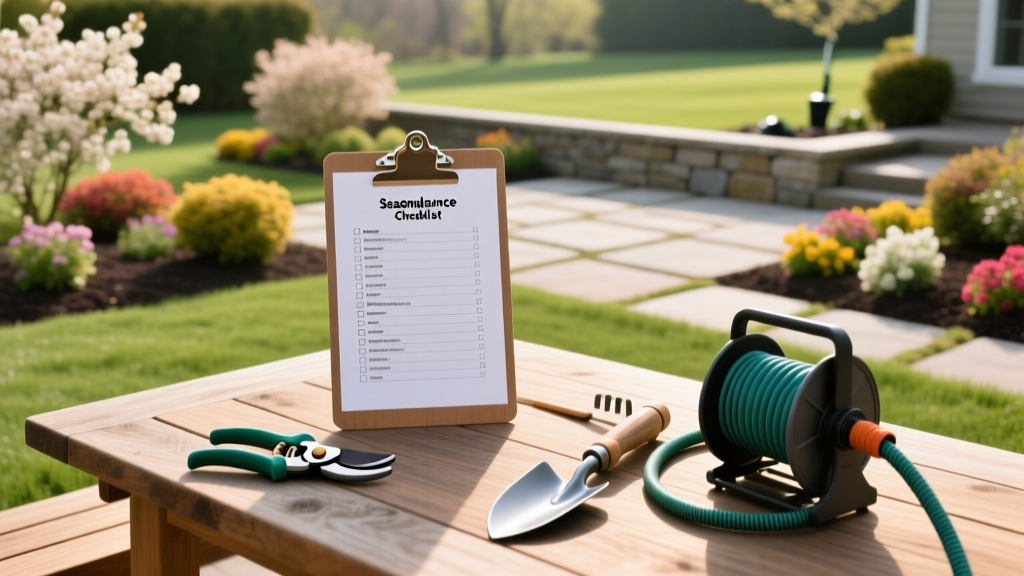
Seasonal Landscape Maintenance Checklist for Lawn and Hardscape
Lisa ThompsonPublished
The Ultimate Seasonal Landscape Maintenance Checklist
A truly stunning landscape is more than just a manicured lawn; it is a cohesive ecosystem where softscapes (grass, garden beds, trees) and hardscapes (patios, retaining walls, walkways) support and elevate one another. Yet, many homeowners treat lawn care and hardscape maintenance as entirely separate entities, leading to disjointed schedules, wasted weekends, and costly repairs. For instance, applying the wrong ice melt in winter can destroy your concrete pavers while simultaneously poisoning the soil for your spring turfgrass.
To achieve flawless curb appeal and structural longevity, you need a unified landscape maintenance schedule. This comprehensive checklist integrates turf management, garden bed care, and hardscape preservation into a single, actionable calendar. By following this timeline, you will optimize your time, reduce long-term repair costs, and maintain a pristine outdoor living space year-round.
Spring: Awakening and Restoration (March – May)
Spring is the season of rehabilitation. Your lawn is emerging from dormancy, and your hardscapes have just endured months of freeze-thaw cycles, snow loads, and de-icing salts. Your primary goal is to reset the foundation of your landscape.
Lawn and Softscape Tasks
- Soil Testing: Before applying any fertilizers, conduct a soil test. Aim for a pH between 6.0 and 7.0 for most turfgrasses. Apply lime if the soil is too acidic, or sulfur if it is too alkaline.
- Pre-Emergent Herbicide: Apply a pre-emergent like Prodiamine 65 WDG when soil temperatures consistently reach 55°F (usually when forsythia bushes bloom). Use a rate of roughly 1.5 lbs per 1,000 square feet to create a chemical barrier against crabgrass.
- Mulching Garden Beds: Refresh your mulch to a depth of 2 to 3 inches. Keep the mulch at least 3 inches away from the base of tree trunks and shrub stems to prevent rot and rodent damage.
Hardscape and Structural Tasks
- Inspect for Frost Heave: Check retaining walls, paver patios, and concrete walkways for shifting or settling. Frost heave occurs when moisture in the soil freezes and expands, pushing hardscape materials upward. Re-level any sunken pavers by adding and compacting a base of angular crushed gravel (ASTM #8 or #9).
- Power Washing: Clean patios and driveways using a pressure washer set to 2,000 PSI with a 25-degree (green) nozzle. Keep the wand at least 12 inches from the surface to avoid etching concrete or blowing out the joint sand between pavers.
- Re-Sand Paver Joints: If water has washed away the sand between your interlocking pavers, sweep in new polymeric sand. Mist it lightly with a garden hose to activate the binding polymers, which will harden and prevent weed growth and ant infestations.
Summer: Preservation and Irrigation (June – August)
Summer heat stresses both your turfgrass and your outdoor structures. The focus shifts from growth to preservation, water management, and pest control.
Lawn and Softscape Tasks
- Adjust Mowing Height: Raise your mower deck to 3.5 or 4 inches for cool-season grasses like Kentucky Bluegrass and Tall Fescue. Taller grass shades the soil, reducing water evaporation and preventing weed seeds from germinating.
- Deep Watering: Lawns require 1 to 1.5 inches of water per week. Water deeply and infrequently (e.g., twice a week) rather than lightly every day to encourage deep root growth.
- Deadheading and Pruning: Maintain garden beds by deadheading spent perennials to encourage a second bloom cycle. According to the Arbor Day Foundation, avoid heavy pruning of spring-flowering shrubs in the summer, as this will remove next year's flower buds. Limit summer pruning to the removal of dead, diseased, or damaged branches.
Hardscape and Structural Tasks
- Irrigation Audit: Inspect your sprinkler system for broken heads and misaligned nozzles that are watering your patio instead of your lawn. The Environmental Protection Agency (EPA) notes that outdoor water use accounts for nearly 30% of total household water use, making efficient irrigation crucial for both your utility bill and the environment. Upgrade to a Weather-Based Irrigation Controller (WBIC) that automatically adjusts watering based on local rainfall.
- Hardscape Weed Control: Despite your spring polymeric sand application, wind-blown soil can accumulate in hardscape crevices, allowing weeds to take root. Spot-treat these areas with a targeted horticultural vinegar solution or a precise application of glyphosate, taking extreme care to prevent chemical runoff into adjacent lawn areas.
- Seal Natural Stone: If you have natural stone features (like flagstone or travertine), apply a breathable, penetrating siloxane sealer to protect against UV fading and summer BBQ grease stains.
Fall: Preparation and Fortification (September – November)
Fall is arguably the most critical season for long-term landscape health. It is the time to fortify your lawn's root system for winter and protect your hardscapes from the impending freeze.
Lawn and Softscape Tasks
- Core Aeration and Overseeding: Aerate your lawn to alleviate soil compaction, then immediately overseed with a premium turf-type tall fescue or Kentucky bluegrass blend. The University of Minnesota Extension emphasizes that early fall (late August to mid-September) is the optimal window for seeding cool-season grasses, as warm soils promote rapid germination while cool air reduces heat stress.
- Winterizer Fertilizer: Apply a fall fertilizer high in potassium (the third number in the N-P-K ratio, such as 10-0-14) to strengthen grass cell walls and improve cold tolerance.
- Leaf Management: Mulch light leaf fall directly into the lawn with your mower. For heavy leaf drop, rake or blow leaves into garden beds to act as natural winter insulation for perennials, or compost them. Never leave thick mats of leaves on the lawn, as they will smother the grass and promote snow mold.
Hardscape and Structural Tasks
- Gutter and Drainage Clearing: Clean out all gutters and ensure downspout extensions discharge at least 4 feet away from your home's foundation and your retaining walls. Poor fall drainage is the leading cause of hardscape base washouts and foundation flooding.
- Concrete Sealing: Apply a high-quality acrylic or polyurethane sealer to stamped concrete and exposed aggregate driveways. This prevents water from penetrating the pores, freezing, and causing 'spalling' (the flaking and chipping of the concrete surface).
- Store Outdoor Furniture: Clean and store wicker, wood, and metal furniture in a dry garage or shed to prevent winter moisture from causing rust and rot.
Winter: Dormancy and Protection (December – February)
While the landscape appears dormant, winter maintenance is primarily about damage mitigation and planning for the spring.
Lawn and Softscape Tasks
- Minimize Foot Traffic: Avoid walking on frozen or dormant turfgrass. The grass crowns are brittle, and heavy foot traffic can cause severe cellular damage, leading to brown, compacted paths in the spring.
- Snow Management on Shrubs: Gently brush heavy, wet snow off the branches of evergreen shrubs and hedges using a broom. Sweep upward from the bottom to prevent snapping the branches.
Hardscape and Structural Tasks
- Choose the Right Ice Melt: Never use rock salt (sodium chloride) on concrete pavers, stamped concrete, or near garden beds. Sodium chloride causes severe chemical scaling on concrete and will sterilize your adjacent soil. Instead, use Calcium Chloride or Magnesium Chloride ice melts. They are effective at much lower temperatures (down to -25°F) and are significantly less damaging to hardscape materials and plant life.
- Design and Planning: Use the winter downtime to assess your landscape. Plan new hardscape additions, such as a fire pit or pergola, and order materials early to beat spring supply chain delays.
Annual Landscape Maintenance Budget and Time Allocation
Maintaining a cohesive landscape requires an investment of both time and money. Below is an estimated breakdown for a standard 5,000-square-foot lawn with a 400-square-foot paver patio and standard garden beds.
| Season | Primary Tasks | Estimated DIY Time | Estimated Material/Pro Cost |
|---|---|---|---|
| Spring | Aeration, Pre-emergent, Paver Re-sanding, Mulching | 12 - 16 Hours | $350 - $600 (DIY Materials) |
| Summer | Irrigation Audits, Mowing, Weed Control, Sealing | 2 - 3 Hours/Week | $150 - $300 (Water/Chemicals) |
| Fall | Overseeding, Winterizer, Gutter Cleaning, Sealing | 10 - 14 Hours | $250 - $500 (Seed/Fertilizer) |
| Winter | Snow Removal, Safe Ice Melt, Planning | Variable (Snow dependent) | $100 - $200 (Calcium Chloride) |
Pro Tip: If you hire a professional landscaping company, expect to pay between $1,500 and $3,500 annually for a comprehensive program that includes lawn fertilization, weed control, seasonal bed cleanups, and basic hardscape sealing. However, specialized hardscape repairs (like fixing a collapsed retaining wall) will require a dedicated masonry contractor.
Conclusion
A beautiful landscape is a living, breathing environment that requires consistent, scheduled care. By integrating your lawn care routines with your hardscape maintenance tasks, you ensure that no element of your outdoor space is neglected. Stick to this seasonal checklist, invest in high-quality materials like polymeric sand and calcium chloride, and respect the biological needs of your turf and plants. The result will be a resilient, breathtaking landscape that adds immense value and enjoyment to your home for decades to come.

