Tree Care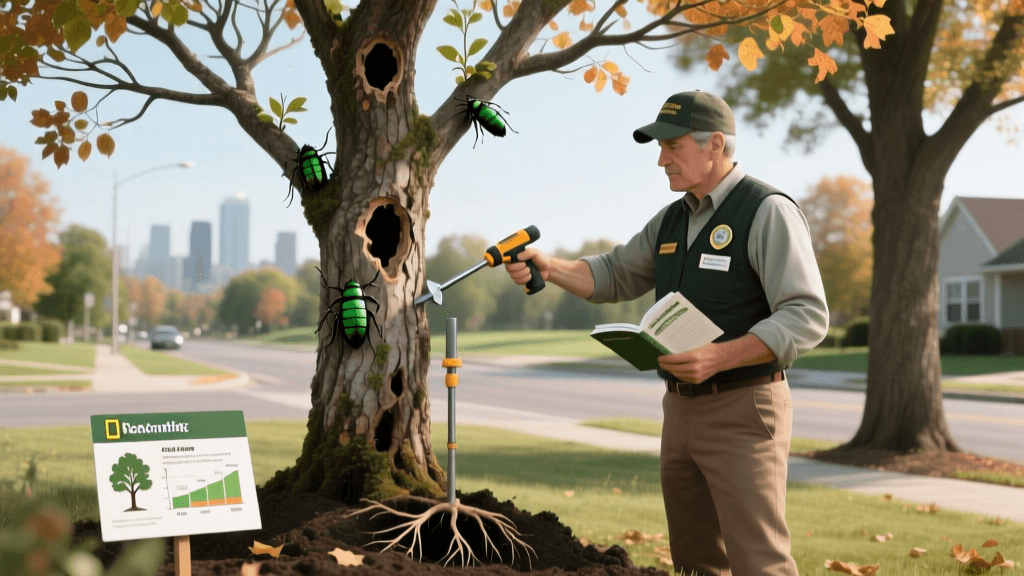
Signs Of Emerald Ash Borer Infestation And Response Plan
Early Detection Is Critical for Ash Tree Survival
Emerald ash borer (Agrilus planipennis), an invasive beetle native to Asia, has killed over 100 million ash trees across North America since its discovery in Michigan in 2002. Early identification of infestation signs—before canopy dieback exceeds 30%—dramatically increases the likelihood of successful treatment or strategic retention. The International Society of Arboriculture (ISA) emphasizes that visual symptoms often appear only after larvae have disrupted phloem and cambium for 1–2 years beneath the bark (ISA, 2021). Delayed recognition leads to structural compromise, increased removal costs, and heightened public safety risk—especially in urban settings like Chicago’s 85,000 municipal ash trees or Portland’s historic street plantings.
Visible Symptoms of Active Infestation
Infested ash trees display a progression of outward indicators. Initial signs include thinning crowns and epicormic shoots—small, vertical sprouts emerging from the trunk or major branches—often within 1–2 meters of the soil line. As larval galleries expand, bark develops characteristic “D-shaped” exit holes approximately 3–4 mm in diameter. These differ sharply from round boring holes left by native beetles. Woodpecker activity intensifies as birds forage for larvae, resulting in conspicuous “blonding”—patches of light-colored, stripped bark exposing lighter sapwood underneath.
Sapwood Discoloration and Galleries
Under loose or split bark, look for serpentine, S-shaped larval galleries filled with fine, cream-colored frass (excrement). These tunnels average 1–2 mm wide and can extend up to 30 cm in length. Healthy ash phloem is typically orange-brown; infested tissue turns grayish-brown and separates easily from underlying wood. Cross-sections reveal galleries concentrated in the outer 2–3 cm of sapwood—the zone where nutrient transport occurs.
Crown Dieback Patterns
Dieback begins in the upper third of the crown and progresses downward over 2–4 years. In mature green ash (Fraxinus pennsylvanica), decline accelerates once more than 40% of the crown exhibits yellowing, premature leaf drop, or bare branches. White ash (F. americana) may retain partial canopy integrity longer but shows similar vascular disruption when dissected.
Species-Specific Vulnerability and Growth Metrics
All North American ash species are susceptible, but mortality timelines vary by species, age, and site conditions. Green ash, widely planted for urban tolerance, grows at 1.2–1.5 meters per year under optimal conditions and develops a shallow, spreading root system extending horizontally up to 2.5× the drip line. White ash grows slower—0.6–0.9 m/year—but attains greater height (up to 25 m) and deeper taproots, with lateral roots penetrating 1.2–1.8 m into soil. Blue ash (F. quadrangulata) exhibits moderate resistance due to higher tannin content and displays the slowest growth: 0.3–0.5 m/year.
The root spread of mature ash trees correlates strongly with canopy width. A 15-meter-diameter crown typically anchors a root zone spanning 35–45 meters in radius—critical for assessing proximity to infrastructure. ANSI A300 Part 4 (Pruning) mandates that pruning cuts avoid removing more than 25% of live crown in a single season to prevent stress-induced vulnerability (ANSI, 2023).
Diagnostic Tools and Professional Assessment Protocols
Visual inspection alone misses early-stage infestations. ISA-certified arborists employ multiple verification methods:
- Increment borers to extract 5-mm core samples from the trunk at breast height (1.37 m) and 30 cm above and below, checking for larval galleries or frass in the cambial zone
- Canopy density assessment using a densitometer or digital hemispherical photography calibrated against baseline pre-infestation imagery
- Ground-penetrating radar (GPR) to detect internal decay patterns consistent with EAB gallery expansion, particularly in high-value specimens near buildings or walkways
At the Morton Arboretum in Lisle, Illinois, researchers validated that trunk injections of emamectin benzoate achieve >95% larval control when applied before mid-July in USDA Hardiness Zones 5–7—timing aligned with peak adult flight and egg-laying periods (Morton Arboretum, 2020). Treatment efficacy drops sharply if applied after larval galleries exceed 2 cm in depth.
Response Framework: Retention, Removal, or Replacement
Decisions must align with tree health, location, and municipal codes. Per ISA Best Management Practices, trees with <20% canopy dieback and no structural defects may be retained with systemic insecticide treatment. Trees exceeding 50% dieback or exhibiting >10 cm of trunk girdling require removal. Removal should follow ANSI A300 Part 1 (Tree Risk Assessment) protocols, including dynamic load testing for leaning specimens.
Root System Considerations During Removal
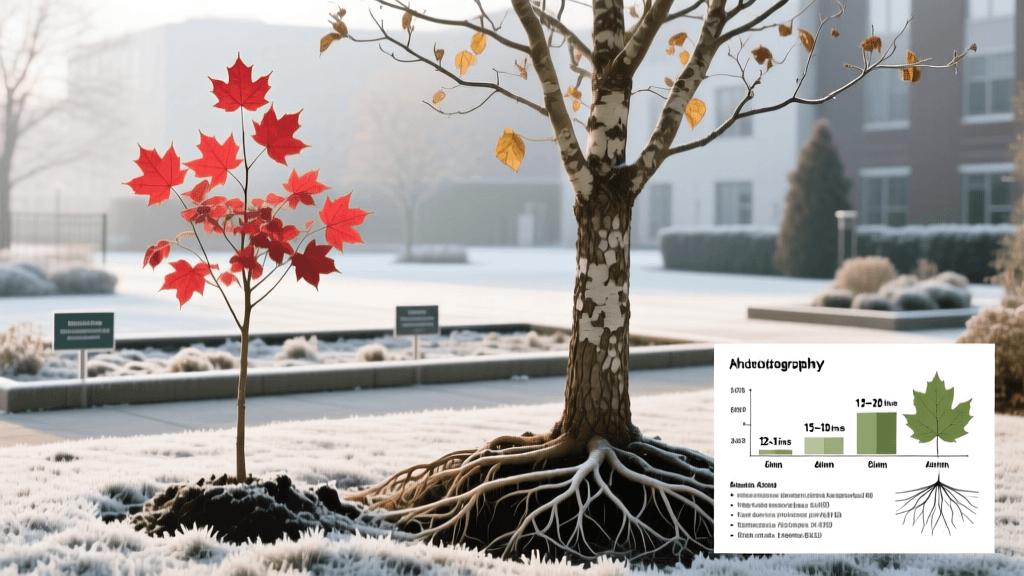
Ash root systems do not self-prune aggressively upon death. Decaying roots persist for 5–10 years, creating subsidence hazards beneath pavement or foundations. When removing a 45-cm-diameter green ash, expect residual root mass extending ≥18 meters from the trunk base. Root trenching or grinding within 3 meters of structures is recommended prior to replanting.
Strategic Replacement Planning
Replacement planting must avoid monoculture. Recommended alternatives include disease-resistant American elm (Ulmus americana ‘Valley Forge’), which achieves 0.8–1.0 m/year growth and develops a 15–20 m wide canopy; or Kentucky coffeetree (Gymnocladus dioicus), with deep taproots limiting surface interference and growth rates of 0.4–0.6 m/year. Avoid planting any Fraxinus species within 15 km of known EAB infestations per USDA APHIS quarantine guidelines.
Replanting spacing follows ANSI A300 Part 9 (Planting): minimum 6 meters between trunks for medium-sized species, increasing to 10 meters for large-canopy trees. Soil volume requirements are non-negotiable—minimum 30 m³ of uncompacted, loamy soil per mature tree to support root respiration and hydraulic function.
Quantitative Benchmarks for Decision-Making
Use these evidence-based thresholds to guide action:
- Exit hole density >5 per 0.5 m² indicates advanced infestation requiring removal
- Trunk circumference loss >12% over 12 months signals irreversible vascular failure
- Canopy transparency >45% (measured via gap fraction analysis) correlates with >60% mortality probability within 18 months
- Soil moisture below 12% volumetric water content within the top 30 cm reduces treatment uptake by 40%
- Distance from nearest known EAB trap <1.6 km increases infection risk by 7-fold (USDA Forest Service, 2019)
| Species | Average Lifespan (Years) | Max Height (m) | Root Spread Radius (m) | Treatment Window (Weeks Post-Flight Peak) |
|---|---|---|---|---|
| Green ash | 30–50 | 18–22 | 25–35 | 6–8 |
| White ash | 50–70 | 20–25 | 20–30 | 4–6 |
| Blue ash | 60–80 | 18–23 | 15–25 | 8–10 |
“Once EAB establishes in a stand, untreated ash mortality approaches 99% within 6–10 years—even in healthy, well-spaced specimens. Proactive management isn’t optional; it’s arboricultural triage.” — Dr. Deborah McCullough, Michigan State University Department of Entomology (2022)
Urban forestry departments in Minneapolis and Toronto now mandate annual EAB surveys for all publicly owned ash trees over 10 cm DBH. Private landowners in Cook County, Illinois must report confirmed infestations to the Illinois Department of Agriculture within 72 hours. Delayed reporting contributes to regional spread and undermines coordinated response efforts.
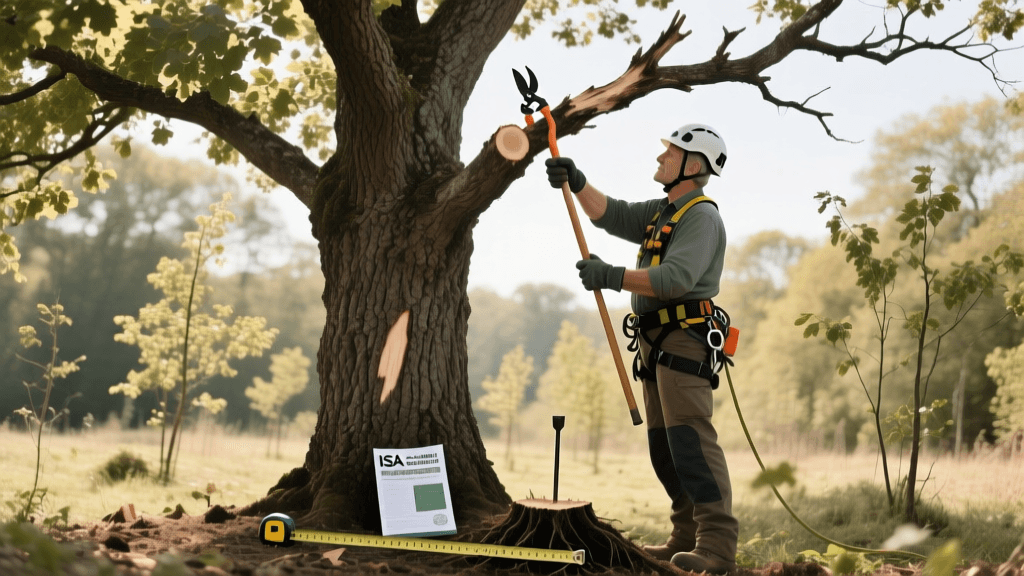
Pruning should never occur between May 1 and September 15 in infested zones—peak adult emergence coincides with this window, and fresh wounds attract gravid females seeking oviposition sites. All pruning tools must be disinfected with 70% ethanol between trees to prevent mechanical transmission.
Growth rate data underscores urgency: a 30-year-old green ash gains ~1.3 m in height annually but loses structural integrity rapidly once larval density surpasses 150/cm² of sapwood. That same tree’s root system occupies ~1,200 m³ of soil volume—making replacement site preparation as critical as species selection.
ISA-certified arborists complete 24+ hours of EAB-specific continuing education every three years. Verify credentials through the ISA website before engaging contractors. Municipal programs like Portland’s “Ash Watch” provide free diagnostic clinics and subsidized treatment for qualifying low-income households.
Monitoring isn’t passive observation—it’s scheduled, metric-driven surveillance. Record trunk circumference quarterly, photograph crown density biannually, and map exit holes with GPS coordinates. This longitudinal data informs whether treatment is succeeding or whether removal timing must be accelerated to protect adjacent trees.
Root zone protection during construction remains non-negotiable. ANSI A300 Part 5 specifies that no soil compaction exceeding 1.4 g/cm³ is permitted within the critical root zone—defined as a circle with radius equal to 1.5× the trunk diameter at breast height. Violations reduce oxygen diffusion by 60%, accelerating decline in stressed ash.
When evaluating treatment viability, consider the tree’s position relative to targets: ash within 5 meters of playgrounds, sidewalks, or power lines warrant earlier removal due to falling limb risk—even with <25% dieback. Structural defect mapping using resistograph readings identifies hidden decay invisible to the naked eye.
Finally, recognize that EAB management is iterative. Reassessment every 12 months—even for treated trees—is required. Larval resistance to neonicotinoids has been documented in Ohio populations, reinforcing the need for rotating chemistries and integrated pest management grounded in ISA and ANSI standards.