Pest Control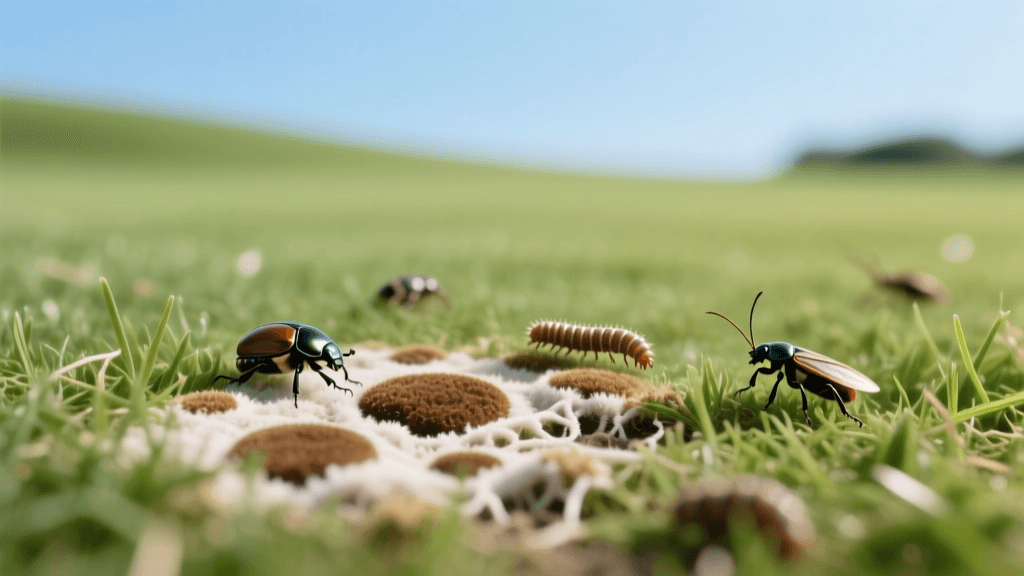
Signs Of Lawn Fungus And Treatment Options
A healthy lawn can turn patchy, discolored, or matted almost overnight when fungal disease takes hold. Unlike insect damage or drought stress, fungal infections often go unnoticed until they’ve spread across large sections of turf. Spotting the signs early, knowing which fungi are involved, and understanding treatment options gives homeowners and turf managers a better shot at stopping an outbreak before it leads to major reseeding or sodding.
Recognizing the Early Warning Signs
Fungal diseases rarely show up with one clear, unmistakable symptom. Instead, they create overlapping patterns that look like nutrient shortages, bug damage, or watering problems. The first clues are usually small color changes — a faint yellowing or bronzing of grass blades that doesn’t improve after watering or fertilizing. Circular or irregular patches that grow larger over several days suggest a pathogen is at work, not just weather or soil conditions.
Look for thread-like mycelium on grass blades in the early morning, before the dew dries. That’s one of the most dependable early signs. Some diseases leave a powdery white or gray film on leaf surfaces. Others rot the base of the grass plant right at the soil line, so blades pull away with little effort. Time of year and recent weather help narrow down likely culprits — most fungi prefer certain temperature and humidity ranges.
Color and Texture Changes to Watch For
Dollar spot (Clarireedia jacksonii, formerly Sclerotinia homoeocarpa) causes straw-colored spots about the size of a silver dollar, often with a reddish-brown edge. When spots merge, they form larger, uneven dead patches. Brown patch (Rhizoctonia solani) makes circular areas of tan or brown grass, sometimes with a darker, water-soaked ring — called a “smoke ring” — around the edge, especially visible in early morning.
Red thread (Laetisaria fuciformis) shows up as pink to red threads sticking out from the tips of infected blades. Pythium blight (Pythium aphanidermatum and related species) moves fast, creating greasy, water-soaked patches that flatten and mat down within 24 to 48 hours during hot, humid weather. According to research published by the University of Massachusetts Extension in 2022, Pythium blight can kill up to half a stand of turfgrass within 72 hours when nighttime temperatures stay above 70°F and humidity stays above 90%.
Distinguishing Fungal Damage from Insect or Drought Stress
A simple field test: tug firmly on affected grass. With fungal root or crown rots, the plant pulls free easily at the soil line. Drought-stressed turf usually holds tight. White grubs (Popillia japonica, Cyclocephala spp.) also cause turf to lift like loose carpet, but grub damage is confirmed when you find 8 to 10 larvae per square foot in the soil — the threshold most university extension programs use.
Fungal lesions on individual blades often have distinct bands or colored edges — something insect feeding doesn’t produce. A hand lens or jeweler’s loupe at 10x magnification can reveal spores, mycelium, or sclerotia on infected tissue, pointing to a fungal cause. Sending a sample to a diagnostic lab — like those run by Penn State Extension or North Carolina State University’s Plant Disease and Insect Clinic — gives a confirmed ID and helps guide treatment.
Common Lawn Fungal Diseases and Their Pathogens
Dozens of fungi can infect turfgrass, but only a handful cause most lawn disease problems across North America. The exact pathogen matters because it determines which fungicides will work. Getting the ID right is the first step toward effective treatment.
| Disease Name | Causal Organism | Favorable Conditions | Primary Turf Hosts |
|---|---|---|---|
| Brown Patch | Rhizoctonia solani | Temps 75–85°F, high humidity | Tall fescue, ryegrass, bentgrass |
| Dollar Spot | Clarireedia jacksonii | Temps 60–80°F, dew, low nitrogen | Bermudagrass, bentgrass, bluegrass |
| Pythium Blight | Pythium aphanidermatum | Temps above 85°F, wet soils | Ryegrass, bentgrass |
| Powdery Mildew | Blumeria graminis | Shade, poor air circulation, 60–72°F | Kentucky bluegrass |
| Red Thread | Laetisaria fuciformis | Cool, wet weather, low nitrogen | Fescues, ryegrass, bluegrass |
| Summer Patch | Magnaporthe poae | Soil temps above 65°F, drought stress | Kentucky bluegrass, fine fescue |
Regional Prevalence Patterns
Disease pressure varies by location. Brown patch dominates lawns in the humid Southeast and Mid-Atlantic from June through September, where warm nights and frequent thunderstorms create perfect conditions for infection. Dollar spot shows up widely across the Midwest and transition zone, especially on cool-season grasses exposed to morning dew and shifting temperatures.
According to the Turfgrass Information Center at Michigan State University, dollar spot ranks as the most costly disease for golf courses and home lawns in the northern U.S., with annual treatment costs topping $1.5 billion industry-wide. In the Pacific Northwest, take-all patch (Gaeumannomyces tritici) keeps showing up in bentgrass and annual bluegrass, especially in soils with high pH and poor drainage.
Fungicide Active Ingredients and Application Strategies
Picking the right fungicide means matching its mode of action to the fungus causing trouble. Fungicides are grouped by FRAC (Fungicide Resistance Action Committee) code, which tells you how they work biochemically. Rotating between FRAC groups helps avoid resistance — and resistance to DMI fungicides has already been found in dollar spot populations in several states.
The following active ingredients are commonly used and well-documented for residential and commercial turf:
- Azoxystrobin (FRAC Group 11) — A strobilurin fungicide that works against brown patch, dollar spot, and anthracnose. It can both prevent and treat active infections. Apply at 0.4 to 0.8 oz per 1,000 sq ft every 14 to 28 days.
- Propiconazole (FRAC Group 3) — A DMI fungicide strong against dollar spot, brown patch, and summer patch. For best results, apply within 72 hours after symptoms appear.
- Iprodione (FRAC Group 2) — A dicarboximide fungicide especially useful for dollar spot and brown patch. Because resistance has shown up in some dollar spot strains, rotating this with other products is key.
- Mefenoxam (FRAC Group 4) — A phenylamide fungicide that targets oomycetes like Pythium. It won’t work on true fungi, so only use it when Pythium is confirmed.
- Thiophanate-methyl (FRAC Group 1) — A benzimidazole fungicide with activity against dollar spot and several other diseases. Repeated use has led to widespread resistance in dollar spot, so it’s best used sparingly and in rotation.
- Chlorothalonil (FRAC Group M5) — A broad-spectrum contact fungicide with low resistance risk. It works well as a preventive, but won’t fix an infection once it’s taken hold.
University trials consistently show that applying fungicides before symptoms appear — during known high-risk periods — works better than waiting until damage shows up. A 2021 study at Rutgers University’s turfgrass research facility found preventive programs cut dollar spot severity by 78% compared to untreated plots, while curative applications reduced severity by only 41% under the same conditions.
Integrated Pest Management for Lawn Fungal Disease
Fungicides are just one part of managing turf disease. IPM for lawns combines cultural practices, biological controls, and chemical tools to keep disease in check without constant spraying. The idea is to make the lawn less hospitable to fungi instead of relying only on fungicides.
"Fungicide applications without corresponding improvements in cultural practices are a short-term solution. The pathogen will return as long as the environment remains favorable. Sustainable disease management requires addressing the root causes — compaction, thatch, irrigation timing, and fertility — alongside any chemical intervention." — Dr. Lee Burpee, Plant Pathology Department, University of Georgia, as cited in the 2020 edition of Turfgrass Science and Culture.
Cultural practices that help include watering deeply and infrequently in the early morning, so grass blades dry before nightfall. Mowing at the right height — usually 3 to 4 inches for tall fescue and 1.5 to 2.5 inches for Kentucky bluegrass — reduces stress and improves airflow near the ground. Core aeration helps with compaction, and removing thatch when it builds past 0.5 inches is standard advice.
Biological Control Options
A few biological fungicides have held up in university trials and are approved for home lawns. Bacillus subtilis strain QST 713, sold as Serenade, produces compounds that disrupt fungal cell membranes and has suppressed dollar spot by 40 to 60% in replicated tests. Trichoderma harzianum strain T-22 lives in the root zone and competes with soilborne pathogens like Rhizoctonia and Pythium.
Biological products tend to work best when used preventively, not as emergency fixes. They’re most effective when soil temperatures stay above 50°F and organic matter supports active microbes. Some studies show combining them with lower doses of conventional fungicides boosts control without increasing total pesticide use.
Soil and Environmental Factors That Drive Outbreaks
Fungal spores and mycelium live in nearly every lawn soil, dormant until conditions tip in their favor. Outbreaks happen when weather, soil, or care practices weaken the grass and give fungi the upper hand. Knowing these triggers helps you act before disease appears.
Soil pH outside the 6.0 to 7.0 range — ideal for most cool-season grasses — can set the stage for disease by limiting nutrients and changing soil microbes. Studies link pH above 7.5 to worse take-all patch. Compacted, poorly drained soils create low-oxygen conditions that Pythium loves and weaken roots, making plants more vulnerable.
Nitrogen plays a tricky role. Too little makes grass more prone to dollar spot and red thread. Too much — especially from quick-release sources — creates soft, lush growth that’s easy prey for brown patch and Pythium blight. A safer approach is slow-release nitrogen at 0.5 to 1.0 lb per 1,000 sq ft per application, timed to avoid peak disease windows.
- Test soil pH every year and adjust with sulfur or lime to keep it between 6.0 and 7.0 for your grass type.
- Aerate compacted areas in spring or fall to let water, air, and roots move more freely.
- Dethatch when the layer gets thicker than 0.5 inches — thatch holds fungal spores and blocks water and air.
- Calibrate your irrigation system to deliver 1 to 1.5 inches of water per week in one deep soak, not several light sprinkles.
- Avoid mowing wet grass — equipment and clippings spread spores across the lawn.
- Keep mower blades sharp — ragged cuts invite disease and increase moisture loss from leaves.
Shade is an easy thing to overlook. Grass under trees gets less sun, dries slower, and competes with tree roots. Powdery mildew thrives in those shady, still spots. Thinning branches to let in more light and air can cut disease pressure without chemicals. If shade is too heavy for decent turf, switching to shade-tolerant ground covers is often smarter than repeated fungicide sprays.
Sampling, Diagnosis, and When to Call a Professional
Getting the right diagnosis before treatment saves money and avoids unnecessary chemicals. Sending a soil and plant sample to a university diagnostic lab usually costs $20 to $75 and returns a confirmed ID plus region-specific recommendations. Most land-grant universities — like Texas A&M, Ohio State, and the University of Florida’s Plant Diagnostic Center — accept mailed samples from homeowners and pros.
If more than 20% of your lawn shows symptoms, if the problem spreads quickly despite good cultural practices, or if it keeps coming back in the same spot year after year, it’s worth bringing in a licensed turfgrass professional or certified crop adviser. Recurring disease often points to deeper issues — poor drainage, compaction, too much shade, or grass that’s just not suited to the site. A pro can run infiltration tests, measure thatch depth, and check how evenly your irrigation system waters the lawn — all things that feed into a realistic, long-term plan.