Tree Care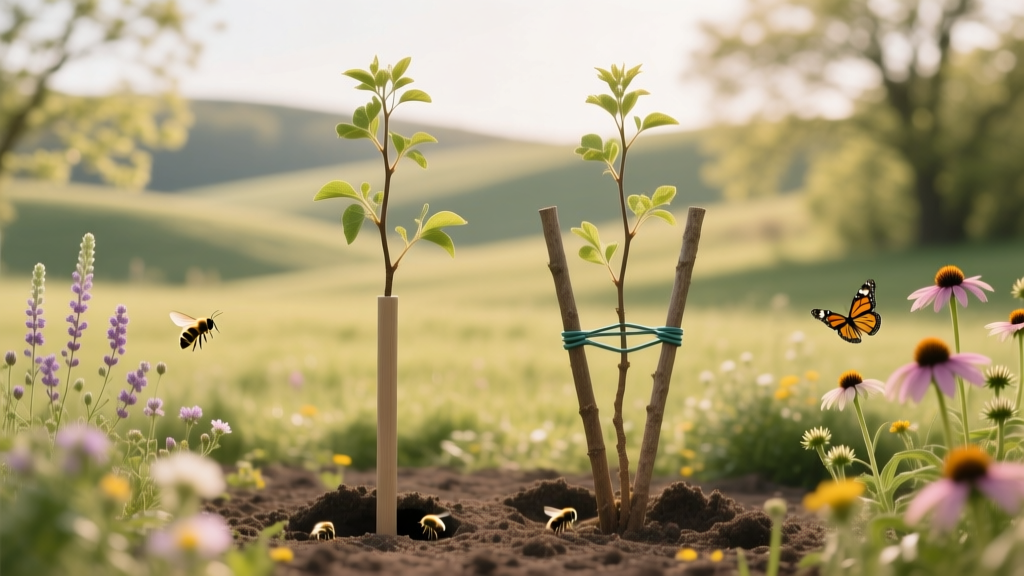
2026 Tree Staking Guide: Single vs Double Stake for
Introduction: Staking Young Trees in Pollinator-Friendly Landscapes
As we navigate the 2026 growing season, the integration of ecological awareness into everyday landscaping has never been more critical. Pollinator-friendly garden design is no longer just about planting native wildflowers; it encompasses the entire ecosystem of your yard, including how you establish and support young trees. When planting a new sapling, proper staking is often necessary to ensure it survives erratic spring winds and establishes a robust root system. However, the methods and materials you use can significantly impact the local pollinator population.
Ground-nesting bees, which account for roughly 70% of native bee species in North America, rely on undisturbed, well-draining soil to build their nests and rear their young. The act of driving stakes into the earth, the materials used for those stakes, and the subsequent soil compaction can inadvertently destroy these vital micro-habitats. In this comprehensive guide, we will explore the nuances of single stake versus double stake tree staking, specifically tailored for the eco-conscious gardener who wants to protect both their young trees and the essential pollinators that bring their garden to life.
The Ecology of the Tree Base and Ground-Nesting Bees
Before deciding between a single or double staking method, it is essential to understand the ecosphere at the base of your young tree. According to the Xerces Society for Invertebrate Conservation, native bees such as sweat bees (Lasioglossum) and mining bees (Andrena) frequently nest in the bare or sparsely vegetated patches of soil often found around newly planted trees. These bees excavate small tunnels where they lay their eggs and provision them with pollen.
When you install tree stakes, you are not only physically occupying space but also compacting the surrounding soil. Heavy tamping and the use of oversized wooden posts can collapse existing bee tunnels and alter the soil drainage profile, making it unsuitable for future nesting. Therefore, the goal of pollinator-safe tree staking in 2026 is to provide adequate mechanical support to the tree trunk while minimizing the footprint of ground disturbance and avoiding toxic chemical leaching into the surrounding root zone.
Single Stake vs. Double Stake: Which is Best?
Choosing between a single stake and a double stake depends on several factors, including the tree's caliper size, the prevailing wind conditions in your microclimate, and the specific pollinator habitat you are trying to cultivate. The University of Minnesota Extension notes that many trees do not require staking at all if they have a properly developed root ball and are planted in a sheltered location. However, when staking is required, the method matters.
The Single Stake Method
The single stake method involves driving one sturdy post into the ground on the windward side of the tree and attaching the trunk with a flexible, broad tie. This method is generally recommended for smaller caliper trees (under 2 inches in diameter) and those planted in areas with moderate, unidirectional winds. From a pollinator perspective, the single stake is highly advantageous because it requires only one point of ground penetration. This minimizes soil compaction and leaves the majority of the tree's understory undisturbed, preserving vital nesting real estate for ground-nesting bees.
The Double Stake Method
The double stake method utilizes two stakes placed on opposite sides of the tree trunk, usually perpendicular to the prevailing wind. The tree is then secured to both stakes using flexible ties. This approach is necessary for larger, heavier saplings, trees with small root balls relative to their canopy, or those planted in highly exposed areas prone to the increasingly common micro-burst storms we are seeing in 2026. While it requires two points of ground disturbance, the double stake method prevents the trunk from pivoting and tearing the delicate new root hairs, which is crucial for the tree's long-term survival and its eventual ability to provide dappled shade for shade-tolerant pollinator plants.
Comparison Chart: Single vs. Double Staking for Pollinator Gardens
| Feature | Single Stake | Double Stake | Pollinator Impact |
|---|---|---|---|
| Ground Penetration Points | One | Two | Fewer points mean less disruption to ground-nesting bee tunnels. |
| Soil Compaction Area | Low (approx. 2 sq ft) | Moderate (approx. 4 sq ft) | Less compaction maintains soil porosity needed for bee excavation. |
| Trunk Movement | Allows slight flexing | Restricts lateral movement | Slight flexing builds trunk taper, leading to a stronger mature tree canopy for bird and insect habitat. |
| Best Used For | Small caliper, sheltered zones | Large caliper, windy zones | Match the stake to the tree to avoid unnecessary habitat disturbance. |
| Understory Planting | Easier to plant around | Requires careful navigation | More open soil allows for dense planting of native pollinator host plants. |
Pollinator-Safe Staking Materials for 2026
The materials you choose for staking are just as important as the method. Historically, gardeners relied on pressure-treated wooden stakes and synthetic nylon ropes. In 2026, we know better. Pressure-treated wood often contains copper-based preservatives that can leach into the soil, potentially harming soil-dwelling insects and the delicate mycorrhizal fungi networks that support both trees and native wildflowers.
- Stakes: Opt for untreated, naturally rot-resistant wood like cedar or black locust. Alternatively, modern composite fiberglass stakes are excellent; they are durable, reusable, and completely inert, meaning they will not leach chemicals into your pollinator garden.
- Ties: Avoid narrow plastic zip-ties or synthetic ropes that can girdle the tree and eventually break down into microplastics. Instead, use broad, biodegradable materials like woven jute, coir (coconut fiber), or specialized natural rubber tree ties. These materials will safely decompose into the soil without harming foraging insects.
Step-by-Step Installation Guide (Pollinator-Safe)
To install your stakes while minimizing harm to the local ecosystem, follow these precise steps recommended by arborists and conservationists alike.
- Assess the Root Flare: Before driving any stakes, ensure your tree is planted correctly with the root flare visible above the soil line. Planting too deep suffocates roots and creates a muddy basin that is unsuitable for nesting bees.
- Locate the Staking Points: For a single stake, position it on the windward side, approximately 18 to 24 inches away from the trunk. For a double stake, place them on opposite sides, also 18 to 24 inches away. Keeping this distance is crucial; it keeps the stakes outside the immediate root ball, reducing damage to the tree's new roots and leaving the central soil profile undisturbed for pollinators.
- Drive the Stakes Carefully: Use a manual post driver or a mallet rather than heavy, gas-powered augers which cause massive soil vibration and compaction. Drive the stakes 18 inches deep. This provides sufficient leverage without unnecessarily disturbing deep soil layers.
- Attach the Ties: Secure the tree at the lowest possible point that still prevents the root ball from shifting. Leave a small amount of slack—about an inch of movement in any direction. As the Morton Arboretum emphasizes, allowing the tree to sway slightly in the wind stimulates the production of reaction wood, resulting in a thicker, stronger trunk.
Pro-Tip for 2026: Never wrap ties tightly around the trunk. Use a figure-eight pattern if tying directly to the stake to create a cushioning buffer between the tree bark and the hard stake surface.
Understory Planting Around Stakes
Once the stakes are in place, the surrounding soil is prime real estate for pollinator-friendly understory planting. Avoid using thick layers of impermeable landscape fabric or excessive, volcano-style woodchip mulching around the base of the tree, as these practices completely block ground-nesting bees from accessing the soil.
Instead, apply a thin (2-inch) layer of coarse, natural wood chips, keeping it strictly away from the trunk flare. Between the stakes, plant shallow-rooted, native pollinator favorites that thrive in the dappled shade of a young tree. Excellent choices for 2026 include Wild Geranium (Geranium maculatum), Canadian Columbine (Aquilegia canadensis), and early-blooming woodland phlox. These plants provide essential early-season nectar for emerging queen bumblebees while their root systems help stabilize the soil around your tree stakes without competing aggressively with the young tree.
When to Remove the Stakes
Stakes are meant to be temporary training wheels, not permanent fixtures. Leaving stakes in the ground for years restricts trunk development, damages the bark, and creates a permanent physical barrier in your pollinator garden. Monitor your tree throughout the first growing season. Generally, stakes should be removed after one year, or at most, two growing seasons. To test if the tree is ready, gently untie the trunk and observe it during a moderate breeze. If the root ball remains firm in the ground and only the upper canopy flexes, the tree has successfully established its root system. Remove the stakes, leaving the soil intact and ready for native bee colonization.
Conclusion
Proper tree staking is a delicate balance of horticultural science and ecological stewardship. By carefully choosing between a single stake and a double stake based on your specific site conditions, and by utilizing pollinator-safe materials and installation techniques, you can ensure your young trees thrive. In doing so, you are not just planting a tree; you are cultivating a foundational pillar for a vibrant, buzzing, and ecologically resilient pollinator garden for decades to come.