Tree Care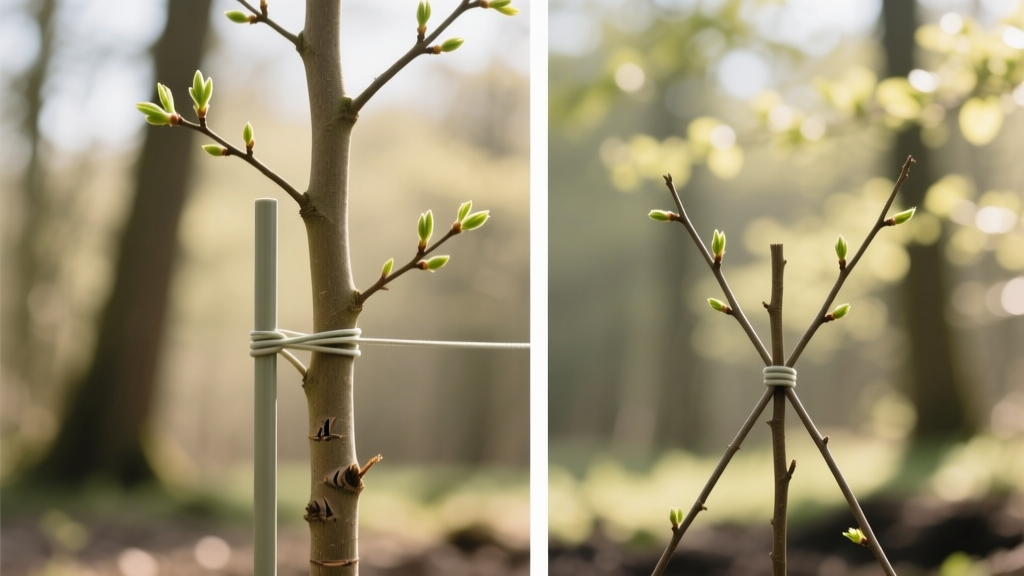
2026 Young Tree Staking Guide: Single vs Double Stake & Pruning
Robert HayesPublished
The 2026 Approach to Young Tree Staking and Structural Pruning
Planting a young tree in 2026 requires a nuanced understanding of root establishment, trunk taper, and canopy balance. While the general consensus among modern arborists is to avoid staking unless absolutely necessary, certain scenarios—such as top-heavy nursery stock, high-wind zones, or sloped terrain—demand structural support. When you must stake a tree, choosing between a single stake and a double stake system is only half the battle. The other critical component is adjusting your pruning methods and timing.
A staked tree is artificially supported, which alters its natural physiological response to wind. If you stake a tree but fail to adapt your pruning strategy, you risk developing a spindly trunk that cannot support its own canopy once the stakes are removed. In this comprehensive 2026 guide, we will explore the mechanics of single versus double staking and detail the precise pruning methods and timing required to ensure your young tree develops a resilient, self-supporting structure.
Single Stake vs. Double Stake: Which System to Choose?
Before making a single pruning cut, you must select the correct staking method for your site and tree species. The decision between a single stake and a double stake depends on the tree's caliper size, the root ball weight, and local wind patterns.
Single Stake Systems
A single stake is driven into the ground on the windward side of the tree (the direction from which the prevailing wind blows). The tree is then attached to the stake using a flexible, biodegradable arbor tie. This method is best suited for bare-root trees or smaller containerized stock with a trunk caliper under 2 inches. Single staking allows for some lateral movement, which is crucial for stimulating trunk taper, but it offers limited protection against multidirectional crosswinds.
Double Stake Systems
A double stake system utilizes two stakes placed outside the root ball, often connected by a crossbar or flexible ties that cradle the lower trunk. This method is the 2026 industry standard for larger containerized trees (2 to 4-inch caliper), heavy clay soils, or areas with turbulent, multidirectional winds. Double staking prevents the root ball from rotating in the soil, which can shear newly forming feeder roots.
| Feature | Single Stake System | Double Stake System |
|---|---|---|
| Best For | Bare-root, small caliper (under 2 inches) | Large caliper (2-4 inches), heavy canopy |
| 2026 Avg Material Cost | $15 - $25 (Fiberglass stake + tie) | $35 - $55 (Dual stakes + cross ties) |
| Wind Resistance | Prevailing unidirectional wind | Multidirectional, turbulent crosswinds |
| Root Ball Stability | Moderate | High (prevents root ball rotation) |
| Impact on Pruning | Requires canopy thinning on windward side | Requires balanced structural subordination |
The Physiology of Staking and Pruning Methods
Trees rely on a biological process called thigmomorphogenesis—their physiological response to mechanical stress, such as wind. When a tree flexes in the breeze, it allocates resources to radial trunk growth (taper) and root mass expansion. Staking restricts this natural flexing. According to research from the University of Minnesota Extension, trees that are staked too tightly or for too long grow taller but remain spindly, lacking the necessary trunk taper to stand alone.
Because the trunk isn't flexing, the canopy may grow too fast, creating a massive 'sail' that puts dangerous leverage on the stake ties. Therefore, your pruning methods must compensate for the lack of mechanical stress.
Pruning Method 1: Subordination Cuts
When managing a staked tree, avoid heading cuts (cutting off the tips of branches). Heading cuts stimulate dense, heavy, wind-resistant sail-like growth at the tips of the canopy. Instead, use subordination cuts. This method involves reducing the length of competing leaders and overly vigorous lateral branches back to a smaller lateral branch. This reduces the sail effect, lowering the wind load on the stakes while encouraging a dominant central leader.
Pruning Method 2: Retaining Temporary Lower Branches
Do not strip the lower trunk of a newly staked tree. Leaving small, temporary branches on the lower 3 to 4 feet of the trunk increases trunk caliper and provides essential photosynthetic energy to the root zone. Even if these branches are shaded and eventually pruned in 2028 or 2029, their presence in the early years is critical for building the wood density that the stake is artificially replacing.
Pruning Timing: Balancing the Canopy of a Staked Tree
Timing your pruning correctly is just as important as the cuts themselves. A newly planted, staked tree is already under transplant shock. Improper pruning timing can halt root establishment and lead to tree decline.
At Planting (Early Spring or Fall 2026)
When you first install the single or double stakes, do not heavily prune the canopy. The outdated practice of 'balancing' the top with the roots by removing 30% of the canopy has been thoroughly debunked. The tree needs its foliage to generate the carbohydrates required for root establishment. At planting, only remove broken, dead, or severely crossing branches.
Year 1 Dormant Season (Late Winter 2026/2027)
The first major structural pruning should occur during the tree's first dormant season after planting. This is when you identify the central leader and make your subordination cuts to competing leaders. Because the tree has been staked and protected from wind all summer, it likely pushed vigorous vertical growth. Pruning during late winter directs the spring 2027 energy into the remaining, well-structured branches.
Year 2 Growing Season: Monitoring and Adjusting
During the second growing season, your primary focus is monitoring the stake ties. As the trunk expands, ties can girdle the bark. Loosen or replace them with wider, softer biodegradable straps. Prune any watersprouts (vigorous, upright shoots) that emerge on the lower trunk or main branches, as these are often a stress response to the artificial restriction of the stake.
The 2026 Staking and Structural Pruning Schedule
To ensure your young tree transitions successfully from a staked sapling to a freestanding shade tree, follow this actionable schedule:
- Month 1 (Planting): Install single or double stakes. Secure ties loosely to allow 1-2 inches of lateral trunk movement. Prune only dead or damaged wood.
- Month 6 (Mid-Summer): Check ties for girdling. Ensure the root ball is not rocking in the soil. Do not prune the canopy.
- Month 12 (First Dormant Winter): Perform structural subordination pruning. Reduce competing leaders by 25%. Leave lower temporary branches intact to build trunk caliper.
- Month 18 (Second Summer): Loosen ties. If the tree can stand upright without the stake when gently pushed, begin the weaning process by removing the ties but leaving the stakes in place as visual markers for mowers.
- Month 24 (Second Dormant Winter): Remove stakes entirely. Perform final structural pruning to establish the permanent scaffold branches. According to Colorado State University Extension, stakes should rarely remain on a tree beyond the second year, as prolonged staking permanently weakens trunk development.
Conclusion
Staking a young tree is a temporary intervention, not a permanent crutch. By carefully selecting between a single or double stake system based on your site conditions, and aligning your pruning methods and timing to compensate for the lack of natural wind stress, you set your tree up for a lifetime of structural integrity. In 2026, the most successful landscapes are those where staking and pruning are treated as a unified, physiological strategy rather than isolated chores.