Tree Care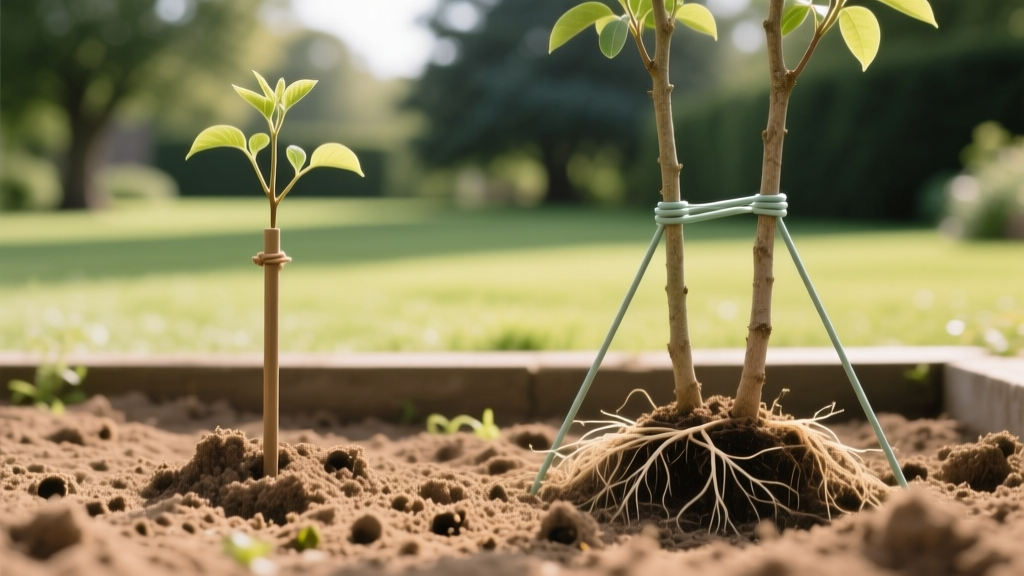
Young Tree Staking 2026: Single vs Double Stakes in Aerated Soil
James MillerPublished
Introduction: The Intersection of Core Aeration and Tree Stability
When preparing a planting site in heavily compacted urban or suburban clay, landscape professionals and advanced home gardeners in 2026 increasingly rely on deep core aeration to fracture the soil and improve gas exchange. Soil compaction is one of the leading causes of young tree mortality, as it restricts oxygen flow to the root zone and impedes water infiltration. By extracting 3-inch soil cores around the planting bed, you create an optimal environment for mycorrhizal fungi and rapid root expansion. However, this vital soil preparation technique creates a looser, less dense planting bed. While this is fantastic for long-term root health, it significantly reduces the initial soil grip on the tree's root ball immediately after planting.
This brings us to a critical debate in modern arboriculture: how do you properly support a young tree planted in freshly core-aerated soil? The choice between a single stake and a double stake system depends heavily on the soil structure, the tree's caliper, and local wind dynamics. In this comprehensive 2026 guide, we will explore the mechanics of single versus double staking specifically within the context of core-aerated planting zones, ensuring your young trees remain upright while their roots establish in newly loosened earth.
Why Core Aeration Matters for Young Tree Planting Zones
Before driving a single piece of fiberglass or steel into the ground, it is essential to understand the soil physics at play. Urban soils often suffer from a bulk density greater than 1.4 g/cm³, which is detrimental to root growth. Using a walk-behind core aerator or a heavy-duty manual foot-aerator to pull plugs from the planting area relieves this compaction without destroying the soil profile, unlike aggressive rototilling which can create a hardpan layer just below the surface.
According to the Penn State Extension, proper soil preparation, including aeration and amendments, is critical for transplant success. However, the immediate aftermath of core aeration means the soil surrounding the root ball is friable and shifting. When a gust of wind catches the canopy of a newly planted tree, the leverage applied to the trunk can easily tilt the root ball in this loosened soil. If the root ball shifts, the delicate new root hairs are sheared off, delaying establishment by months. Therefore, staking is not just about keeping the trunk straight; in an aerated bed, it is about anchoring the root ball securely while the soil naturally settles and the roots knit the surrounding cores together.
Single Stake vs. Double Stake: The 2026 Breakdown
The decision to use one stake or two is not arbitrary. It requires an assessment of the tree's size, the wind exposure of your yard, and the degree of aeration performed on the soil.
Single Staking: When and How to Use It
Single staking involves driving one heavy-duty stake into the ground, typically on the windward side of the tree, and attaching the trunk to it using a flexible, broad tree tie. In 2026, single staking is recommended for smaller caliper trees (1 to 1.5 inches in diameter) planted in moderately aerated soils that are somewhat sheltered from high-velocity wind corridors.
The primary advantage of a single stake is that it allows the tree trunk to flex slightly in the breeze. This micro-movement stimulates the production of reaction wood, which thickens the trunk and builds natural taper and strength. When using a single stake in an aerated bed, you must drive the stake at least 18 to 24 inches deep to reach the un-aerated, compacted subsoil layer. This provides a solid anchor point that the loose topsoil cannot compromise. We recommend using 60-inch galvanized steel or heavy-duty fiberglass step-in stakes, paired with UV-resistant polyurethane webbing straps rather than old rubber hoses, which can girdle the bark and harbor pests.
Double Staking: The Heavy-Duty Solution
Double staking utilizes two stakes placed parallel to each other, usually perpendicular to the prevailing wind direction, with ties connecting both stakes to the lower trunk. This method is vastly superior for trees with a 2-inch or larger caliper, trees planted in highly aerated or sandy soils, and specimens located in open, windy landscapes.
Because core aeration loosens the top 3 to 4 inches of soil, a double stake system creates a wider base of support, preventing the root ball from pivoting in the soft earth. The University of Minnesota Extension notes that while many trees do not require staking, those with large canopies or those planted in loose, unstable sites benefit immensely from a dual-anchor system. In 2026, the industry standard for double staking involves using cross-arms or heavy-duty canvas belts that loop around the trunk and attach to both stakes, distributing the wind load evenly and preventing bark abrasion.
Comparison Chart: Single vs. Double Staking in Aerated Soil
To help you choose the right method for your specific landscape, refer to the comparison table below. This data reflects current 2026 arboricultural practices and average hardware costs.
| Feature | Single Stake System | Double Stake System |
|---|---|---|
| Ideal Tree Caliper | 1 to 1.5 inches | 1.5 to 3+ inches |
| Wind Exposure | Sheltered or moderate | High exposure / Open areas |
| Soil Condition (Post-Aeration) | Moderately loosened clay/loam | Heavily aerated, sandy, or sloped |
| Trunk Flexibility | High (promotes natural taper) | Low (prioritizes root ball stability) |
| Hardware Required | One 60-inch stake, 1 tree tie | Two 60-inch stakes, cross-ties or belt |
| Estimated 2026 Cost | $15 - $25 | $35 - $55 |
| Installation Time | 10 - 15 minutes | 20 - 30 minutes |
Step-by-Step Installation Guide for Aerated Beds
Proper installation is critical when working in soil that has just undergone core aeration. Follow these steps to ensure maximum stability.
- Step 1: Aerate Before Digging. Run your core aerator over the entire planting zone before you dig the hole. This prevents the walls of your planting hole from collapsing and ensures uniform soil relief.
- Step 2: Dig and Plant. Dig a hole twice as wide as the root ball but no deeper. Place the tree so the root flare is slightly above grade. Backfill with the native soil (do not amend the backfill heavily, as this creates a 'bathtub' effect in aerated soil).
- Step 3: Position the Stakes. For a single stake, place it on the windward side, about 12 inches from the trunk. For a double stake, place them on opposite sides of the tree, parallel to the prevailing wind, roughly 18 inches from the trunk. Drive them down 24 inches so they bypass the aerated layer and bite into the firm subsoil.
- Step 4: Attach the Ties. Use a 2026-approved broad polyurethane tree strap. Attach the strap to the trunk at the lowest point that keeps the tree upright—usually about 12 to 18 inches above the ground. Never tie the tree tightly; leave about one inch of slack to allow for slight movement and trunk expansion.
- Step 5: Water and Settle. Water the root ball deeply. The water will help the loose, aerated soil settle around the root ball, naturally increasing the soil grip over the next 48 hours.
When to Remove Stakes and Aeration Maintenance
A common mistake among homeowners is leaving stakes in place for too long. Trees that are artificially supported for years fail to develop the necessary trunk taper and root strength to stand on their own. The Arbor Day Foundation strongly advises removing stakes as soon as the tree is established, which is typically after one full growing season or a maximum of 12 months.
To test if your tree is ready for stake removal in its aerated bed, gently push on the trunk. If the root ball remains firmly in place and only the upper trunk flexes, the roots have successfully penetrated the surrounding soil cores and anchored the tree. If the root ball still shifts, leave the stakes on for another season and consider applying a layer of organic mulch to encourage further root growth.
Regarding ongoing soil care, the benefits of your initial core aeration will last for several years. To maintain soil porosity without damaging the newly established surface roots, avoid heavy foot traffic over the root zone. If the soil begins to re-compact after three or four years, you can perform a gentle, shallow core aeration at the dripline, taking care to avoid the thick structural roots near the trunk.
Conclusion
Core aeration is a transformative technique for reviving compacted planting sites and giving young trees the oxygen-rich environment they need to thrive. However, the temporary loosening of the soil demands a strategic approach to tree support. By carefully evaluating your tree's caliper, the local wind conditions, and the depth of your aeration, you can confidently choose between a single stake and a double stake system. Utilizing modern, tree-safe materials and adhering to the 2026 best practices outlined above will ensure your young trees grow straight, strong, and deeply rooted for decades to come.
