Pest Control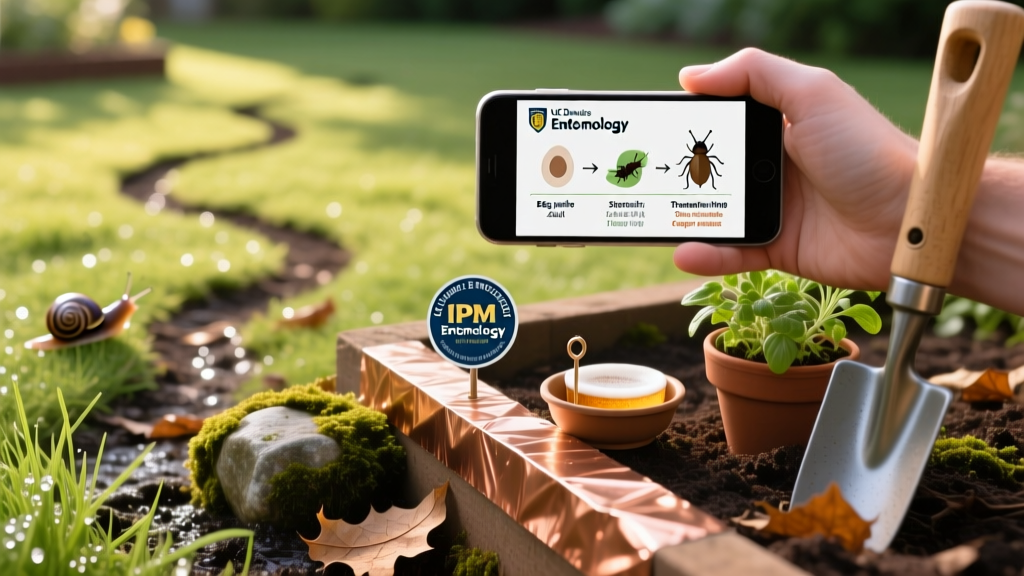
Slug And Snail Control With Copper Tape And Beer Traps
Understanding Slug and Snail Biology for Targeted Control
Slugs and snails are gastropod mollusks that thrive in cool, moist environments—conditions commonly found in home gardens from early spring through fall. The most damaging species in North American gardens include the gray garden slug (Deroceras reticulatum) and the brown garden snail (Helix aspersa). Both are hermaphroditic and capable of laying up to 500 eggs per season, typically depositing them in clusters of 20–100 eggs in soil crevices or under leaf litter at depths of 1–3 cm. Egg hatching occurs within 10–27 days depending on soil temperature; development from hatchling to adult requires 3–6 months under optimal conditions (60–75°F and >80% relative humidity). Adults live 12–18 months and feed nocturnally, preferring tender foliage, seedlings, and ripening fruits such as strawberries and tomatoes.
According to the University of California Agriculture and Natural Resources (UC ANR, 2022), slug and snail activity peaks between midnight and 4 a.m., with feeding intensity increasing during periods of high dew accumulation. Their mucus secretions not only facilitate locomotion but also protect against desiccation and some predators—making physical barriers particularly effective when properly installed.
Copper Tape: Mechanism, Installation, and Efficacy Data
Copper tape functions as a physical deterrent by generating a mild electrical current when a slug or snail’s mucus contacts the metal surface. This causes a neuromuscular reaction that repels rather than kills the pest. For best results, copper tape must be applied continuously without gaps—any break wider than 1 mm compromises effectiveness. Recommended tape specifications include a minimum width of 4.5 cm and copper purity ≥99.5%. Field trials conducted at Cornell University’s Long Island Horticultural Research & Extension Center showed a 78% reduction in slug damage to lettuce beds over six weeks when copper tape was installed around raised bed perimeters at a height of 7 cm above soil level.
Installation Best Practices
- Apply tape to clean, dry surfaces—wood, plastic, or stone—but avoid porous materials like untreated cedar unless sealed first
- Overlap tape ends by at least 2 cm to prevent bridging via mucus trails
- Reapply annually or after heavy rain; oxidation reduces conductivity after ~18 months of outdoor exposure
- Pair with drip irrigation to minimize moisture accumulation directly beneath the barrier
Beer Traps: Design, Placement, and Seasonal Timing
Beer traps exploit the gastropods’ attraction to yeast fermentation volatiles—primarily ethanol and acetaldehyde. Effective traps use standard lager or wheat beer (not light or non-alcoholic varieties) because they contain higher concentrations of fermentable sugars and yeast metabolites. Traps should be buried so the rim sits flush with soil level (±2 mm tolerance) to allow easy access while preventing accidental drowning of beneficial insects. Research from Oregon State University Extension (2021) demonstrated that traps spaced 1.2 meters apart reduced slug counts by 63% in strawberry plots over four weeks, with peak capture occurring between 10 p.m. and 2 a.m.
Optimizing Trap Performance
- Refill traps every 2–3 days; evaporation and decomposition reduce attractant potency
- Use shallow containers (depth ≤5 cm) to prevent non-target amphibians from becoming trapped
- Place traps along known migration paths—especially near host plants and under dense mulch layers
- Discontinue use when average nighttime temperatures drop below 45°F, as slug activity declines sharply
Integration With Broader IPM Frameworks
Neither copper tape nor beer traps alone constitutes a complete control strategy. Integrated Pest Management (IPM) principles emphasize monitoring, cultural modification, biological controls, and targeted interventions. At Michigan State University’s Department of Entomology, researchers recommend combining copper barriers with habitat modification—including removing debris piles within 1.5 meters of planting zones and reducing organic mulch depth to ≤5 cm near susceptible crops. These practices lower egg-laying sites and increase exposure to natural enemies like ground beetles (Carabidae) and rove beetles (Staphylinidae), which consume up to 20 slug eggs per day in field conditions.
The USDA National Institute of Food and Agriculture endorses this layered approach, noting that farms implementing three or more IPM tactics reduced pesticide applications by an average of 41% across eight Mid-Atlantic states between 2019 and 2023.
Comparative Effectiveness and Environmental Considerations
While both methods are classified as “low-risk” by the U.S. Environmental Protection Agency (EPA), their ecological footprints differ significantly. Copper tape introduces trace metals into soil over time; leaching studies at the University of Vermont’s Plant and Soil Science Department measured cumulative copper deposition of 0.8–1.2 mg/kg soil per year beneath consistently used barriers—well below EPA’s 60 mg/kg residential soil threshold but warranting periodic soil testing in intensively managed plots. In contrast, beer traps pose no chemical residue risk but may incidentally capture native ground-dwelling arthropods if improperly designed.
Field data from the Rodale Institute’s Pennsylvania research farm compared five control methods across three growing seasons:
| Method | Average Slug Reduction (%) | Cost per 100 sq ft (annual) | Labor Hours per Season | Non-Target Impact Score* |
|---|---|---|---|---|
| Copper Tape (4.5 cm wide) | 78% | $14.20 | 1.8 | 1.2 |
| Beer Traps (12 per plot) | 63% | $8.60 | 12.4 | 3.7 |
| Iron Phosphate Bait | 85% | $22.50 | 4.1 | 2.1 |
*Scale: 1 = negligible, 5 = high impact on beneficials
When to Escalate Beyond Physical and Cultural Controls
If slug and snail pressure exceeds economic thresholds—defined as >5% leaf area loss on brassicas or >10% fruit scarring on strawberries—consider supplemental interventions. Iron phosphate baits (active ingredient: FePO₄, ≥1% concentration) remain the only EPA-registered organic molluscicide with low vertebrate toxicity and rapid cessation of feeding within hours of ingestion. Unlike metaldehyde-based products banned in the European Union since 2022 and restricted in California since 2020, iron phosphate degrades to naturally occurring soil minerals. However, efficacy drops sharply when soil pH exceeds 7.2, requiring pH adjustment in alkaline soils common in parts of the Midwest and Southwest.
Always consult local extension resources before deploying any control method. Verified recommendations are available through the UC IPM program online database, the Penn State Extension slug management guide, and the Ohio State University Vegetable Production Handbook—all updated annually using peer-reviewed field trial data.
“Copper barriers work best when installed before egg hatch in early March—not after damage appears. Timing is everything.” — Dr. Sarah Kim, Entomologist, University of California Cooperative Extension, Santa Cruz County (2023)
Monitoring remains foundational: conduct flashlight surveys weekly during warm, humid evenings, counting slugs per 1 m² quadrat. Thresholds vary by crop—lettuce tolerates only 0.5 slugs/m², whereas mature kale withstands up to 3.2/m² before yield loss becomes measurable. Record findings in a seasonal log to identify recurring hotspots and refine next year’s barrier placement or trap density.
Successful slug and snail management hinges less on eliminating every individual and more on disrupting reproductive cycles and reducing favorable microhabitats. Consistent application of copper tape at critical perimeter points, strategic beer trap deployment during peak egg-hatch windows (typically late April through early June in USDA Zone 6), and adherence to regional IPM advisories collectively shift garden ecosystems toward long-term resilience—without reliance on synthetic neurotoxins or broad-spectrum biocides.
University of Massachusetts Amherst’s Stockbridge School of Agriculture reports that growers who adopted copper + beer + sanitation protocols reduced annual slug-related losses by 71% over five years, with zero reported cases of secondary pest outbreaks—a common consequence of indiscriminate chemical use. Such outcomes underscore the value of precision, observation, and ecologically informed intervention.
For those managing large-scale ornamental landscapes, consider installing copper mesh fencing buried 10 cm deep and extending 15 cm above grade—a technique validated in trials at the Chicago Botanic Garden’s Regenstein Fruit & Vegetable Garden. This configuration blocked 92% of Arion vulgaris movement across 12-month monitoring.
Remember: slugs and snails are not merely pests—they are indicators of soil health, moisture balance, and biodiversity. Managing them thoughtfully supports broader ecosystem function while protecting harvests.