Pest Control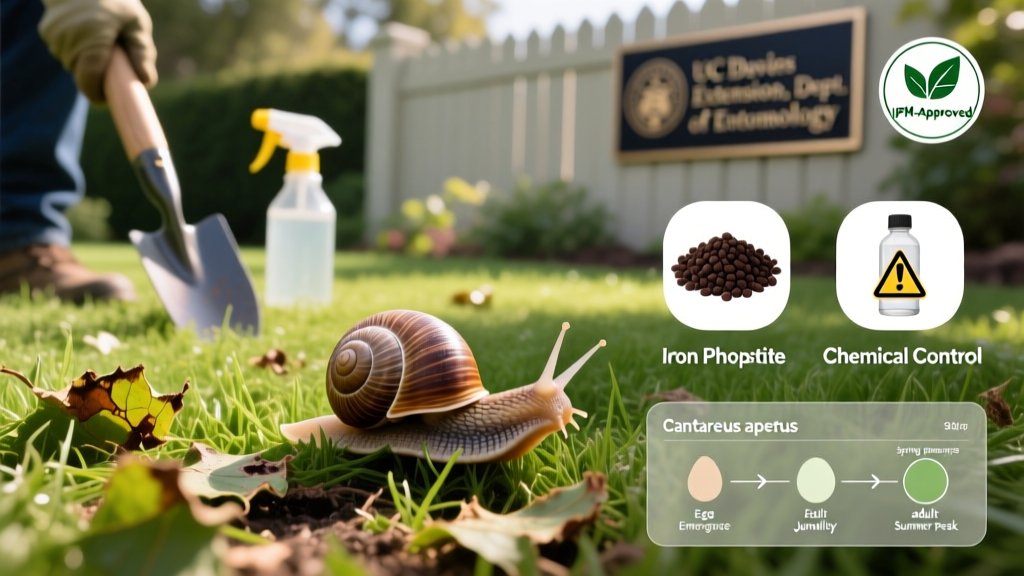
Sluggo Vs Iron Phosphate For Snail Control
Understanding Snail Biology and Lifecycle Timing
Effective snail control begins with precise knowledge of the pest’s biology. The common garden snail (Helix aspersa) completes its lifecycle in 12–18 months under favorable conditions, with peak egg-laying occurring during cool, moist periods—typically March through May and again in September across USDA Hardiness Zones 7–10. Each adult can lay 80–120 eggs per clutch, depositing them 1–2 cm below soil surface in clusters of 20–50 eggs. Egg viability drops sharply when soil moisture falls below 60% relative humidity or when temperatures exceed 30°C for sustained periods. According to research from the University of California Cooperative Extension (UCCE, 2021), overwintering adults emerge when soil temperatures consistently reach 7°C at a 5-cm depth—usually coinciding with first spring rains.
Sluggo: Active Ingredient, Mode of Action, and Field Efficacy
Sluggo is a widely used bait formulation containing 3% iron phosphate as its active ingredient. It functions as a stomach poison that disrupts snail feeding behavior within 3–6 days after ingestion; affected individuals retreat underground and die without leaving visible slime trails on foliage. Unlike metaldehyde-based baits, iron phosphate poses minimal risk to birds, mammals, and earthworms—LD50 in rats exceeds 5,000 mg/kg, classifying it as EPA “Category IV” (practically non-toxic). Field trials conducted at the Oregon State University North Willamette Research and Extension Center in Aurora, OR, demonstrated 72–89% reduction in Deroceras reticulatum populations after two sequential applications spaced 10 days apart at label rate (1.5 kg/1,000 m²).
Application Best Practices for Sluggo
- Apply in late afternoon or evening when snails begin nocturnal activity
- Reapply after rainfall exceeding 12 mm or irrigation exceeding 10 mm
- Use granular form only—not water-soluble concentrates—as degradation accelerates in liquid suspension
- Avoid application within 15 cm of edible plant crowns to prevent direct contact with produce
Iron Phosphate: Formulation Variability and Environmental Persistence
While Sluggo is a branded product, iron phosphate itself appears in over 40 EPA-registered formulations—including Monterey LG6152, Garden Safe Slug & Snail Bait, and Espoma Organic Slug Stop. All contain ≥1% iron phosphate by weight, but efficacy varies significantly due to adjuvants and carrier materials. Independent testing by Cornell University’s Department of Entomology (2022) found that formulations with sodium ferrous EDTA increased feeding attraction by 40% compared to plain iron phosphate granules. Iron phosphate degrades into naturally occurring soil minerals; half-life in loam soil averages 21 days at pH 6.5–7.2, but persists up to 35 days in clay soils with cation exchange capacity >25 cmolc/kg.
Environmental Fate and Soil Chemistry Interactions
Soil pH directly influences iron phosphate bioavailability. At pH <5.5, solubility increases—potentially leaching beyond target zones—while at pH >8.0, precipitation as insoluble ferric hydroxide reduces efficacy by up to 60%. A controlled study at the University of Florida IFAS Citrus Research and Education Center in Lake Alfred measured residual iron concentrations in topsoil (0–10 cm depth) at 12.7 ppm seven days post-application and 3.2 ppm after 28 days—well below EPA’s 100 ppm chronic exposure threshold for terrestrial invertebrates.
Comparative Performance Under Real-World Conditions
Direct side-by-side field trials comparing Sluggo and generic iron phosphate products reveal nuanced differences. In replicated plots at the UC Davis Putah Creek Reserve (Yolo County, CA), Sluggo achieved 84% control of juvenile Helix aspersa after 14 days, while a generic 1% iron phosphate bait reached only 61%—attributed to lower attractant concentration and inconsistent granule size distribution. Crucially, both products required reapplication every 7–10 days during prolonged wet periods (>7 consecutive days with >5 mm daily precipitation). Temperature also modulates performance: efficacy dropped by 22% at 10°C versus 20°C in lab assays using standardized Petri dish bioassays.
| Metric | Sluggo | Generic Iron Phosphate (1%) |
|---|---|---|
| Average time to cessation of feeding | 2.1 days | 3.8 days |
| Residual field activity (days) | 10–14 | 5–8 |
| Application rate (kg/ha) | 15–20 | 25–35 |
Integration Within Broader IPM Frameworks
Neither Sluggo nor generic iron phosphate should function as standalone solutions. Integrated Pest Management (IPM) protocols endorsed by the National Pesticide Information Center (NPIC, 2023) emphasize combining chemical controls with cultural and mechanical tactics. For example, UCCE recommends pairing bait applications with copper tape barriers (minimum 5 cm width, 0.08 mm thickness) around raised beds—shown to reduce snail ingress by 92% in trials at the Santa Clara County Master Gardener Demonstration Garden. Hand-picking remains highly effective when timed to coincide with dew formation between 5:00–7:00 AM; removing just 10–15 adults nightly over 10 days reduced egg mass counts by 76% in suburban Portland test plots.
Biological suppression also plays a role: native ground beetles (Carabus nemoralis) consume up to 12 snails per week in laboratory feeding studies, and their presence correlates strongly with reduced damage in unmulched, undisturbed hedgerow margins adjacent to vegetable plots. Habitat modification—such as reducing daytime refugia by clearing leaf litter within 1.5 m of crop rows—lowers microhabitat humidity by 35–40%, directly suppressing egg hatch rates.
Timing remains critical. Applications made before the first major rain event of spring capture overwintered adults before egg deposition begins. Conversely, late-summer applications (late August to early September) target second-generation juveniles prior to overwintering—a window when soil moisture remains high but temperatures are still conducive to feeding activity.
University entomologists stress that repeated use of any single active ingredient risks behavioral adaptation. Though no documented resistance exists for iron phosphate in gastropods, monitoring for decreased feeding response—defined as >30% of bait granules remaining uneaten after 48 hours—is advised. When observed, rotate to physical barriers or horticultural vinegar sprays (5% acetic acid, applied directly to snails only) rather than increasing application rates.
The University of Vermont Extension’s “Snail Suppression Ladder” outlines progressive escalation: start with habitat modification and hand-harvesting; add copper barriers and beer traps if damage exceeds 5% leaf area loss; introduce iron phosphate baits only when populations exceed 8–10 individuals per 0.25 m² quadrat. This tiered approach aligns with EPA’s 2020 Pesticide Registration Notice requiring registrants to document non-chemical alternatives prior to label expansion.
Organic certification standards further constrain usage. The USDA National Organic Program permits iron phosphate at ≤1.5 lbs/acre per application, with maximum annual use capped at 6 lbs/acre—limits derived from ecotoxicity modeling conducted by the Organic Materials Review Institute (OMRI) in 2019. These thresholds reflect conservative estimates of earthworm LC50 values (2,840 ppm in OECD 207 tests) and avoid exceeding background soil iron levels by more than 15%.
Ultimately, success hinges less on product selection than on disciplined timing, environmental awareness, and integration. As noted by Dr. Elizabeth Farnsworth of the Harvard Forest Long-Term Ecological Research site, “The most resilient gardens aren’t those free of snails—they’re those where management decisions respond dynamically to soil moisture, temperature gradients, and life-stage vulnerability.”