Gardening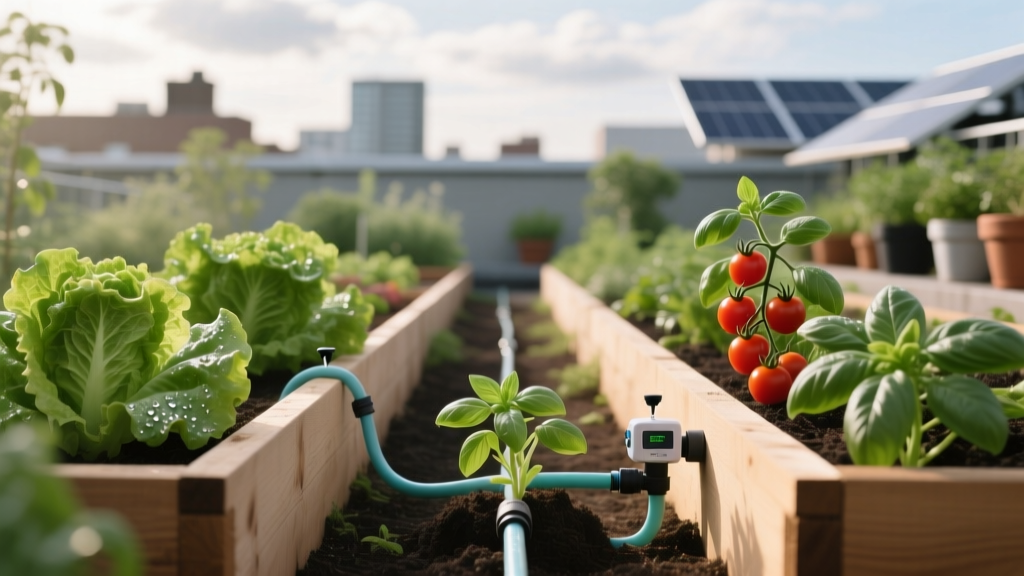
Best Smart Irrigation Systems For Automated Gardens
James MillerPublished
The Intersection of Smart Home Tech and Gardening
Gardening is no longer just about dirt under your fingernails; it is increasingly about data, automation, and smart home integration. As climate patterns become more erratic and municipal water restrictions tighten, relying on a manual watering can or a rudimentary mechanical timer is no longer the most efficient way to tend to your vegetable and flower beds. Enter the smart garden: a fully automated ecosystem that leverages Wi-Fi connectivity, soil moisture sensors, and real-time meteorological data to deliver the exact amount of water your plants need, precisely when they need it.
For home gardeners managing raised beds, container gardens, or expansive in-ground vegetable plots, smart irrigation eliminates the guesswork. It prevents the catastrophic overwatering that leads to root rot and fungal diseases, while simultaneously avoiding the underwatering that causes blossom end rot in tomatoes and splitting in root vegetables. By integrating your garden into your broader smart home ecosystem, you can monitor soil health from your smartphone, receive freeze alerts, and automate your drip irrigation based on hyper-local weather forecasts.
Core Components of an Automated Garden
Building a smart irrigation system requires a synergy between water delivery hardware and environmental sensors. Here are the foundational components you will need to upgrade your garden:
- Smart Irrigation Controllers: These replace traditional mechanical timers. They connect to your home Wi-Fi and use Evapotranspiration (ET) data to adjust watering schedules based on local temperature, humidity, wind, and rainfall.
- Soil Moisture Sensors: While weather data is useful, microclimates in your garden can vary. Wireless soil sensors measure volumetric water content (VWC) at the root zone, triggering the smart controller to water only when the soil drops below a specific threshold.
- Drip Irrigation Manifolds: Smart controllers operate best with low-flow drip systems. A proper manifold includes a backflow preventer, a mesh filter to protect emitters from debris, and a pressure regulator to drop standard household water pressure (60+ PSI) down to the 15-25 PSI required for drip lines.
Top Smart Irrigation Controllers Compared
Choosing the right brain for your garden depends on your existing smart home ecosystem, the number of watering zones you have, and your budget. Below is a comparison of the top smart controllers suited for garden automation.
| Controller Model | Connectivity | Zone Support | Weather Intelligence | Est. Cost |
|---|---|---|---|---|
| Orbit B-hyve XR | Wi-Fi | 6 Zones | WeatherSense (Advanced) | $130 |
| Rachio 3 | Wi-Fi | 8 Zones | Weather Intelligence Plus | $230 |
| Eve Aqua | Bluetooth / Thread | 1 Zone (Hose) | Native App / HomeKit | $150 |
| Wyze Sprinkler Controller | Wi-Fi | 8 Zones | Basic Weather Skip | $100 |
Step-by-Step Installation for a 4x8 Raised Bed
Let us look at a practical, actionable guide to automating a standard 4x8 foot raised vegetable bed. This setup utilizes a smart hose timer and a drip irrigation grid, perfect for renters or those who do not want to splice into their home's hardwired PVC sprinkler system.
Step 1: Assemble the Smart Manifold
Attach your smart hose faucet timer (such as the Orbit B-hyve Hose Faucet Timer) directly to the outdoor spigot. Next, screw in the drip irrigation manifold. The order of operations is critical: Smart Timer > Backflow Preventer > Filter > Pressure Regulator > 1/2-inch Poly Tubing Adapter. This ensures the sensitive internal solenoids of your smart timer are protected from back-siphonage and debris.
Step 2: Layout the Drip Grid
For a 4x8 raised bed, run 1/2-inch mainline tubing around the interior perimeter. From the mainline, use a punch tool to attach 1/4-inch drip lines with inline emitters spaced every 6 inches. Snake these lines back and forth across the bed, spacing the rows 8 to 10 inches apart. This grid ensures uniform moisture distribution, which is vital for shallow-rooted crops like lettuce and radishes, as well as deep-rooted tomatoes.
Step 3: Deploy Soil Moisture Sensors
Surface moisture is a poor indicator of root-zone hydration. Insert a wireless soil moisture sensor (like the Ecowitt WH51 or a Xiaomi Mi Flora) at a depth of 6 to 8 inches in the center of the bed. This targets the active root zone of most common vegetable crops. Pair the sensor with your smart home hub to create conditional watering triggers.
Programming Your Smart Garden for Maximum Yield
The true power of smart irrigation lies in its software. According to the Colorado State University Extension, smart irrigation controllers that utilize weather-based data can reduce outdoor water use by up to 40% compared to traditional clock timers. To achieve this, you must configure your system to use Evapotranspiration (ET) scheduling.
ET is the sum of evaporation from the soil surface and transpiration from the plant leaves. Advanced controllers like the Rachio 3 pull data from local weather stations to calculate daily ET rates. If your garden loses 0.2 inches of water to evaporation and plant transpiration on a hot Tuesday, the controller will automatically apply exactly 0.2 inches of water via the drip system that night, preventing both water waste and plant stress.
Pro-Tip for Smart Home Enthusiasts: If you use Apple HomeKit, Home Assistant, or Samsung SmartThings, you can create complex conditional automations. For example: "IF soil moisture drops below 35% AND local weather forecast predicts zero precipitation for the next 24 hours AND current time is between 4:00 AM and 6:00 AM, THEN trigger the smart hose timer for 15 minutes."
Water Conservation and Financial ROI
While the upfront cost of a smart irrigation kit—typically ranging from $150 to $300 for a single raised bed setup—may seem steep, the return on investment is realized through water conservation and increased crop yields. The EPA WaterSense program highlights that weather-based irrigation controllers can save the average home nearly 7,600 gallons of water annually. For gardeners in drought-prone regions where tiered water pricing penalizes high usage, the smart controller can pay for itself in a single growing season.
Furthermore, research from the University of California Agriculture and Natural Resources (UC ANR) emphasizes that drip irrigation combined with mulching delivers water directly to the root zone, reducing evaporation losses by up to 50%. When you pair this highly efficient delivery method with smart scheduling, you create a closed-loop system that maximizes every drop of water.
Seasonal Maintenance and Winterization
Automation does not mean zero maintenance. As the growing season ends, smart garden systems must be properly winterized to prevent catastrophic damage to the hardware. Water expands when it freezes, which will easily crack the internal brass solenoids of your smart hose timer and the plastic housing of your pressure regulator.
Before the first hard freeze, detach the smart timer and manifold from the spigot, drain all residual water by blowing through the lines, and store the electronics indoors. Leave the 1/2-inch and 1/4-inch drip lines in the raised bed, but ensure the ends are open so any condensation or rainwater can drain out naturally. Cover your raised bed with a layer of compost and a frost blanket, and your smart garden will be ready to seamlessly reboot the moment spring soil temperatures reach 60°F.
Conclusion
Integrating smart home automation into your gardening routine transforms a labor-intensive chore into a precise, data-driven science. By investing in a quality smart controller, deploying root-zone soil sensors, and utilizing low-flow drip irrigation, you insulate your garden from the unpredictability of nature. Whether you are growing heirloom tomatoes, delicate orchids, or a simple cut-flower garden, smart irrigation ensures your plants receive optimal hydration while freeing up your time to focus on the joy of gardening itself.
