
Landscaping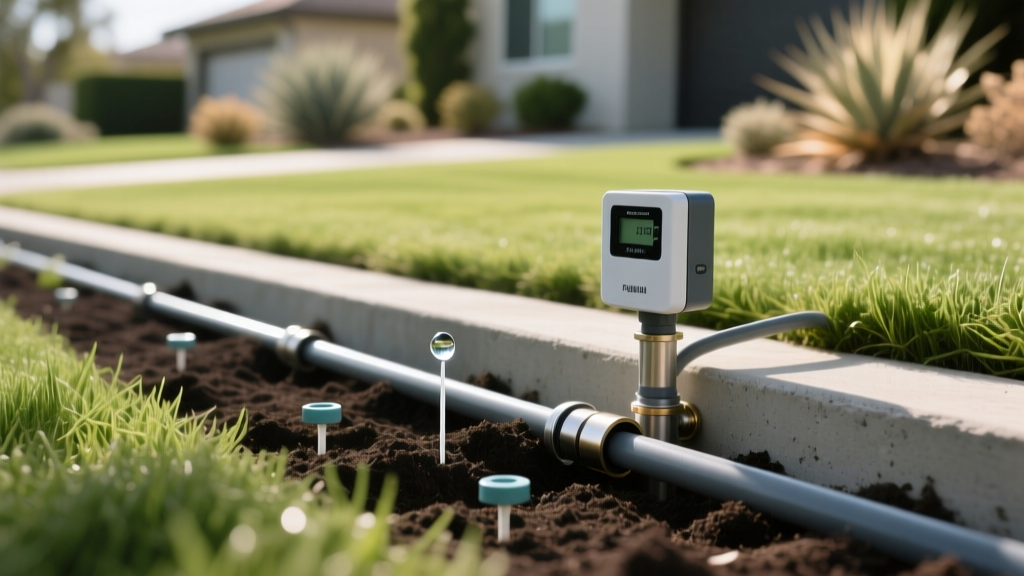
Smart Irrigation Systems for Automated Lawn Watering
James MillerPublished
The Shift Toward Automated Landscaping
The modern landscape is no longer just about selecting the right plants and laying down fresh mulch; it is about integrating intelligent technology to maintain those elements efficiently. For decades, homeowners relied on rudimentary mechanical timers to water their lawns. These traditional clock-based controllers operate on rigid schedules, completely blind to the actual environmental conditions of your yard. They water during rainstorms, ignore seasonal temperature shifts, and frequently contribute to massive water waste and turf disease.
Enter the era of smart home landscaping. By upgrading to a smart irrigation system, you transform your outdoor space into a responsive, automated ecosystem. According to the EPA WaterSense program, outdoor water use accounts for nearly 30 percent of total household water consumption, with up to 50 percent of that water wasted due to evaporation, wind, and inefficient watering schedules. Smart landscaping automation directly combats this waste, saving thousands of gallons of water annually while keeping your lawn impeccably healthy.
How Weather-Based Smart Controllers Work
At the core of any automated irrigation system is the smart controller. Unlike standard timers, smart controllers connect to your home Wi-Fi network and pull real-time data from local weather stations or hyper-local meteorological APIs. They calculate watering needs based on a concept known as Evapotranspiration (ET).
Evapotranspiration is the sum of evaporation from the land surface plus transpiration from plants. In simple terms, it measures how much moisture is leaving your soil and grass based on current solar radiation, temperature, humidity, and wind speed. When the ET rate is high (hot, dry, and windy days), the smart controller automatically extends watering durations. When the ET rate is low (cool, cloudy, or humid days), it reduces the runtime. If the API detects incoming rain or a recent freeze, the system automatically skips the scheduled cycle, protecting your landscape from overwatering and root rot.
Top Smart Irrigation Controllers Compared
Choosing the right brain for your irrigation system depends on your yard's complexity, your budget, and your preferred smart home ecosystem. Below is a comparison of the industry's leading smart controllers.
| Feature | Rachio 3 | Orbit B-hyve XR | Hunter Hydrawise (Pro-HC) |
|---|---|---|---|
| Starting Price | $229 (8-zone) | $279 (15-zone) | $350 (12-zone) |
| Weather Intelligence | Hyper-local, multi-source | WeatherSense technology | Hydrawise predictive API |
| Sensor Compatibility | Universal (with adapter) | Proprietary & Universal | Proprietary Hunter sensors |
| Smart Home Integration | Alexa, Google, HomeKit, IFTTT | Alexa, Google | Alexa, Google |
| Best For | Tech enthusiasts & Apple users | Large properties & DIYers | Pro landscapers & complex yards |
The Rachio 3 is widely considered the gold standard for residential smart home integration. Its seamless compatibility with Apple HomeKit and IFTTT allows for advanced automation routines, such as pausing watering when a smart weather station detects high wind speeds to prevent water drift.
The Orbit B-hyve XR offers excellent value for larger properties requiring more zones, featuring a robust weatherproof casing that can be mounted outdoors without an additional enclosure. Meanwhile, the Hunter Pro-HC bridges the gap between residential and commercial landscaping, offering advanced flow-meter integration to detect broken pipes and leak alerts directly to your smartphone.
Integrating Soil Moisture Sensors for Precision
While weather-based algorithms are highly accurate, they cannot tell you exactly what is happening beneath the surface of your soil. This is where soil moisture sensors become an indispensable component of automated landscaping. A smart controller tells the system when it should water based on the sky; a soil sensor tells the system when it must water based on the ground.
Soil moisture sensors, such as the Toro Precision Soil Sensor or the Hunter Soil-Clik, are buried in the root zone of your lawn or garden beds (typically 3 to 6 inches deep for turfgrass, and 12 inches deep for shrubs). They measure the volumetric water content of the soil. If the soil is already saturated, the sensor overrides the smart controller's weather-based schedule and skips the watering cycle. This dual-layered approach—combining predictive weather data with reactive soil telemetry—ensures your landscape receives exactly the amount of water it needs, down to the drop.
Hydrozoning: The Foundation of Smart Valves
Automation cannot fix a poorly designed irrigation layout. To maximize the efficiency of your smart controller, your landscape must be divided into distinct 'hydrozones.' Hydrozoning is the practice of grouping plants with similar water, sun, and soil requirements onto the same irrigation valve.
- Zone 1: Full-Sun Turfgrass. Requires high water volume, typically serviced by rotary nozzles or high-efficiency spray heads.
- Zone 2: Shaded Turf or Groundcover. Requires 30-50 percent less water than full-sun turf due to lower ET rates.
- Zone 3: Drought-Tolerant Shrubs and Trees. Best serviced by drip irrigation, which delivers water directly to the root zone at a slow rate (measured in gallons per hour rather than inches per minute).
- Zone 4: Seasonal Flower Beds. Requires frequent, shallow watering, entirely separate from deep-rooted perennials.
By configuring your smart controller to recognize these distinct hydrozones, the software will automatically apply different watering algorithms to each valve, preventing the common landscaping error of drowning shade plants while starving the sunny lawn.
Advanced Automation: The Cycle and Soak Method
One of the most powerful automation features of smart controllers is the 'Cycle and Soak' function. Many landscapes suffer from soil compaction or heavy clay content, which limits the soil's infiltration rate. If a traditional sprinkler runs for 20 continuous minutes, the soil reaches its saturation point after 8 minutes, and the remaining 12 minutes of water becomes wasteful runoff, carrying fertilizers and pesticides into storm drains.
The Cycle and Soak algorithm automatically splits a long watering duration into multiple short bursts. For example, if a zone requires 15 minutes of water, the smart controller will run the zone for 5 minutes, then pause for 45 minutes to allow the water to percolate deeply into the clay, before returning for a second 5-minute cycle, and finally a third. This automated pacing promotes deep root growth, making your lawn more drought-resilient and reducing your overall water consumption.
Smart Home Integration and Geofencing
True landscaping automation extends beyond the sprinkler valves. By integrating your irrigation system with broader smart home platforms like IFTTT (If This Then That), you can create highly customized triggers. For instance, you can set a routine that automatically waters the lawn at 4:00 AM, but only if your smart weather station reports that the wind speed is below 10 mph. High winds cause severe water distortion and evaporation; automating a wind-delay ensures every drop hits the soil.
Additionally, geofencing can be utilized for drip irrigation zones in garden beds. If you have potted plants or a delicate vegetable garden on a drip system, you can link your irrigation to your home's occupancy status, ensuring that high-traffic outdoor areas are not being watered while you and your guests are actively using the patio space.
Financial ROI, Costs, and Utility Rebates
The initial investment for a smart landscaping automation setup typically ranges from $200 to $400 for the controller, plus $40 to $70 per soil moisture sensor. Professional installation by a licensed landscaping contractor may add $150 to $300 to the total cost. However, the return on investment is remarkably swift.
According to data cited by the Texas A&M AgriLife Extension, smart controllers can reduce outdoor water use by 15 to 30 percent compared to traditional clock timers. For a homeowner paying premium tiered water rates during the summer months, this translates to annual savings of $100 to $250. Furthermore, because smart controllers are proven to conserve municipal water supplies, many local water districts and utility companies offer aggressive rebate programs. It is highly common for municipalities to rebate 50 to 100 percent of the purchase price of an EPA WaterSense-certified smart controller, effectively making the automation upgrade free while permanently lowering your monthly utility bills.
Conclusion
Upgrading to a smart irrigation system is one of the most impactful landscaping improvements a homeowner can make. By leveraging real-time weather data, soil moisture telemetry, and advanced cycle-and-soak algorithms, you remove the guesswork from lawn care. The result is a vibrant, deeply rooted landscape that thrives in any climate, all while operating silently and efficiently in the background of your smart home ecosystem.

