
Landscaping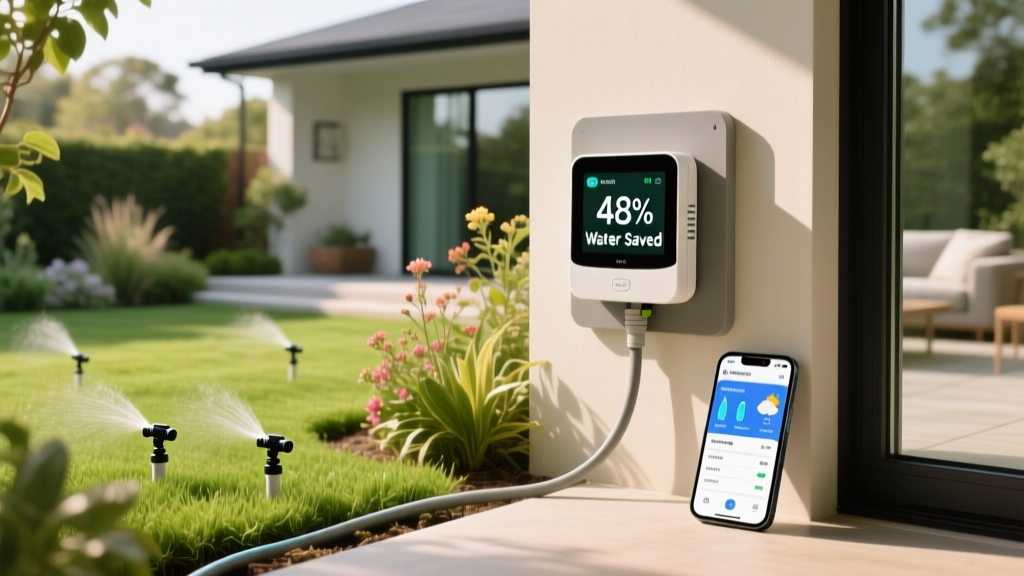
Smart Irrigation Controllers: Automate Landscape Watering
David ParkPublished
The Evolution of Landscape Automation
Landscaping is no longer just about planting the right shrubs, building retaining walls, or laying perfectly level sod. Today, sustainable landscape design heavily relies on integrating technology to create resilient, low-maintenance outdoor environments. At the forefront of this smart home revolution is the automated irrigation controller. By replacing outdated, rigid timer systems with intelligent, data-driven hubs, homeowners can dramatically reduce water waste, lower utility bills, and promote deeper, healthier root systems in their turf and garden beds.
Traditional irrigation timers operate on a fixed schedule, blindly watering your lawn whether it is experiencing a drought or a torrential downpour. Smart irrigation controllers, however, connect to your home Wi-Fi network and pull real-time environmental data to adjust watering schedules dynamically. According to the Environmental Protection Agency (EPA) WaterSense program, replacing a standard clock timer with a WaterSense-labeled smart controller can save the average home nearly 7,600 gallons of water annually. When scaled across millions of homes, the water conservation impact is monumental.
Weather-Based vs. Soil Moisture Controllers
When planning your landscape automation, it is crucial to understand the two primary types of smart controllers available on the market:
1. Weather-Based (ET) Controllers
These are the most common and popular smart home devices. They utilize local weather stations and hyper-local meteorological data to calculate Evapotranspiration (ET)—the rate at which water evaporates from the soil and transpires from plant leaves. By analyzing variables such as temperature, humidity, solar radiation, and wind speed, ET controllers automatically shorten or lengthen watering durations. If a rainstorm is forecasted, the system will preemptively skip the scheduled cycle.
2. Soil Moisture Sensor Controllers
These systems rely on physical probes buried in the root zones of your landscape beds or turf. The sensors measure the actual volumetric water content in the soil. While highly accurate, they require more invasive installation and periodic calibration. Many advanced landscapers use a hybrid approach, pairing a weather-based smart controller with a secondary soil moisture sensor for high-value garden beds or shaded areas that dry out at different rates than the main lawn.
Top Smart Irrigation Controllers Compared
Choosing the right hub depends on your landscape's complexity, your budget, and your preferred smart home ecosystem. Below is a comparison of the industry's leading smart irrigation controllers:
| Feature | Rachio 3 | Hunter Hydrawise Pro-HC | Orbit B-hyve XD |
|---|---|---|---|
| Estimated Cost | $229 - $279 | $350 - $450 | $179 - $219 |
| Max Zones | 8 or 16 | 6 to 22 (Expandable) | 8 or 16 |
| Smart Home Integration | Apple HomeKit, Alexa, Google, IFTTT | Alexa, Hunter App Ecosystem | Alexa, Google, B-hyve App |
| Weather Source | Weather Intelligence Plus (Hyper-local) | Hydrawise (Local Stations) | Weather Sense (Local) |
| EPA WaterSense Certified | Yes | Yes | Yes |
| Best For | Tech enthusiasts & Apple Home users | Complex landscapes & pro installers | Budget-conscious DIY upgrades |
Step-by-Step Installation and Zone Configuration
Upgrading to a smart controller is a highly accessible DIY landscaping project that typically takes 45 to 90 minutes. Before beginning, ensure you have a screwdriver, wire strippers, and a smartphone ready for setup.
Hardware Installation
- Power Down: Turn off the power to your existing irrigation controller at the circuit breaker to avoid shorting the 24VAC transformer.
- Label and Document: Take a high-resolution photo of your existing wiring. Label each zone wire (usually 18-gauge multistrand copper) with painter's tape corresponding to the station number.
- Mount the New Hub: Most smart controllers utilize a mounting bracket that requires two screws. If mounting outdoors, ensure you purchase a weather-resistant enclosure and use waterproof wire nuts for the transformer connections.
- Wire the Zones: Insert the stripped ends of your zone wires and the common wire (usually white or black) into the corresponding push-in or screw terminals on the new smart controller.
- Connect to Wi-Fi: Restore power, download the manufacturer's app, and connect the device to your 2.4GHz home Wi-Fi network.
Software Configuration: The Secret to Landscape Health
The physical installation is only half the battle. The true magic of landscape automation happens in the app's zone configuration. To prevent runoff and promote deep root growth, you must input the correct environmental data for each zone:
- Soil Type: Clay soils absorb water slowly (approx. 0.2 inches per hour), while sandy soils absorb quickly (1.0+ inches per hour). Entering this data allows the controller to utilize 'Cycle and Soak' methods, breaking a 20-minute watering session into three shorter bursts to prevent puddling and erosion.
- Vegetation Type: Turfgrass requires different watering depths compared to deep-rooted shrubs or drought-tolerant xeriscaping beds.
- Sprinkler Head Type: Rotor heads apply water much slower than fixed spray heads. The app will automatically adjust the run times to ensure uniform precipitation rates across the zone.
- Sun Exposure: Classify zones as full sun, partial shade, or full shade to adjust the baseline evaporation rates.
Integrating with Smart Home Ecosystems
A true smart home extends its automation to the exterior perimeter. By integrating your irrigation controller with platforms like Apple HomeKit, Amazon Alexa, or IFTTT (If This Then That), you can create powerful, automated landscaping routines.
For example, using IFTTT, you can program an applet that states: 'If the National Weather Service forecasts more than 0.5 inches of rain in my zip code within the next 12 hours, then skip tomorrow's irrigation schedule.' Furthermore, if you have smart soil moisture sensors integrated into your garden beds, you can trigger your smart home hub to send a push notification to your phone when your prized hydrangeas are experiencing moisture stress, allowing you to manually override the system from your office.
Troubleshooting Common Smart Irrigation Issues
While smart controllers are highly reliable, integrating technology with outdoor landscaping elements can occasionally present challenges. Understanding how to troubleshoot these issues ensures your automated system runs seamlessly throughout the growing season.
Wi-Fi Connectivity Dropouts
Outdoor walls, brick veneers, and stucco can severely degrade Wi-Fi signals. If your controller frequently loses connection to the cloud, it may default to a basic timer mode, negating the water-saving benefits. To resolve this, consider installing a weatherproof Wi-Fi range extender in an exterior outlet near the controller, or upgrade to a mesh Wi-Fi system with an outdoor node. Ensure your controller is connected to the 2.4GHz band, as it offers better penetration through exterior walls than the 5GHz band.
Transformer and Wiring Faults
Smart controllers require a consistent 24VAC power supply. If your app displays a 'Master Valve Error' or 'Short Circuit' warning, the issue is rarely the smart hub itself. Instead, inspect your valve manifold in the garden beds. Rodents chewing through 18-gauge wires, or water infiltrating a cracked solenoid, are the most common culprits. Use a multimeter to test the transformer output and the continuity of each zone wire to isolate the physical break in the landscape.
Micro-Climate Calibration
Sometimes, a zone may still appear too dry or too wet despite the smart controller's ET adjustments. This usually occurs in micro-climates—such as a narrow strip of turf between a driveway and a south-facing brick wall, which radiates intense heat. In these cases, use the app's 'Custom Shade' or 'Water Budget' sliders to manually increase the baseline water requirement for that specific zone by 10% to 15%, allowing the algorithm to scale from a more accurate starting point.
Cost Analysis, ROI, and Utility Rebates
The upfront cost of a smart irrigation controller ranges from $150 for basic models to over $400 for professional-grade, multi-zone systems. However, the return on investment is accelerated by two main factors: reduced water bills and municipal rebates.
Because outdoor water use accounts for nearly 30% of total household water consumption—spiking to 60% in arid regions during summer months—the water savings generated by ET-based scheduling often pay for the device within one to two irrigation seasons. Furthermore, many local water municipalities and conservation districts actively incentivize the adoption of smart landscaping technology.
'Many water utilities offer rebates that cover 50% to 100% of the purchase price of an EPA WaterSense-labeled smart controller. Homeowners should consult their local water provider or search regional conservation databases before purchasing to maximize their savings.' — Penn State Extension
Additionally, the Irrigation Association emphasizes that smart watering not only conserves municipal water supplies but also reduces the energy required to treat and pump that water, lowering the overall carbon footprint of your property's maintenance.
Professional Installation vs. DIY Costs
For homeowners who are uncomfortable working with electrical wiring or have complex, multi-acre landscapes with master valves and pump start relays, hiring a licensed landscaping professional is recommended. A certified irrigation contractor will typically charge between $450 and $800 for a complete smart controller upgrade, which includes the cost of the unit, labor, wire splicing, and system-wide auditing of the sprinkler heads. While this increases the initial investment, a professional audit ensures that broken nozzles and misaligned spray patterns are fixed, ensuring the smart software has a physically sound hardware system to manage.
Conclusion
Automating your landscape irrigation is one of the most impactful smart home upgrades you can make. It bridges the gap between lush, beautiful curb appeal and responsible environmental stewardship. By selecting the right smart controller, meticulously configuring your zone data, and leveraging utility rebates, you can ensure your lawn and garden thrive on autopilot, saving you time, money, and our most precious natural resource.

