
Landscaping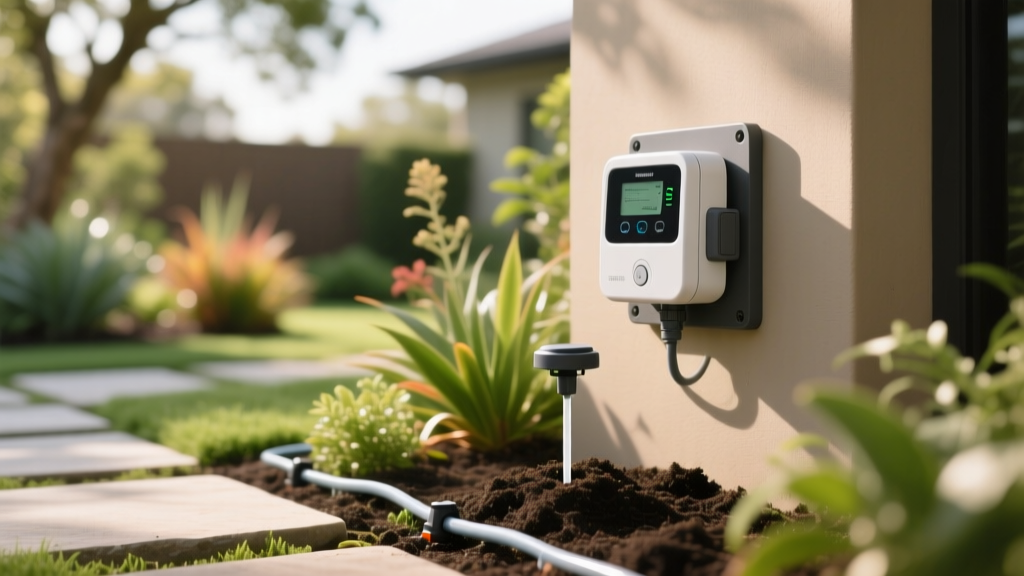
Smart Irrigation Controllers: Automate Landscape Watering
Robert HayesPublished
The Shift to Smart Landscape Automation
As smart home technology continues to evolve, the automation of outdoor spaces has become a priority for modern homeowners and landscape professionals alike. While smart thermostats and security cameras often steal the spotlight, the most impactful automation upgrade you can make for your property's health and your wallet lies in the garden: the smart irrigation controller. Traditional timer-based sprinkler systems are notoriously inefficient, often watering lawns and garden beds during rainstorms or applying the same volume of water to shade-loving hostas and sun-baked turfgrass. By integrating Wi-Fi-enabled smart controllers and wireless soil moisture sensors, you can transform your landscape into a highly efficient, self-regulating ecosystem.
Why Weather-Based Automation Matters
According to the EPA WaterSense program, outdoor water use accounts for 30% to 60% of total household water consumption, with up to 50% of that water wasted due to evaporation, wind, and inefficient watering schedules. Smart irrigation controllers solve this problem by utilizing Evapotranspiration (ET) data. These devices connect to local weather stations via your home's Wi-Fi network to monitor real-time variables such as temperature, humidity, solar radiation, and wind speed. When a rainstorm is approaching or the ambient humidity spikes, the controller automatically delays or cancels scheduled watering cycles. This level of automation not only conserves a vital natural resource but also prevents the fungal diseases and root rot that plague overwatered landscape beds.
Top Smart Irrigation Controllers Compared
Choosing the right hub for your landscape automation depends on your yard's complexity, budget, and desire for professional-grade telemetry. Below is a comparison of the industry's leading smart controllers.
| Feature | Rachio 3 (8-Zone) | Orbit B-hyve XR | Hunter Hydrawise PRO-HC |
|---|---|---|---|
| Estimated Cost | $229 | $199 | $285 |
| Weather Intelligence | Weather Intelligence Plus | WeatherSense | Hydrawise Predictive |
| Sensor Compatibility | Soil, Rain, Freeze, Flow | Rain, Freeze | Soil, Rain, Freeze, Flow |
| Best Application | DIY Homeowners & Smart Home Integration | Budget-Conscious Upgrades | Complex Landscapes & Pro Installers |
Rachio 3 Smart Sprinkler Controller
The Rachio 3 is widely considered the gold standard for DIY smart home landscaping. Its standout feature is 'Weather Intelligence Plus,' which utilizes hyper-local weather data to make micro-adjustments to your watering schedule. It integrates seamlessly with platforms like Apple HomeKit, Amazon Alexa, and Google Home, allowing you to trigger specific landscape zones via voice commands. For garden beds utilizing drip irrigation, Rachio's 'Cycle and Soak' feature is invaluable, breaking up long watering durations into shorter intervals to prevent runoff on sloped terrain or heavy clay soils.
Orbit B-hyve XR
For those looking to automate their landscape without breaking the bank, the Orbit B-hyve XR offers robust WeatherSense technology at a lower entry price. While its third-party smart home integrations are slightly more limited than the Rachio, its proprietary app is highly intuitive. The XR model supports up to 16 zones, making it ideal for larger properties that feature distinct landscaping areas, such as a front lawn, a rear vegetable garden, and perimeter shrubbery.
Hunter Hydrawise PRO-HC
When managing high-end landscapes with diverse microclimates, the Hunter PRO-HC paired with the Hydrawise software is unmatched. It supports advanced flow meters, meaning the system can detect broken pipes or clogged drip emitters in your garden beds and automatically shut off the zone while sending an alert to your smartphone. This level of telemetry is crucial for protecting expensive hardscaping and mature specimen trees from water damage or drought stress.
Integrating Soil Moisture Sensors for Precision Watering
While weather-based controllers are excellent for general scheduling, they cannot measure the actual moisture content in your soil. This is where wireless soil moisture sensors become a critical component of landscape automation. A study published by the University of Florida IFAS Extension highlights that combining smart controllers with soil moisture sensors can reduce residential irrigation water use by an additional 20% to 40% compared to weather-based controllers alone.
Products like the Hunter Soil-Clik (approx. $65) or the Toro Precision Soil Sensor (approx. $75) are buried directly in the root zone of your most sensitive landscape beds. For example, a shaded garden bed filled with hydrangeas and ferns will retain moisture much longer than a sunny patch of Bermuda grass. By wiring a soil sensor to the specific zone controlling the shaded bed, the smart controller will override the weather schedule if the soil moisture remains above the predetermined threshold (typically set around 40% volumetric water content for most ornamentals).
Strategic Zoning for Automated Landscapes
Automation can only be as effective as the physical layout of your irrigation system. To maximize the efficiency of your smart controller, your landscape must be properly zoned based on hydrozones—grouping plants with similar water requirements together.
- Zone 1: Turfgrass (High Water Demand). Lawns require frequent, deep watering to encourage deep root growth. Smart controllers should be set to deliver 1 to 1.5 inches of water per week, utilizing the 'Cycle and Soak' method to ensure water penetrates 6 inches into the soil without pooling.
- Zone 2: Ornamental Shrubs and Perennials (Moderate Water Demand). These beds should be outfitted with drip irrigation lines. Drip systems apply water directly to the root zone at a slow rate (typically 0.5 to 1.0 gallons per hour per emitter). Because drip is highly efficient, smart controllers should run these zones for 30 to 45 minutes, but only 1 to 2 times per week.
- Zone 3: Xeriscaping and Native Plants (Low Water Demand). Once established, native plants and drought-tolerant succulents require minimal supplemental watering. These zones should be heavily restricted, relying primarily on soil moisture sensors to trigger watering only during severe, prolonged droughts.
Step-by-Step Installation and Wi-Fi Requirements
Upgrading from a legacy timer to a smart controller is a straightforward weekend project, provided you have a strong Wi-Fi signal in your garage or wherever your irrigation manifold is housed.
- Power Down and Document: Turn off the power to your existing controller. Before removing any wires, take a clear, well-lit photograph of the wiring terminal block. Label each wire with painter's tape corresponding to its zone number.
- Mount the New Hub: Most smart controllers, like the Rachio 3, are designed for indoor use. If your system is located outdoors, you must purchase a weatherproof enclosure (approx. $40) and ensure the Wi-Fi signal reaches the yard. Consider installing a Wi-Fi extender if the signal drops below -70 dBm at the controller's location.
- Wire the Terminals: Connect your zone wires to the corresponding numbered terminals on the smart hub. Connect the common wire (usually white or black) to the 'C' terminal, and the master valve or pump start relay to the 'M' or 'P' terminal.
- Connect to 2.4GHz Wi-Fi: Like most smart home devices, irrigation controllers require a 2.4GHz Wi-Fi network. They do not support 5GHz bands due to the shorter range and poor wall-penetration capabilities of higher frequencies.
- Calibrate the App: Open the manufacturer's app and input your specific landscape data. You will need to define the soil type (e.g., clay loam, sandy), plant type, sun exposure, and sprinkler head type (rotor vs. spray) for every single zone. This data allows the algorithm to calculate precise run times.
Cost Analysis and Return on Investment
The initial investment for a comprehensive smart landscape automation setup includes the controller ($199–$285), optional soil sensors ($65–$100 each), and potentially a Wi-Fi extender or weatherproof enclosure ($40–$80). Total upfront costs generally range from $250 to $450 for a standard residential property.
However, the return on investment is remarkably swift. The Irrigation Association notes that smart irrigation technologies are pivotal in reducing peak summer water demand. For a homeowner in a region with tiered water pricing or high municipal water rates (such as the American Southwest or parts of California), saving 15,000 to 20,000 gallons of water annually can reduce summer water bills by $30 to $60 per month. In many cases, the smart controller pays for itself in water savings within a single 90-day summer season, all while ensuring your landscape remains lush, healthy, and perfectly tailored to its environment.
Conclusion
Embracing smart home automation in your landscaping is no longer a luxury reserved for commercial properties; it is an accessible, highly effective strategy for the modern homeowner. By replacing outdated timers with intelligent, weather-responsive controllers and supplementing them with soil moisture sensors, you take the guesswork out of garden care. You will spend less time manually adjusting dials and worrying about drought restrictions, and more time enjoying a vibrant, sustainably managed outdoor living space.

