Gardening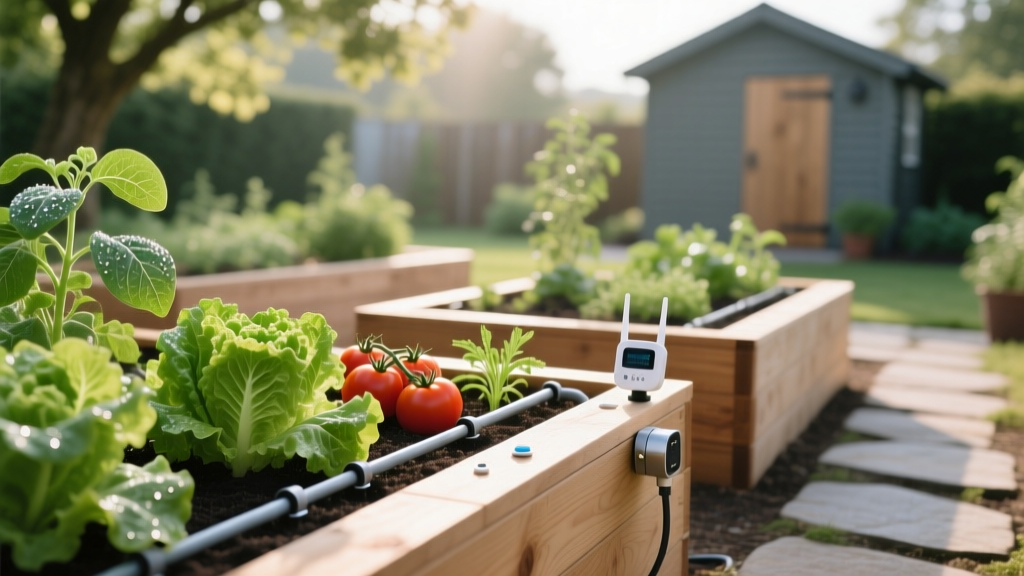
Best Smart Irrigation for Raised Bed Vegetable Gardens
Sarah ChenPublished
The Rise of Smart Gardening: Why Automate Your Raised Beds?
Raised bed vegetable gardening has exploded in popularity, offering superior soil drainage, fewer weeds, and higher yields per square foot. However, the very feature that makes raised beds so effective—excellent drainage—also presents a unique challenge: they dry out much faster than traditional in-ground gardens. During the peak heat of mid-summer, a raised bed filled with a porous mix of compost, peat moss, and vermiculite may require watering twice a day. This is where smart home automation transitions from a luxury to an absolute necessity for the modern gardener.
Automating your garden irrigation is not just about saving time; it is about precision agriculture on a micro-scale. Vegetables like tomatoes and peppers require deep, consistent moisture to prevent blossom end rot, while shallow-rooted crops like lettuce and radishes need frequent, light watering. By integrating smart irrigation controllers with drip systems, you can deliver the exact amount of water directly to the root zone, eliminating the guesswork and drastically reducing water waste. According to the EPA WaterSense program, replacing a standard clock-based timer with a smart, weather-based irrigation controller can save an average home up to 7,600 gallons of water annually while maintaining healthier landscapes and gardens.
The Unique Watering Needs of Raised Bed Vegetables
Before selecting a smart home device, it is crucial to understand the horticultural science behind raised bed hydration. Overhead watering with oscillating sprinklers is highly inefficient for vegetable gardens. It wets the foliage, creating a breeding ground for fungal diseases such as powdery mildew and early blight, which devastate tomato and squash crops. Furthermore, overhead watering leads to high evaporation rates and soil compaction on the bed surface.
Drip irrigation is the undisputed gold standard for raised beds. When paired with a smart controller, a drip system applies water slowly at a rate of 0.5 to 1.0 gallons per hour (GPH) per emitter. This slow percolation ensures that water reaches deep into the soil profile, encouraging robust, deep root systems. The Oregon State University Extension notes that drip irrigation systems operate at 90% water efficiency compared to the 50-70% efficiency of traditional sprinklers, making them the perfect partner for automated smart valves.
Top Smart Controllers for Garden Drip Systems
When designing a smart garden, the controller is the brain of the operation. Unlike traditional lawn sprinkler systems that use 24-volt hardwired valves, most raised bed gardens rely on hose-bibb (spigot) driven systems. Here are the top smart home devices tailored for garden automation:
1. Orbit B-hyve Smart Hose Faucet Timer
For the average home gardener with one to three raised beds, the Orbit B-hyve is the most practical entry point. It screws directly onto your outdoor spigot and connects to your home Wi-Fi network. Using Orbit’s WeatherSense technology, the device pulls hyper-local weather data to automatically adjust watering schedules based on rainfall, temperature, and evapotranspiration rates. It is ideal for running 1/2-inch mainline drip tubing equipped with a pressure regulator.
2. Rachio 3 Smart Sprinkler Controller
If your garden features multiple raised beds with distinct watering zones (e.g., Zone 1 for deep-rooted tomatoes, Zone 2 for shallow herbs), the Rachio 3 is the ultimate smart home hub. While traditionally used for lawns, it can easily be adapted for garden drip systems by connecting it to 24V anti-siphon drip valves. The Rachio 3 integrates seamlessly with platforms like Apple HomeKit, Amazon Alexa, and Google Home, allowing you to trigger garden watering via voice commands or complex smart home routines.
3. Gardena Smart Water Control
Popular in Europe and gaining traction globally, the Gardena Smart System offers a holistic approach. It pairs a smart water valve with Bluetooth-enabled soil moisture sensors placed directly in the raised beds. This closed-loop system ensures that irrigation only triggers when the soil moisture drops below a specific threshold, overriding weather forecasts if the soil is already saturated from a previous manual watering or unreported micro-climate rain.
Comparison Chart: Smart Controllers for Drip Irrigation
| Smart Controller | Best Use Case | Est. Cost | Weather Intelligence | Soil Sensor Support |
|---|---|---|---|---|
| Orbit B-hyve (Hose) | 1-2 Beds / Beginner | $60 - $80 | Yes (WeatherSense) | No |
| Rachio 3 (8-Zone) | Multi-Bed / Advanced | $150 - $230 | Yes (Weather Intelligence Plus) | Yes (Add-on flow meters) |
| Gardena Smart Hub | Precision Moisture Control | $120 - $160 | Yes (via App integration) | Yes (Native Bluetooth) |
Step-by-Step Guide to Automating Your Raised Bed Drip System
To achieve the perfect smart garden setup, you must pair your automated controller with a properly engineered drip layout. Follow these actionable steps to build your system:
Step 1: Install the Spigot Manifold and Pressure Regulator
Drip tubing is designed to operate at low pressure, typically between 15 and 25 PSI. Standard home water pressure (50-80 PSI) will blow the fittings apart and damage the emitters. Attach a brass hose manifold to your spigot, followed by a 25-PSI pressure regulator and a 200-mesh drip filter to prevent mineral deposits from clogging your micro-emitters.
Step 2: Connect the Smart Valve
Thread your smart hose timer (like the Orbit B-hyve) directly onto the filter. Ensure the device is mounted in a position where its internal Wi-Fi antenna can reach your home router without signal degradation caused by thick exterior walls or metal siding.
Step 3: Lay the Mainline and Micro-Tubing
Run 1/2-inch blank polyethylene mainline tubing along the edge of your raised beds. For a standard 4x8-foot raised bed, punch holes into the mainline every 12 inches and insert 1/4-inch micro-tubing with pre-installed inline emitters (spaced 6 inches apart, rated at 0.5 GPH). Lay these lines in a grid pattern across the bed to ensure total, uniform soil saturation.
Step 4: Calibrate the Smart App
Open your smart controller app and configure the zone settings. Select "Drip Irrigation" as the nozzle type, and set the soil type to "Loam" or "Sandy Loam," which most closely mimics standard raised bed soil mixes. Set the allowed watering window to the early morning hours (e.g., 5:00 AM to 7:00 AM). Penn State Extension experts recommend early morning watering to maximize absorption before the sun drives evaporation, while ensuring foliage remains dry to deter slugs and fungal pathogens.
Integrating Soil Moisture Sensors for Precision Watering
While weather-based algorithms are highly effective, they cannot account for the unique micro-climates of your specific yard or the rapid drainage characteristics of custom soil blends like Mel's Mix. To elevate your smart garden from automated to truly intelligent, integrate wireless soil moisture sensors.
Devices like the Ecowitt WH51 Soil Moisture Sensor connect to a smart home hub and transmit real-time volumetric water content (VWC) data directly to platforms like Home Assistant or Apple HomeKit. By creating a smart home automation routine, you can program your smart irrigation valve to trigger only when the VWC drops below 20% AND the local weather forecast predicts no rain for the next 12 hours. This dual-verification method guarantees that your vegetables never suffer from drought stress or root rot due to overwatering.
Cost Breakdown and ROI of Smart Garden Automation
Investing in smart home garden automation requires upfront capital, but the return on investment is realized through water savings, plant survival, and increased crop yields. Here is a typical cost breakdown for automating a 4x8-foot raised bed:
- Smart Hose Timer (Orbit B-hyve): $70
- Pressure Regulator & Filter Kit: $15
- 1/2" Mainline Tubing (50 ft): $12
- 1/4" Drip Lines with Emitters (100 ft): $25
- Brass Fittings and Punch Tools: $18
- Total Initial Investment: ~$140
Considering that a single failed crop of heirloom tomatoes due to blossom end rot (caused by inconsistent watering) can cost a gardener over $50 in lost harvest value, the smart controller pays for itself in a single growing season. Furthermore, by eliminating the need to manually drag hoses and adjust cheap mechanical timers, you reclaim dozens of hours over the summer to focus on pruning, trellising, and harvesting.
Conclusion
Smart home automation is no longer confined to indoor thermostats and security cameras; it has firmly taken root in the garden. By pairing a weather-intelligent controller with a low-pressure drip system, you provide your raised bed vegetables with the precise, consistent hydration they need to thrive. Whether you opt for a simple hose-bibb timer or a fully integrated soil-moisture-sensing network, automating your irrigation is the single most effective upgrade you can make to ensure a bountiful, disease-free harvest year after year.
