Gardening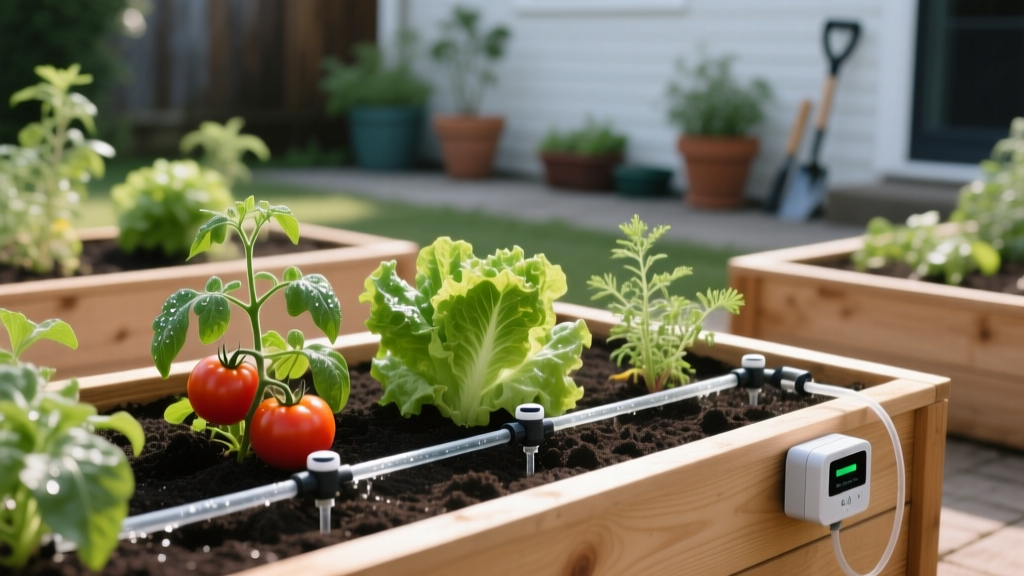
Smart Irrigation Systems for Raised Bed Vegetable Gardens
Robert HayesPublished
The Rise of the Smart Vegetable Garden
The intersection of horticulture and smart home technology has revolutionized how we approach backyard food production. Gone are the days of manually dragging hoses across the yard or guessing whether your tomatoes need water. Today, smart home automation allows gardeners to precision-manage their raised bed vegetable gardens using Wi-Fi-enabled irrigation controllers, wireless soil moisture sensors, and automated drip systems. By integrating your garden into your broader smart home ecosystem, you can achieve healthier plants, higher yields, and significant water conservation, all while managing your garden from your smartphone or via voice commands.
Why Automate Your Raised Bed Irrigation?
Raised beds offer excellent drainage and soil aeration, but these same benefits mean they can dry out much faster than traditional in-ground gardens during the heat of summer. Inconsistent watering is the leading cause of common vegetable ailments, including blossom end rot in tomatoes and cracking in root vegetables like carrots and radishes. Automating your irrigation solves this by providing a consistent, measured supply of moisture directly to the root zone.
Furthermore, smart automation drastically reduces water waste. According to the EPA WaterSense program, smart irrigation controllers that utilize local weather data can save the average home up to 7,600 gallons of water annually. By replacing a standard timer with a smart controller, your garden will automatically skip watering cycles when rain is in the forecast, pause during freeze warnings, and adjust run times based on seasonal evapotranspiration rates.
Essential Components of a Smart Garden Watering System
Building a fully automated raised bed irrigation system requires three primary components: the brain (controller), the sensory input (sensors), and the delivery mechanism (drip irrigation).
1. Smart Wi-Fi Irrigation Controllers
The controller is the hub of your automated garden. Unlike traditional mechanical timers, smart controllers connect to your home's Wi-Fi network and pull real-time hyper-local weather data. Top-tier models like the Rachio 3 or the Orbit B-hyve use algorithms to calculate the exact moisture deficit in your soil, adjusting watering schedules dynamically. They also offer smart home integration, allowing you to trigger watering routines via Amazon Alexa, Apple HomeKit, or Google Assistant.
2. Wireless Soil Moisture Sensors
While weather-based algorithms are highly effective, they cannot measure the actual moisture content of your specific raised bed soil. Adding a wireless soil moisture sensor, such as the Rachio Soil Moisture Sensor or a generic Zigbee-based sensor integrated via Home Assistant, provides ground-truth data. By burying the sensor probe 4 to 6 inches deep in your raised bed, the smart controller will override scheduled watering if the soil volumetric water content (VWC) is already above your target threshold.
3. Drip Irrigation and Micro-Sprinklers
Overhead watering promotes fungal diseases like powdery mildew and late blight, which thrive on wet foliage. Drip irrigation is the gold standard for vegetable gardens. As noted by Colorado State University Extension, drip systems deliver water directly to the root zone with up to 90% efficiency, minimizing evaporation and runoff. For raised beds, a combination of 1/2-inch mainline tubing, 1/4-inch distribution tubing, and 2 GPH (gallons per hour) pressure-compensating button drippers is ideal.
Hydrozoning: Grouping Plants by Water Needs
Before installing your hardware, you must plan your garden layout using a technique called hydrozoning. Smart controllers operate on a zone-by-zone basis. If you plant shallow-rooted lettuce and deep-rooted, drought-tolerant rosemary in the same raised bed on the same drip valve, one will inevitably suffer.
- Zone 1 (High Moisture): Leafy greens (lettuce, spinach, arugula), cucumbers, and radishes. These require frequent, shorter watering cycles to keep the top 4 inches of soil consistently moist.
- Zone 2 (Moderate/Deep Moisture): Tomatoes, peppers, eggplants, and squash. These benefit from infrequent, deep watering cycles that encourage roots to grow downward, improving drought resilience.
- Zone 3 (Low Moisture): Mediterranean herbs (rosemary, thyme, oregano). These prefer the soil to dry out significantly between watering cycles.
By dedicating specific raised beds or distinct drip valves to these hydrozones, your smart controller can apply customized watering schedules to each plant group.
Step-by-Step Guide to Installing a Smart Drip System
Installing an automated drip system in a standard 4x8-foot raised bed is a straightforward weekend project. Here is how to execute the installation:
- Connect the Smart Valve: Attach your smart irrigation controller's wiring to a 24V AC solenoid valve located near your outdoor water spigot. Connect the valve to a backflow preventer and a 200-mesh filter to prevent dripper clogs.
- Lay the Mainline: Run 1/2-inch poly tubing along the perimeter or down the center of your raised bed. Secure it with landscape staples.
- Punch and Distribute: Use a drip punch tool to insert 1/4-inch micro-tubing into the mainline. Run the micro-tubing to the base of each plant.
- Attach Emitters: Secure 2 GPH pressure-compensating drippers to the end of each micro-tube. For larger plants like indeterminate tomatoes, use two drippers per plant placed 6 inches from the main stem.
- Configure the App: Open your smart controller's app, set the zone type to 'Drip', the soil type to 'Loam' (standard for raised beds), and the shade level based on your garden's sun exposure.
Comparison of Top Smart Irrigation Controllers
Choosing the right brain for your garden depends on your budget, existing smart home ecosystem, and the number of zones you need to manage.
| Controller Model | Max Zones | Weather Intelligence | Smart Home Integration | Approx. Cost |
|---|---|---|---|---|
| Rachio 3 | 8 or 16 | Advanced (Freeze, Rain, Wind, Seasonal Shift) | Alexa, Google, Apple HomeKit, IFTTT | $230 - $280 |
| Orbit B-hyve XR | 6 or 12 | WeatherSense (Local radar & ET data) | Alexa, Google, IFTTT | $150 - $180 |
| Wyze Sprinkler Controller | 8 | Basic (Rain skip, freeze skip) | Wyze Ecosystem, IFTTT | $70 - $90 |
| Eve Aqua (Smart Valve) | 1 (Inline) | None (Relies on HomeKit automations) | Apple HomeKit, Matter | $150 |
Integrating with Smart Home Ecosystems
The true power of smart gardening emerges when you integrate your irrigation system with broader home automation platforms like Apple HomeKit, Amazon Alexa, or Home Assistant. By utilizing IFTTT (If This Then That) or native routines, you can create highly advanced, conditional automation scripts.
For example, you can set up a 'Vacation Mode' routine that increases watering duration by 15% and sends a push notification to your phone if the soil moisture sensor detects critically low levels while you are away. You can also link your smart outdoor lighting to your irrigation system; when the smart valve opens at 4:00 AM, your garden path lights can temporarily dim to reduce light pollution, then brighten again once the watering cycle concludes.
Timing is critical for vegetable gardens. Always program your smart controller to water between 4:00 AM and 6:00 AM. This ensures water pressure is optimal, evaporation is minimal, and foliage has time to dry before the morning sun hits, drastically reducing the risk of fungal pathogens.
Cost Breakdown and ROI for a Standard 4x8 Raised Bed
Investing in smart automation requires upfront capital, but the return on investment (ROI) is realized through water savings, reduced plant loss, and increased crop yields. Here is a realistic cost breakdown for automating a single 4x8-foot raised bed, assuming you are adding it to an existing smart controller:
- 24V Solenoid Valve & Valve Box: $35
- Backflow Preventer & 200-Mesh Filter: $45
- 100 ft of 1/2-inch Poly Tubing: $30
- 50 ft of 1/4-inch Micro-Tubing: $15
- 20 x Pressure-Compensating Drippers (2 GPH): $12
- Landscape Staples & Punch Tool: $18
- Wireless Soil Moisture Sensor: $50
- Total Estimated Cost: $205
If you are starting from scratch and need to purchase a mid-range smart controller like the Orbit B-hyve ($160), your total initial investment will be approximately $365. However, considering the cost of replacing dead heirloom tomato transplants, wasted municipal water, and the sheer convenience of automated garden management, the system typically pays for itself within two growing seasons.
Conclusion
Automating your raised bed vegetable garden bridges the gap between traditional horticulture and modern convenience. By leveraging smart Wi-Fi controllers, soil moisture sensors, and precision drip irrigation, you eliminate the guesswork from garden maintenance. Your plants receive the exact amount of water they need, exactly when they need it, resulting in a more resilient, productive, and water-wise garden. Embrace smart home automation, and spend less time managing hoses and more time harvesting your homegrown produce.
