Gardening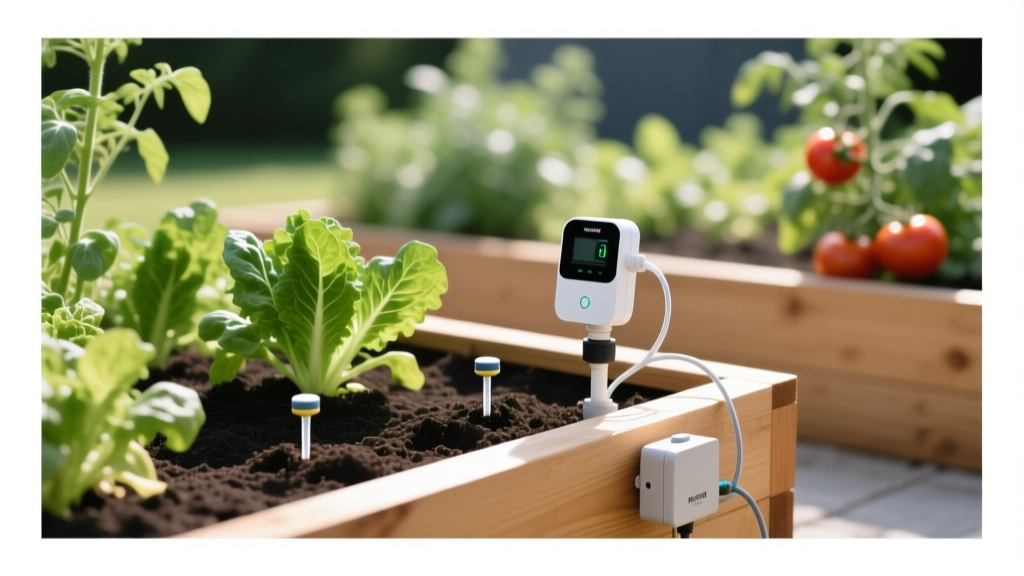
Smart Irrigation and Soil Sensors for Raised Bed Gardens
Sarah ChenPublished
The Rise of the Smart Vegetable Garden
The intersection of smart home technology and horticulture has given rise to the fully automated vegetable garden. For home gardeners utilizing raised beds, maintaining consistent soil moisture is one of the most persistent challenges. Raised beds offer superior drainage and soil aeration, but these same benefits cause them to dry out significantly faster than traditional in-ground plots during the heat of summer. Enter smart irrigation and Internet of Things (IoT) soil sensors. By integrating weather-based smart controllers with localized soil moisture monitoring, you can transform your garden into a self-regulating ecosystem that maximizes crop yields while minimizing water waste.
Automating your garden is no longer a luxury reserved for commercial greenhouse operations. With off-the-shelf smart home hubs, affordable Wi-Fi and Zigbee sensors, and precision drip irrigation components, any home gardener can build a responsive, data-driven growing environment. This guide will walk you through the technical specifications, installation steps, and advanced automation strategies required to build a smart irrigation system tailored specifically for raised bed vegetable gardening.
Core Components of an Automated Raised Bed System
Building a reliable smart irrigation system requires a synergy between digital logic and hydraulic hardware. You cannot simply attach a smart timer to a standard sprinkler and expect optimal results in a vegetable bed. Instead, you need a system built on precision delivery and localized feedback.
1. Smart Irrigation Controllers
The brain of your operation is the smart controller. Unlike traditional timer-based hose faucets that water on a rigid schedule regardless of recent rainfall, smart controllers connect to your home Wi-Fi network. They pull real-time hyperlocal weather data, adjusting watering schedules based on evapotranspiration (ET) rates, upcoming rain forecasts, and seasonal shifts. Top-tier models integrate seamlessly with ecosystems like Apple HomeKit, Amazon Alexa, and Google Home, allowing for voice commands and complex routine building.
2. Soil Moisture Sensors
While weather data is useful, it does not tell you what is happening beneath the soil surface. Wireless soil moisture sensors, such as the Ecowitt WH51 or Xiaomi Mi Flora, are inserted directly into the root zone of your raised beds. These sensors measure volumetric water content (VWC) and transmit the data to a central hub. By setting conditional automations—for example, triggering the drip system only when VWC drops below 30% and no rain is forecasted—you achieve true precision agriculture on a micro-scale.
3. Precision Drip Irrigation Hardware
Smart controllers must be paired with low-volume delivery systems. For raised beds, a 1/4-inch drip tubing network with inline emitters spaced every 6 inches is ideal. Because municipal water pressure typically ranges from 40 to 80 PSI, you must install a 25 PSI pressure regulator and a 200-mesh filter at the hose bib. Without these, the high pressure will blow apart your drip fittings, and sediment will clog the micro-emitters.
Step-by-Step Installation Guide for Smart Drip Systems
Installing an automated drip system in a 4x8-foot raised bed takes roughly two hours. Follow these steps to ensure proper hydraulic flow and digital connectivity.
- Step 1: Prep the Water Source. Attach the 200-mesh filter to your outdoor spigot, followed by the 25 PSI pressure regulator, and finally a standard hose thread to 1/2-inch tubing adapter.
- Step 2: Lay the Mainline. Run 1/2-inch poly tubing along the perimeter of your raised bed. Secure it with landscape staples every two feet to prevent shifting during freeze-thaw cycles.
- Step 3: Connect the Drip Zones. Use 1/4-inch barbed connectors to punch into the mainline. Run 1/4-inch drip tubing with inline emitters down the length of the bed, spacing rows 12 inches apart for leafy greens, or 18 inches apart for deep-rooted crops like indeterminate tomatoes.
- Step 4: Flush the System. Before capping the ends of your tubing, turn on the smart valve for 60 seconds to flush out any plastic shavings or dirt introduced during assembly.
- Step 5: Deploy Sensors and Connect. Insert your soil moisture sensors into the center of the bed at a depth of 4 inches (the primary root zone for most vegetables). Pair the sensors and the smart controller to your home Wi-Fi or Zigbee hub.
Pro-Tip: Always bury your drip lines under 2 inches of organic mulch, such as straw or shredded leaves. This prevents UV degradation of the tubing, reduces surface evaporation, and keeps the soil moisture sensor readings highly accurate by preventing rapid topsoil drying.
Comparing Top Smart Irrigation Controllers for Gardeners
Choosing the right controller depends on your existing smart home ecosystem, the number of raised beds you manage, and your budget. Below is a comparison of the top smart irrigation controllers suited for home garden automation.
| Controller Model | Base Cost | Max Zones | Sensor Compatibility | Smart Home Ecosystem |
|---|---|---|---|---|
| Rachio 3 Smart Sprinkler Controller | $229 | 8 or 16 | Wired Soil & Rain Sensors | Alexa, Google, Apple HomeKit |
| Orbit B-hyve Smart Hose Faucet Timer | $79 | 1 (per hub) | Bluetooth Soil Sensor | Alexa, Google, Orbit App |
| Gardena Smart System Water Control | $149 | 1 (per valve) | Proprietary Soil Moisture Sensor | Apple HomeKit, Gardena App |
| Eve Aqua Smart Water Controller | $99 | 1 | None (Relies on Weather API) | Apple HomeKit, Thread/Matter |
Advanced Automation: Climate and Soil Monitoring
Once your watering is automated, you can expand your smart garden to manage microclimates. Vegetables are highly sensitive to temperature fluctuations. By integrating smart plugs (such as the TP-Link Kasa or Wemo Smart Plug) with outdoor temperature sensors, you can automate frost protection and heat mitigation.
For example, if you are starting seeds in a cold frame or unheated greenhouse attached to your raised beds, you can plug a seedling heat mat into a smart plug. Using a home automation platform like Home Assistant or Apple HomeKit, create a rule that turns the heat mat on only when the ambient temperature drops below 45°F. Conversely, during the peak of summer, you can wire a small 12V winch to a smart relay to automatically deploy a 40% shade cloth over your cool-weather crops like lettuce and spinach when the local UV index and temperature exceed critical thresholds.
Furthermore, integrating a smart EC (Electrical Conductivity) and pH meter into your hydroponic or fertigation setup allows you to monitor nutrient runoff. If you use a fertilizer injector on your mainline, an inline EC sensor can alert your phone if the nutrient concentration drifts outside the optimal 1.5 to 2.5 mS/cm range required for heavy feeders like peppers and squash.
Water Conservation, ROI, and Plant Health
The financial and environmental return on investment for smart garden automation is substantial. According to the EPA WaterSense program, smart irrigation controllers can save the average home nearly 7,600 gallons of water annually by eliminating unnecessary watering cycles triggered by outdated timer schedules. For raised bed gardeners who pay for municipal water, this reduction in waste quickly offsets the initial hardware costs of the smart controller and drip network.
Beyond water savings, plant health improves dramatically with automated consistency. As noted by the University of Minnesota Extension, consistent soil moisture is critical for preventing physiological disorders such as blossom end rot in tomatoes and splitting in root vegetables like carrots and radishes. Hand-watering or dumb timers often lead to cycles of drought and flood stress, which stunts plant growth and invites fungal pathogens. Smart systems maintain the soil at field capacity, ensuring roots have continuous access to both water and oxygen.
Industry experts also highlight the importance of weather-adaptive logic. According to extensive testing and reviews by Wirecutter, weather-based smart controllers significantly reduce water waste by adjusting schedules based on local evapotranspiration rates, ensuring your garden receives exactly what it needs based on real-time atmospheric demand rather than a static calendar guess.
Troubleshooting Common Smart Garden Issues
Even the most advanced IoT gardens require occasional maintenance. Here are solutions to the most common hurdles faced by smart gardeners:
- Clogged Drip Emitters: If a zone is running but the soil remains dry, mineral buildup is likely the culprit. Flush the lines with a mixture of white vinegar and water once per season to dissolve calcium deposits.
- Wi-Fi Dropouts in the Garden: Outdoor spigots are often far from the main router. If your smart hose timer frequently disconnects, install a weatherproof mesh Wi-Fi node near the garden, or switch to a Zigbee-based irrigation hub which offers superior range and lower power consumption.
- Sensor Calibration Drift: Capacitive soil moisture sensors can sometimes drift over time. Test your sensors annually by placing them in a glass of distilled water to verify the 100% saturation reading, and in dry air to verify the 0% baseline.
- Overwatering During Monsoons: If your smart controller relies solely on internet weather APIs, it may miss hyperlocal micro-storms. Always pair weather-based logic with a physical soil moisture sensor override to prevent waterlogging.
Conclusion
Transitioning your raised bed vegetable garden to a smart, automated system is one of the most impactful upgrades a modern gardener can make. By combining precision drip hardware, real-time soil moisture sensors, and weather-adaptive smart controllers, you eliminate the guesswork from garden maintenance. The result is a thriving, high-yield vegetable garden that conserves precious water resources, prevents plant diseases, and frees up your weekends to enjoy the harvest rather than holding a watering wand. Embrace the future of horticulture, and let your smart home ecosystem cultivate your garden with digital precision.
