Gardening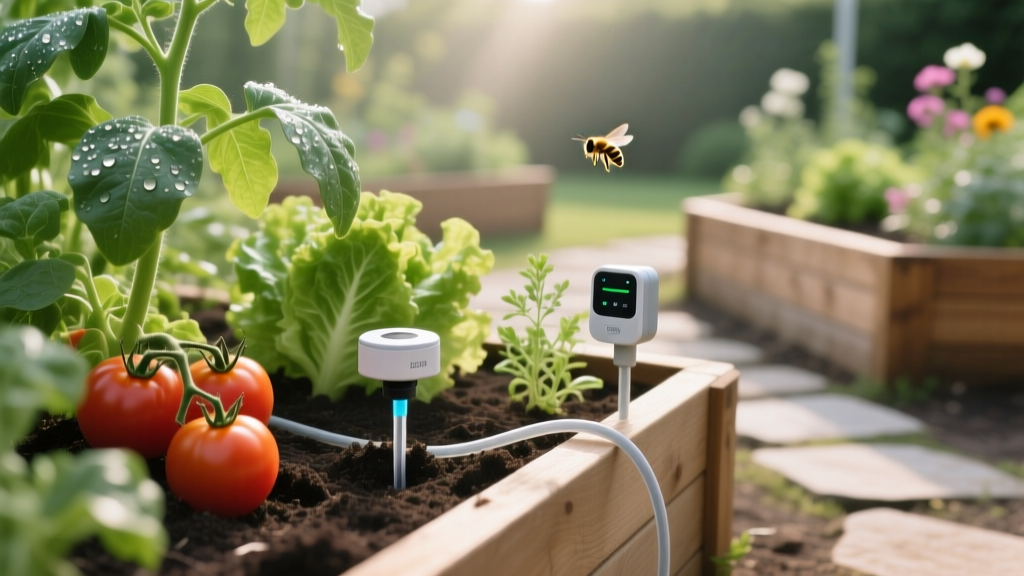
Smart Irrigation And Soil Sensors For Vegetable Gardens
Lisa ThompsonPublished
The Rise of the Smart Vegetable Garden
Gardening has traditionally been a labor-intensive hobby, requiring daily monitoring, manual watering, and constant guesswork regarding soil conditions. However, the intersection of horticulture and smart home technology has birthed the 'Internet of Things (IoT) Garden.' By integrating smart irrigation controllers, wireless soil moisture sensors, and automated drip networks, home gardeners can now achieve commercial-level precision in their backyards. Automating your vegetable garden is no longer just about saving time; it is about optimizing plant health, preventing fungal diseases caused by overhead watering, and drastically reducing water waste. Whether you are growing heirloom tomatoes in raised beds or cultivating leafy greens in containers, smart home automation provides the exact microclimate data and hydration your crops need to thrive.
Core Components of Garden Automation
Building a fully automated vegetable garden requires a synergy between hardware and software. The ecosystem generally relies on three primary components:
1. Smart Irrigation Controllers
Unlike traditional timer-based sprinkler systems that water on a rigid schedule regardless of the weather, smart controllers connect to your home Wi-Fi network. They pull real-time local weather data, including evapotranspiration (ET) rates, humidity, wind speed, and upcoming precipitation forecasts. Devices like the Rachio 3 or the Orbit B-hyve XR automatically skip watering cycles if rain is imminent or if the soil has sufficient residual moisture from previous days.
2. Wireless Soil Moisture Sensors
While weather data is useful, it does not tell you what is happening in your specific garden beds. Wireless soil moisture sensors bridge this gap. Modern capacitive sensors (which resist the corrosion issues of older resistive probes) measure the volumetric water content in the root zone. When paired with a smart hub, these sensors can override weather-based schedules, triggering a watering cycle only when the soil moisture drops below a specific threshold tailored to your crop type.
3. Drip Irrigation Networks
Automation is most effective when paired with drip irrigation. Overhead sprinklers waste water to evaporation and promote foliar diseases like powdery mildew and blight. A drip system utilizes a 1/2-inch poly mainline snaking through your garden beds, branching off into 1/4-inch micro-tubing with 1 GPH (gallon per hour) emitters placed directly at the base of each plant. This delivers water exactly where the roots can absorb it.
Top Smart Irrigation Systems Compared
Choosing the right hub for your garden depends on your budget, the size of your growing space, and your desire for granular data. Below is a comparison of the top smart irrigation systems suitable for home vegetable gardens.
| System | Best For | Approx. Cost | Key Features | Sensor Compatibility |
|---|---|---|---|---|
| Rachio 3 (8-Zone) | Large raised bed networks & integrated lawns | $230 | Weather intelligence, EPA WaterSense certified, IFTTT integration | Proprietary Rachio Soil Moisture Sensor |
| Orbit B-hyve XR | Budget-conscious gardeners & DIYers | $180 | Smart watering, indoor/outdoor use, easy app interface | Orbit Bluetooth Soil Sensor |
| Gardena Smart System | Complete garden automation (mowers + water) | $350+ | Integrated ecosystem, includes water computer & sensors | Native Gardena Smart Soil Moisture Sensor |
| Ecowitt WH51 Hub | Data nerds & container gardeners | $75 | Highly granular data logging, multiple sensor support | Up to 8 wireless Ecowitt soil probes |
Step-by-Step Installation and Calibration
Installing an automated drip and sensor network requires careful planning to ensure even water distribution and accurate data collection.
Step 1: Zone Mapping and Tubing Layout
Map out your garden beds and group plants with similar water needs into the same irrigation zone. For example, place thirsty crops like tomatoes, squash, and melons on one valve, and drought-tolerant herbs like rosemary and thyme on another. Lay the 1/2-inch mainline along the edge of the bed, securing it with landscape staples every three feet to prevent it from shifting as the plastic expands in the summer sun.
Step 2: Emitter Placement
Punch holes into the mainline using a drip irrigation punch tool and insert barbed connectors. Run 1/4-inch tubing to the base of each plant. For heavy feeders like indeterminate tomatoes, use two 1 GPH emitters per plant placed on opposite sides of the stem to encourage wide root growth. For densely planted leafy greens, consider using 1/4-inch soaker drip lines with emitters spaced every 6 inches.
Step 3: Sensor Placement and Depth
The accuracy of your automation relies entirely on sensor placement. Do not place sensors at the very edge of the bed where they will dry out faster than the rest of the soil. Insert the probe into the active root zone. For shallow-rooted crops like lettuce and radishes, the sensor should be buried 4 to 6 inches deep. For deep-rooted crops like tomatoes and peppers, bury the sensor 10 to 12 inches deep. Ensure the sensor is placed near a drip emitter so it can accurately read the moisture infiltration after a watering cycle.
Step 4: App Configuration and Scheduling
Connect your controller to your 2.4GHz home Wi-Fi network (most smart home outdoor devices do not support 5GHz bands). In the app, configure your zones by selecting the correct soil type (e.g., loam, clay, or sandy) and vegetation type (vegetable garden). Enable 'Flexible Daily' or 'Smart Cycle' scheduling. This allows the controller to calculate the exact run time needed to replenish the soil moisture deficit based on daily ET rates.
Environmental Impact and Water Conservation
The environmental benefits of automating your garden extend far beyond your utility bill. Traditional timer-based systems are notorious for overwatering, leading to nutrient leaching, root rot, and the waste of treated municipal water. According to the EPA WaterSense program, smart irrigation controllers can save the average home nearly 7,600 gallons of water annually by adjusting schedules based on local weather conditions. When applied specifically to vegetable gardens, where precise moisture levels are critical for fruit set and preventing blossom end rot, these savings are compounded by healthier, more productive plants.
Furthermore, as noted by the Water Use It Wisely conservation campaign, smart controllers prevent the common mistake of watering during the heat of the day or during rainstorms. By automatically restricting watering to the early morning hours (typically between 4:00 AM and 6:00 AM), smart systems minimize evaporative loss and ensure that water penetrates deeply into the soil profile before the sun rises.
Advanced Automation: Greenhouses and Container Gardens
Smart home technology is not limited to in-ground or raised bed irrigation. If you utilize a greenhouse or grow vegetables in containers on a patio, automation can manage the microclimate entirely.
- Smart Plugs for Grow Lights and Fans: Use outdoor-rated smart plugs (like Kasa or Wyze) to automate supplemental LED grow lights and exhaust fans. Set schedules to mimic natural daylight hours and trigger fans when temperatures exceed 80°F.
- Automated Greenhouse Vent Openers: While not strictly 'smart' in the Wi-Fi sense, wax-cylinder vent openers are a brilliant piece of passive automation. As the greenhouse heats up, the wax expands, pushing a piston that opens the roof vents. As it cools, the wax contracts, and a spring closes the vent, requiring zero electricity.
- Container Drip Systems: For patio containers, utilize a gravity-fed or low-pressure drip system connected to a smart faucet timer (such as the Orbit B-hyve Smart Hose Faucet Timer). This allows you to automate container watering without hardwiring a full irrigation manifold.
Maintenance and Winterization
While smart gardens save time during the growing season, they require specific maintenance to ensure longevity. Capacitive soil sensors should be calibrated annually. To do this, take a soil sample from near the sensor, weigh it, dry it in an oven, and weigh it again to determine the true volumetric water content, then adjust the sensor's baseline in your app. Furthermore, before the first winter freeze, you must blow out your drip irrigation lines with an air compressor set to no more than 20 PSI to prevent the 1/4-inch emitters and mainlines from cracking. Bring all wireless sensors, smart timers, and above-ground manifolds indoors to protect their lithium batteries and circuit boards from freezing temperatures.
Conclusion
Transitioning to a smart, automated vegetable garden represents a shift from reactive gardening to proactive cultivation. By leveraging Wi-Fi-enabled controllers, precise drip networks, and real-time soil moisture data, you remove the guesswork from irrigation. The result is a garden that uses less water, suffers fewer diseases, and produces higher yields, all while integrating seamlessly into your modern smart home ecosystem. Whether you are managing a sprawling backyard farm or a modest collection of patio containers, automation is the key to a more sustainable and abundant harvest.
