
Landscaping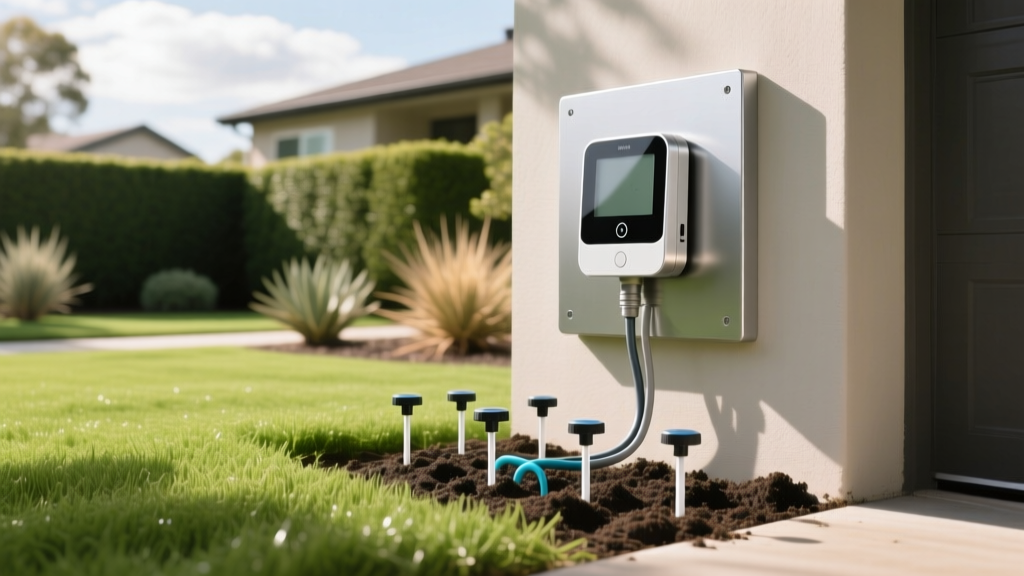
Smart Irrigation Controllers: Automate Your Landscape Watering
Sarah ChenPublished
The Future of Lawn Care: Smart Irrigation Automation
As smart home technology continues to evolve, homeowners are increasingly looking beyond indoor automation to optimize their outdoor spaces. Landscaping is no exception. One of the most impactful upgrades you can make to your property is installing a smart irrigation controller. Traditional sprinkler timers operate on rigid, pre-set schedules, often watering your lawn during rainstorms or wasting thousands of gallons during peak summer heat. By integrating smart home automation into your landscape design, you can achieve a lush, healthy yard while drastically reducing your water footprint.
According to the EPA WaterSense program, the average American family uses nearly 320 gallons of water per day, with about 30% dedicated to outdoor use. Inefficient irrigation systems can waste up to 50% of this outdoor water due to evaporation, wind, and runoff. Smart irrigation controllers solve this problem by acting as the central brain of your sprinkler system, adjusting watering schedules dynamically based on real-time environmental data and integrating seamlessly with your broader smart home ecosystem.
Weather-Based vs. Soil Moisture-Based Controllers
When automating your landscape watering, you generally have two technological paths to choose from. Understanding the difference is crucial for selecting the right equipment for your specific yard microclimates and hardscaping layouts.
Weather-Based (Evapotranspiration) Controllers
These controllers connect to your home Wi-Fi network and pull local weather data from nearby meteorological stations. They calculate the Evapotranspiration (ET) rate, which is the amount of water lost from the soil through evaporation and plant transpiration. If a rainstorm, high-wind event, or high-humidity front is approaching, the controller automatically delays or cancels the watering cycle. Brands like Rachio and Rain Bird excel in this space, offering hyper-local weather intelligence that adjusts daily without any manual input.
Soil Moisture Sensor Controllers
Instead of relying on weather forecasts, these systems measure the actual volumetric water content in your soil. A specialized probe is buried in the root zone of your most critical landscape beds or turf areas. The Colorado State University Extension notes that soil moisture sensors are particularly effective in areas with varied soil types, heavy clay, or distinct microclimates where regional weather data might not perfectly reflect ground conditions. If the soil is already at optimal moisture, the system overrides the scheduled run time, preventing root rot and fungal diseases.
Top Smart Irrigation Controllers Compared
Choosing the right hub for your smart landscape depends on your yard's size, your existing sprinkler valves, and your preferred smart home ecosystem. Below is a comparison of the industry's leading smart controllers to help you plan your upgrade.
| Model | Zones | Key Smart Features | Smart Home Integration | Avg. Cost |
|---|---|---|---|---|
| Rachio 3 | 8 or 16 | Weather Intelligence Plus, automatic seasonal shifts, flow meter support | Alexa, Google, Apple HomeKit, IFTTT | $229 - $279 |
| Rain Bird ST8I-2.0 | 8 | Automatic weather adjustments, rapid programming via mobile app | Alexa, Google Home | $135 - $150 |
| Hunter Hydrawise Pro-C | Up to 16 | Predictive ET forecasting, wireless flow sensors, master valve support | Alexa, Google Home | $280 - $350 |
| Orbit B-hyve XD | 6 to 16 | WeatherSense technology, water usage reporting, leak detection alerts | Alexa, Google Home | $160 - $200 |
Automating Drip Lines and Fertigation Systems
While traditional spray heads are common for broad turf areas, smart home automation truly shines when paired with drip irrigation and automated fertigation (fertilizer plus irrigation) systems. Drip lines deliver water directly to the root zone, minimizing evaporation and protecting hardscaping elements from water stains and mineral buildup. By connecting your drip zones to a smart controller equipped with flow sensors, you can automate precise hydration for delicate garden beds, raised planters, and vegetable patches.
Advanced landscaping setups incorporate smart dosing pumps that inject liquid fertilizers directly into the irrigation line based on the specific needs of your landscape. For instance, if your smart soil sensor detects a drop in nitrogen levels or an increase in soil pH, the automated fertigation hub can trigger a micro-dose of liquid iron or acidic soil amendment during the next scheduled watering cycle. This level of precision ensures your landscape receives exact nutrient profiles without the manual labor of broadcasting granular fertilizers across your lawn.
Integrating Smart Landscape Lighting and Automation
A truly automated landscape extends far beyond irrigation. Pairing your smart sprinkler system with automated hardscape and garden lighting creates a cohesive, immersive outdoor living experience. By utilizing a centralized smart home hub like Samsung SmartThings, Apple HomeKit, or Home Assistant, you can create complex scenes or routines that bridge the gap between utility and ambiance.
For example, you can program a Sunset Routine where your smart irrigation system verifies that no watering is scheduled, your low-voltage path lights dim to 50% brightness, and your patio string lights turn on. Furthermore, integrating smart soil moisture sensors with your lighting can serve as a visual alert system. If a specific garden bed's moisture drops below 15%, a designated smart spotlight can pulse red, alerting you to a potential localized drip-line failure or clogged emitter before your expensive ornamental plants wilt.
Step-by-Step Installation and Calibration
Upgrading to a smart controller is a highly accessible DIY landscaping project. Most modern units are designed to be direct drop-in replacements for legacy 24-volt AC transformers. Here is a quick overview of the installation and calibration process.
- Power Down: Turn off the breaker to your existing irrigation controller and unplug the transformer to ensure safety.
- Document Wiring: Take a high-resolution photo of your existing zone wire configurations before disconnecting them from the terminal strip.
- Mount and Wire: Mount the new smart hub, thread the zone wires through the waterproof gaskets, and secure them into the corresponding terminal slots.
- Connect to Wi-Fi: Power the unit, download the manufacturer's app, and connect the controller to your 2.4GHz home Wi-Fi network.
- Calibrate Zones: Input your soil type (e.g., clay, loam, sand), plant type, and sun exposure for each individual zone to allow the algorithm to build a highly efficient baseline schedule.
Maintenance, Winterization, and Troubleshooting
Automated landscape systems require specific maintenance protocols to ensure longevity, particularly in regions with freezing winter temperatures. Smart controllers make winterization significantly easier but also introduce digital vulnerabilities that homeowners must proactively manage.
Digital Troubleshooting
The most common issue with smart irrigation is Wi-Fi connectivity loss. Because sprinkler controllers are often mounted in garages, basements, or thick exterior walls, they may sit on the fringe of your router's range. To resolve this, install a dedicated Wi-Fi extender or a mesh network node near the controller to ensure a stable 2.4GHz connection. Additionally, ensure your app push notifications are enabled so you receive immediate alerts if the controller goes offline or if a flow sensor detects a ruptured mainline.
Smart Winterization
Before the first freeze, your smart system must be properly winterized to prevent cracked valves and shattered PVC pipes. While the smart controller can automate a blow-out sequence by opening one zone at a time for an air compressor, you must still manually drain the backflow preventer and insulate above-ground components. Many premium apps feature a Winter Mode that suspends all schedules and locks the system, preventing accidental activation during unseasonably warm winter spells that could lead to catastrophic freezing at night.
Calculating the ROI and Municipal Rebates
The financial benefits of smart landscaping automation are substantial and often immediately realized. The University of California Agriculture and Natural Resources (UC ANR) division highlights that smart irrigation controllers can reduce outdoor water use by 20% to 50% compared to traditional clock timers. If your summer water bill typically spikes by $120 per month due to landscape irrigation, a conservative 35% reduction saves you $42 monthly. Over a four-month peak watering season, that equates to $168 in direct savings.
Furthermore, many local water municipalities and utility companies offer aggressive rebates for upgrading to EPA WaterSense-certified smart controllers. In some regions, these rebates cover up to 100% of the equipment cost, meaning your smart landscape upgrade is essentially free while providing an immediate return on investment through lowered utility bills.
Final Thoughts on Landscape Automation
Embracing smart home technology in your landscape design is no longer just a luxury for tech enthusiasts; it is a fundamental pillar of sustainable, modern lawn care. By upgrading to a smart irrigation controller, integrating soil moisture sensors, automating drip fertigation, and syncing your outdoor lighting, you protect your hardscaping investments, nurture deeper root growth, and conserve vital water resources. Take control of your outdoor oasis, leverage the power of automation, and let your smart home ecosystem do the heavy lifting this season.

