
Landscaping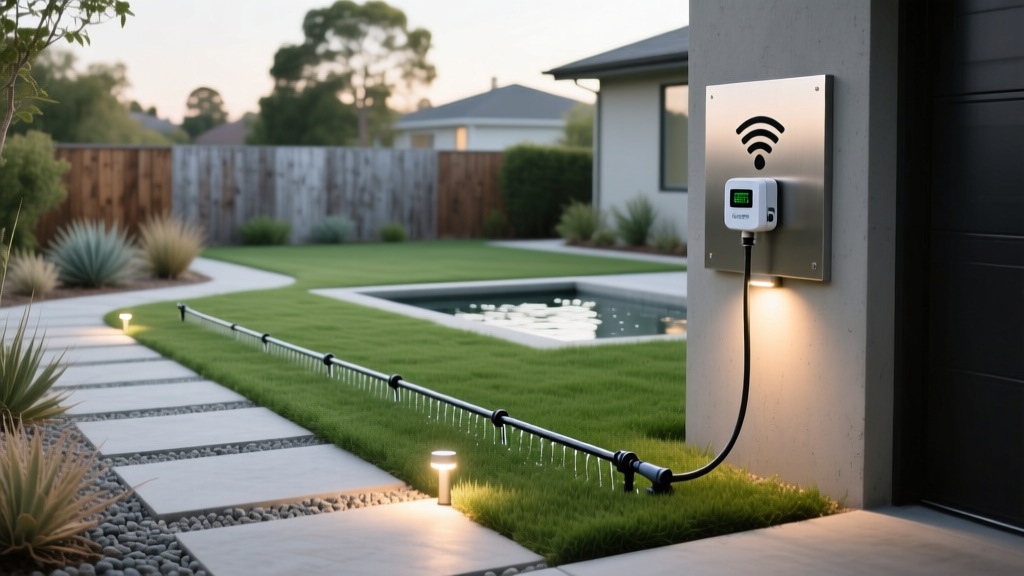
Smart Landscape Automation: Irrigation and Lighting
Robert HayesPublished
The Rise of the Smart Landscape
The modern smart home extends far beyond the living room and kitchen. Today, homeowners are pushing the boundaries of automation into their outdoor spaces, transforming traditional yards into highly efficient, responsive, and secure environments. Smart landscape automation merges the principles of sustainable landscaping with cutting-edge Internet of Things (IoT) technology. By integrating intelligent irrigation controllers, automated LED lighting systems, and smart hardscape features, you can drastically reduce your environmental footprint while elevating your curb appeal and property security.
Transitioning to an automated landscape is not just about convenience; it is a strategic investment in resource conservation. According to the EPA WaterSense Smart Irrigation Controllers program, outdoor water use accounts for nearly 30 percent of total household water consumption in the United States. By upgrading to smart technology, homeowners can eliminate the guesswork from yard maintenance, ensuring that every drop of water and every watt of electricity is used precisely when and where it is needed.
Smart Irrigation Controllers: Watering with Precision
Traditional sprinkler timers operate on rigid, pre-set schedules, completely ignoring the actual needs of your lawn and the current weather conditions. This outdated approach often leads to overwatering, which promotes shallow root growth, fungal diseases, and massive water waste. Smart irrigation controllers solve this problem by utilizing real-time data to adjust watering schedules dynamically.
There are two primary types of smart controllers: weather-based (Evapotranspiration or ET) controllers and soil moisture sensor controllers. ET controllers pull data from local weather stations or on-site sensors to calculate the exact amount of water your landscape loses to evaporation and plant transpiration. They factor in solar radiation, wind speed, temperature, and humidity to deliver the perfect amount of moisture. Soil moisture sensors, on the other hand, measure the actual volumetric water content in the root zone, triggering irrigation only when the soil drops below a specific threshold.
Comparing Top Smart Irrigation Controllers
Choosing the right controller depends on your landscape's complexity, your budget, and your preferred smart home ecosystem. Below is a comparison of three industry-leading smart irrigation controllers.
| Feature | Rachio 3 Smart Sprinkler | Orbit B-hyve Smart Timer | Rain Bird ST8I-2.0 Smart Timer |
|---|---|---|---|
| Available Zones | 8 or 16 Zones | 6 or 12 Zones | 8 Zones |
| Weather Intelligence | Advanced (Freeze, Wind, Rain, Saturation) | WeatherSense (Rain, Freeze) | Basic Weather Adjustment |
| Smart Home Integration | Apple HomeKit, Alexa, Google, IFTTT | Alexa, Google Assistant | Alexa, Google Assistant |
| EPA WaterSense Certified | Yes | Yes | Yes |
| Estimated Retail Cost | $229 - $279 | $119 - $149 | $169 - $189 |
Upgrading to a WaterSense labeled smart irrigation controller can save an average home nearly 7,600 gallons of water annually, translating to significant savings on municipal water bills while preserving local aquifers.
For optimal performance, the University of Florida IFAS Extension recommends pairing your smart controller with high-efficiency rotary nozzles and a master valve. This combination ensures that water is applied slowly enough for the soil to absorb, preventing runoff on sloped terrains or compacted clay soils.
Automated Landscape Lighting: Security and Ambiance
Landscape lighting serves a dual purpose: it highlights the architectural and botanical features of your property while providing essential security. Smart outdoor lighting takes this a step further by allowing you to control, schedule, and automate your exterior illumination from your smartphone or via voice commands.
The core of a smart lighting system is the smart transformer. Traditional transformers simply step down the voltage from 120V to 12V and operate on a basic mechanical timer or photocell. Smart transformers, such as those offered by VOLT or Kichler, connect to your home Wi-Fi network. They allow you to dim the lights, adjust the color temperature, and create complex schedules based on sunset and sunrise times, which shift throughout the year.
Strategic Smart Lighting Placement
When designing an automated lighting scheme, consider the following techniques to maximize both aesthetics and security:
- Path and Area Lighting: Use smart path lights along walkways and driveways. Set them to operate at 50 percent brightness during the evening for ambiance, and automatically ramp up to 100 percent brightness if integrated motion sensors detect movement.
- Uplighting and Moonlighting: Highlight specimen trees or architectural columns. Smart RGBW (Red, Green, Blue, White) LED fixtures allow you to change the color of your uplighting for holidays or special events, then revert to a warm 2700K white for everyday elegance.
- Security Integration: Link your smart landscape lighting to your home security cameras. If a Ring or Nest camera detects a person on your property after midnight, the smart transformer can instantly trigger all perimeter floodlights and path lights to deter intruders.
When selecting fixtures, always look for integrated LED designs with an IP65 or higher waterproof rating. The U.S. Department of Energy Outdoor Lighting guidelines emphasize that LED fixtures consume up to 80 percent less energy than traditional halogen bulbs and last significantly longer, reducing the maintenance burden of replacing burnt-out bulbs in hard-to-reach garden beds.
Automated Hardscaping and Water Features
Beyond plants and lights, smart technology is revolutionizing hardscaping and water features. Motorized louvered pergolas are a prime example. These structures feature integrated rain and wind sensors. When the sensor detects precipitation, the aluminum louvers automatically close to protect your outdoor furniture and dining area. When the sun is too intense, you can adjust the louvers via a smartphone app to provide partial shade, optimizing your outdoor living space regardless of the weather.
For properties with koi ponds or waterfalls, smart pond automation is a game-changer. Smart pump controllers allow you to adjust the flow rate of your waterfall based on the time of day. You can run the pump at a lower, energy-efficient speed during the night, and increase the flow during the day for maximum visual and auditory impact. Additionally, automated dosing systems can monitor the pH and alkalinity of your water feature, automatically dispensing the exact amount of water conditioner needed to keep your aquatic ecosystem healthy without manual testing.
Ecosystem Integration and the Matter Protocol
One of the historical challenges of smart landscaping has been fragmentation—having one app for your sprinklers, another for your lights, and a third for your security cameras. The introduction of the Matter smart home protocol is changing this landscape. Matter is a universal standard backed by Apple, Amazon, Google, and Samsung that allows devices from different manufacturers to communicate seamlessly on a single local network.
When planning your smart landscape, prioritize devices that are Matter-compatible or natively integrate with your existing hub, whether that is Apple HomeKit, Amazon Alexa, or Google Home. By centralizing your outdoor automation, you can create powerful routines. For example, a single 'Goodnight' voice command can lock your doors, arm your security system, turn off your interior lights, lock your smart pergola louvers, and arm your smart irrigation system to water the lawn at 4:00 AM when evaporation rates are lowest.
The ROI of Smart Landscaping
While the upfront cost of smart irrigation controllers, LED fixtures, and smart transformers can be higher than traditional analog equipment, the return on investment is substantial. Water savings alone can pay for a smart irrigation controller within one to two watering seasons, especially in regions with tiered water pricing or strict drought restrictions.
Furthermore, automated landscape lighting and smart hardscaping significantly boost property value. Real estate appraisers increasingly recognize smart home and smart yard features as premium upgrades that signal a well-maintained, energy-efficient property. By embracing smart landscape automation, you are not just building a more beautiful yard; you are cultivating a sustainable, secure, and highly intelligent outdoor ecosystem that works for you 24 hours a day, 365 days a year.

