Gardening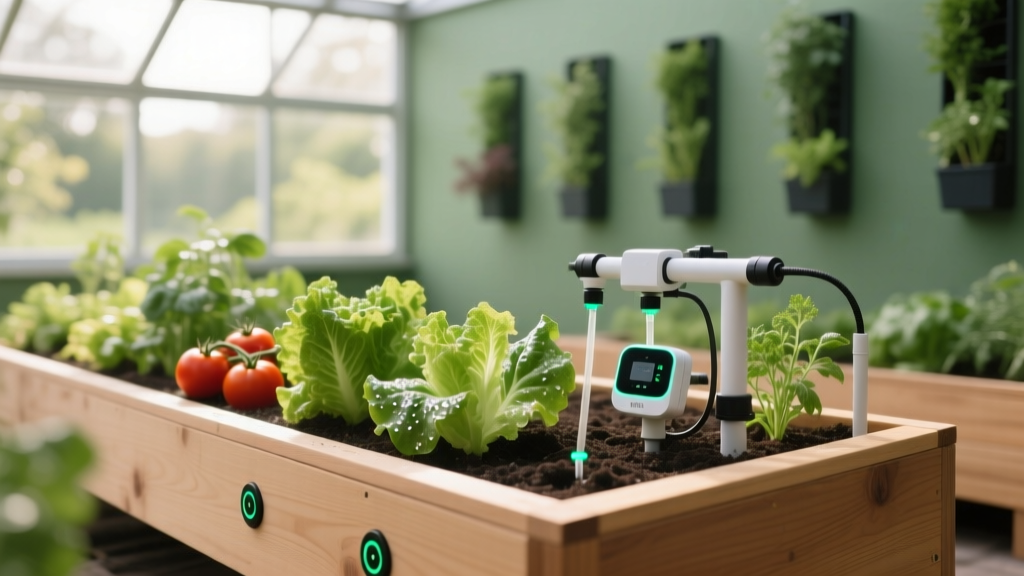
Smart Raised Bed Gardening: Automated Irrigation Guide
Emily WatsonPublished
The Rise of the Smart Vegetable Garden
The intersection of agriculture and smart home technology has birthed a new era for home gardeners. No longer do you need to rely on guesswork, daily hose dragging, or unreliable mechanical timers to keep your vegetables thriving. Smart home automation allows you to monitor, control, and optimize your garden's microclimate directly from your smartphone or via voice assistants. For raised bed vegetable gardens, which present unique watering challenges due to their superior drainage and elevated soil temperatures, automation is not just a luxury—it is a game-changer for crop yield and water conservation.
Why Automate Your Raised Beds?
Raised bed gardens offer incredible benefits: warmer soil in the spring, reduced weed pressure, and complete control over soil composition. However, this enhanced drainage also means raised beds dry out significantly faster than traditional in-ground gardens during the peak of summer. Tomatoes, peppers, and leafy greens require consistent moisture to prevent issues like blossom end rot or bolting. Overwatering, conversely, leads to root rot and fungal diseases. Automating your irrigation solves this problem by delivering precise amounts of water exactly when the plants need it. According to the Environmental Protection Agency (EPA), WaterSense labeled smart irrigation controllers can save the average home nearly 7,600 gallons of water annually by adjusting watering schedules based on real-time local weather data.
Core Components of a Smart Irrigation System
Building a fully automated raised bed system requires three primary components: a smart controller, a drip irrigation network, and soil moisture sensors.
1. Smart Wi-Fi Irrigation Controllers
Smart controllers replace traditional mechanical timers. Devices like the Rachio 3, Orbit B-hyve XR, or Wyze Sprinkler Controller connect to your home Wi-Fi network and pull data from local weather stations. They utilize evapotranspiration (ET) data to calculate exactly how much water your plants lose to the atmosphere and adjust watering durations accordingly. If a rainstorm is forecasted, the controller automatically skips the scheduled watering cycle.
2. Drip Irrigation Tubing and Emitters
Overhead watering is highly inefficient and promotes powdery mildew on squash and cucumbers. Research from Penn State Extension highlights that drip irrigation systems deliver water directly to the root zone with up to 90% efficiency. For raised beds, you will need a 1/2-inch polyethylene mainline, 1/4-inch drip tubing, and inline emitters rated at 1 Gallon Per Hour (GPH) spaced every 12 inches. You must also install a 25 PSI pressure regulator and a 200-mesh inline filter at the spigot to prevent emitter clogs and blown fittings.
3. Soil Moisture Sensors
While weather-based smart controllers are excellent, they do not know the actual moisture content of your specific soil. Integrating a smart soil moisture sensor, such as the Spruce Sensor or a Zigbee-enabled Xiaomi sensor, provides ground-truth data. The United States Department of Agriculture (USDA) emphasizes water conservation through precision agriculture techniques, and home soil sensors apply this same logic by triggering irrigation only when the volumetric water content drops below a user-defined threshold, typically around 30% for most vegetables.
Smart Controller Comparison Chart
Choosing the right brain for your garden automation setup depends on your smart home ecosystem and budget. Below is a comparison of the top consumer-grade smart irrigation controllers.
| Feature | Rachio 3 | Orbit B-hyve XR | Wyze Sprinkler Controller |
|---|---|---|---|
| Zones Available | 8 or 16 | 6 or 12 | 8 |
| Weather Intelligence | Advanced (Freeze, Wind, Rain) | Advanced (WeatherSense Tech) | Basic (Rain Skip) |
| Smart Home Integration | Alexa, Google, HomeKit, IFTTT | Alexa, Google, IFTTT | Alexa, Google, Wyze App |
| Estimated Cost | $170 - $230 | $100 - $140 | $70 - $90 |
Step-by-Step Installation Guide
Installing an automated drip system in a 4x8 foot raised bed takes roughly two hours and requires minimal tools. Follow these steps for a professional-grade setup:
- Spigot Preparation: Attach an anti-siphon backflow preventer to your outdoor faucet. Next, screw on the 25 PSI pressure regulator, followed by the 200-mesh filter. Finally, attach your smart controller's manifold valves.
- Mainline Routing: Run the 1/2-inch poly tubing along the inside top edge of the wooden raised bed frame. Secure it every 3 feet using galvanized U-clips or garden staples to prevent it from shifting when the soil settles.
- Drip Line Placement: Punch holes into the 1/2-inch mainline using a barbed hole punch tool. Insert 1/4-inch barbed connectors and run the 1/4-inch drip tubing in a grid pattern across the bed. For dense companion planting layouts, space the drip lines 12 inches apart to ensure overlapping water coverage.
- Sensor Burial: Bury your soil moisture sensor in the center of the raised bed. The probe must be inserted horizontally at a depth of 4 to 6 inches, which represents the active root zone for most annual vegetables. Ensure the sensor's wireless transmitter remains above the soil line or mulch layer to maintain a strong signal.
- Flushing the System: Before capping the ends of your drip lines, turn the system on manually for 60 seconds to flush out any plastic shavings or dirt that entered the tubes during assembly.
Hydrozoning and Companion Planting
When automating your garden, you must practice hydrozoning—grouping plants with similar water requirements onto the same irrigation valve or drip zone. For example, tomatoes, peppers, and eggplants are heavy drinkers and should share a zone. Conversely, drought-tolerant herbs like rosemary, thyme, and oregano should be placed in a separate raised bed or on a dedicated drip zone with a shorter runtime. If you plant water-loving basil alongside drought-tolerant lavender on the same automated line, one plant will inevitably suffer.
Programming and Smart Home Integration
Once the hardware is installed, the true power of automation is unlocked in the software configuration. Set your smart controller to 'Flex Daily' or 'Weather-Based' scheduling rather than fixed intervals. Input your specific soil type (e.g., sandy loam or amended compost mix) and plant type (vegetable garden) into the app. The algorithm will calculate the precise watering duration needed to reach the root zone without causing runoff.
For advanced smart home enthusiasts, integrating your garden into platforms like Home Assistant or Apple HomeKit allows for complex routines. You can create an automation that says: 'If the soil moisture sensor reads below 25% AND the local weather forecast shows zero chance of rain for the next 12 hours, trigger the drip irrigation valve for 20 minutes.' You can also set up push notifications to alert you if a sudden drop in temperature threatens your tender seedlings, prompting you to deploy frost covers.
Cost Breakdown and ROI
While the upfront cost of a smart garden system is higher than a standard hose-end timer, the return on investment manifests in water savings, reduced plant mortality, and increased crop yields. Here is a typical cost breakdown for automating two 4x8 raised beds:
- Smart Controller (8-Zone): $120
- Pressure Regulator & Filter Kit: $35
- 100 ft of 1/2-inch Mainline Tubing: $25
- 200 ft of 1/4-inch Drip Tubing (Inline Emitters): $45
- Fittings, Clips, and Hole Punch Tool: $30
- Wireless Soil Moisture Sensor: $60
- Total Estimated Cost: $315
Considering the cost of municipal water and the financial loss of replacing dead heirloom tomato plants mid-season, the system typically pays for itself within two growing seasons.
Maintenance and Seasonal Adjustments
Automation does not mean zero maintenance. At the end of every growing season, you must winterize the system to prevent cracked fittings. Disconnect the smart controller and pressure regulator from the spigot and store them indoors. Open all manual drain valves on the drip lines and use an air compressor set to a low PSI (under 30 PSI) to blow out residual water from the tubing. In the spring, inspect the 1/4-inch lines for rodent damage, as mice frequently chew on drip lines seeking water during dry spells. By maintaining your hardware and letting smart algorithms handle the daily scheduling, your raised bed vegetable garden will thrive with minimal manual intervention.
