Gardening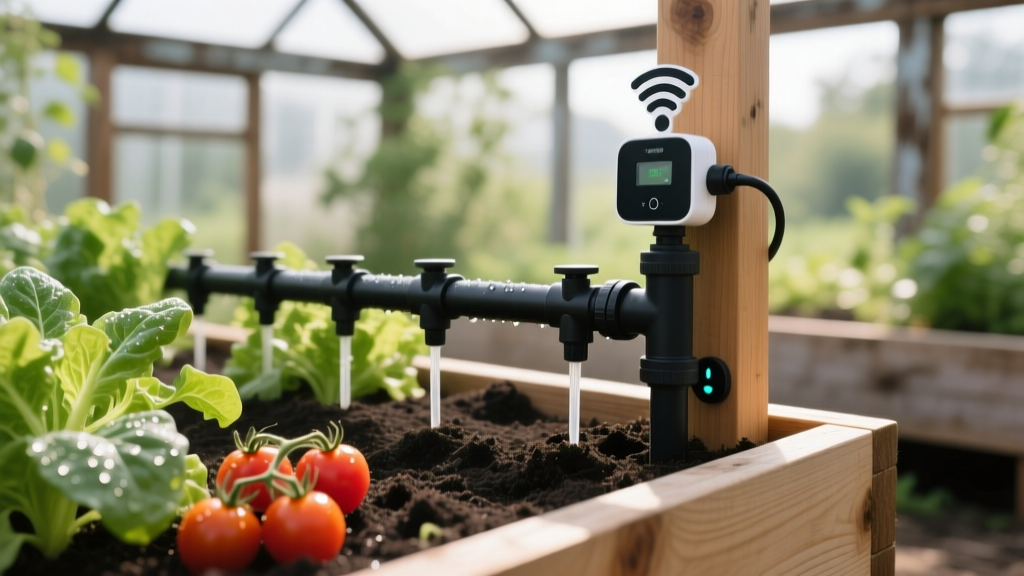
Smart Garden Automation: Raised Bed Irrigation Setup
Robert HayesPublished
The Rise of the Smart Garden
Gardening has traditionally been a manual labor of love, requiring daily observation, physical watering, and constant weather monitoring. However, the intersection of horticulture and the Internet of Things (IoT) has given rise to the smart garden. By integrating smart home automation into your vegetable and flower beds, you can achieve optimal plant health while drastically reducing your water footprint and daily maintenance time. Automating your raised beds is not just about convenience; it is about applying precision agriculture techniques to your backyard.
Why Automate Your Raised Beds?
Raised beds offer superior drainage and soil control, but they also dry out faster than in-ground gardens during peak summer heat. Manual watering often leads to either overwatering, which promotes root rot and fungal diseases, or underwatering, which stresses plants and reduces yields. Smart irrigation systems solve this by utilizing real-time weather data and soil moisture feedback.
According to the EPA WaterSense program, replacing a standard clock timer with a WaterSense labeled smart irrigation controller can save the average home up to 8,800 gallons of water annually. These controllers use local weather data, including evapotranspiration (ET) rates, to automatically adjust watering schedules, ensuring your tomatoes, peppers, and leafy greens receive exactly what they need, right when they need it.
Choosing the Right Smart Controller
The brain of your automated garden is the smart sprinkler controller. When selecting a model, consider your smart home ecosystem (Apple HomeKit, Amazon Alexa, Google Home, or Home Assistant), the number of zones you need, and the granularity of weather data provided. Below is a comparison of the top smart controllers suitable for residential garden automation.
| Controller Model | Approx. Cost | Zones | Smart Features | Ecosystem Compatibility |
|---|---|---|---|---|
| Rachio 3 | $229 | 8 or 16 | Weather Intelligence Plus, freeze skip, wind skip, seasonal adjustments | Alexa, Apple HomeKit, Google, IFTTT, Home Assistant |
| Orbit B-hyve XR | $149 | 8 | WeatherSense technology, smart watering, leak detection | Alexa, Google, IFTTT |
| Wyze Sprinkler Controller | $50 | 8 | Weather-based skips, basic scheduling, budget-friendly | Alexa, Google, IFTTT |
The Science of Soil Moisture and Drip Irrigation
To truly automate a garden, you must move beyond simple timers and embrace targeted water delivery. Drip irrigation is the gold standard for raised beds. As noted by Penn State Extension, drip systems apply water directly to the root zone, achieving up to 90% efficiency compared to the 50-70% efficiency of traditional overhead sprinklers. This targeted approach keeps foliage dry, significantly reducing the risk of powdery mildew and blight, which are common issues in dense companion planting setups.
Furthermore, understanding your soil's water-holding capacity is crucial. University of Minnesota Extension experts recommend that most vegetable crops require about 1 to 1.5 inches of water per week. However, a raised bed filled with a porous mix of peat moss, vermiculite, and compost will drain much faster than heavy clay soil. By integrating wireless soil moisture sensors into your automation logic, you can override weather-based schedules and water based on actual subterranean conditions.
Companion Planting and Zoned Automation
One of the most significant advantages of smart irrigation is the ability to create micro-zones within a single raised bed. If you practice companion planting, you already know that different plants have varying moisture requirements. For example, planting basil alongside tomatoes is a classic pairing that deters pests and improves flavor. However, basil prefers consistently moist soil, while established tomatoes thrive on deep, infrequent watering that encourages deep root growth.
By utilizing a multi-zone smart controller and running separate 1/4-inch micro-tubing lines to different sections of your bed, you can automate these distinct needs. Zone 1 can deliver a light, daily 5-minute watering to the shallow-rooted herbs, while Zone 2 executes a deep, 20-minute soak twice a week for the nightshades. This precision prevents the common gardening error of compromising the health of one plant species to accommodate another.
Step-by-Step Installation for a 4x8 Raised Bed
Building an automated drip system for a standard 4-foot by 8-foot raised bed is a straightforward weekend project. Here is a practical guide with measurements and estimated costs.
- Step 1: The Mainline and Hub (Cost: $229)
Mount your smart controller near a power source and connect it to your outdoor hose bib using a smart valve or a standard 24V irrigation valve wired to the controller. Attach a pressure regulator (25 PSI) and a 200-mesh filter to prevent emitter clogs. - Step 2: Lay the 1/2-Inch Poly Tubing (Cost: $35)
Run a 1/2-inch mainline poly tubing down the center of the 8-foot length of the bed. Secure it with garden staples every 2 feet. - Step 3: Install Drip Emitters (Cost: $15)
For row crops like carrots or lettuce, punch 1 GPH (gallon per hour) button emitters directly into the mainline every 6 inches. For sprawling crops like tomatoes or zucchini, use 1/4-inch micro-tubing to route two 2 GPH emitters to the base of each plant. - Step 4: Deploy Soil Moisture Sensors (Cost: $45)
Bury a wireless soil moisture sensor (such as the Ecowitt WH51) at a depth of 4 inches—the active root zone for most young transplants. Connect the sensor hub to your Wi-Fi network. - Step 5: Mulch and Conceal (Cost: $20)
Cover the tubing with 2 inches of organic straw or wood chip mulch. This hides the hardware, reduces surface evaporation, and regulates soil temperature.
Total Estimated Hardware Cost: ~$344
Fertigation: Automating Nutrient Delivery
Advanced smart gardeners often take automation a step further by integrating fertigation—the injection of water-soluble fertilizers directly into the irrigation system. By adding a smart fertilizer injector inline with your main drip tubing, you can automate the feeding schedule alongside your watering schedule. This is particularly useful for heavy feeders like corn, squash, and melons. When programming your smart controller, simply adjust the run times to account for the slightly altered flow rate caused by the injector. Consistent, low-dose nutrient delivery prevents the boom-and-bust growth cycles associated with manual granular fertilizing, resulting in stronger stems and higher yields.
Advanced Automation: Home Assistant and IFTTT
The true power of smart home gardening lies in custom automation logic. Using platforms like Home Assistant or IFTTT (If This Then That), you can create complex triggers that bridge the gap between your soil sensors and your irrigation controller.
Example Automation Logic:
IF Ecowitt Soil Moisture drops below 35% AND local weather forecast shows no rain for the next 12 hours, THEN trigger Rachio Zone 1 to run for 12 minutes.
IF soil temperature drops below 40°F (4°C), THEN send a push notification to frost-protect sensitive peppers and tomatoes.
This level of automation ensures that your garden is entirely responsive to its microclimate. It is particularly beneficial for container gardening and raised beds, where thermal mass is low and temperature fluctuations can shock plant roots.
Maintenance and Winterization
While smart gardens save time during the growing season, they require specific end-of-season care. Before the first hard freeze, you must winterize your automated system to prevent cracked valves and shattered tubing. Disconnect the smart controller from the water source, open all manual drain valves, and use an air compressor to blow out residual water from the 1/2-inch poly lines. Store wireless soil sensors and the smart controller indoors to protect their internal electronics from extreme winter temperatures and moisture ingress. By properly maintaining your hardware, your smart irrigation setup will provide precision hydration for your garden for years to come.
