Lawn Care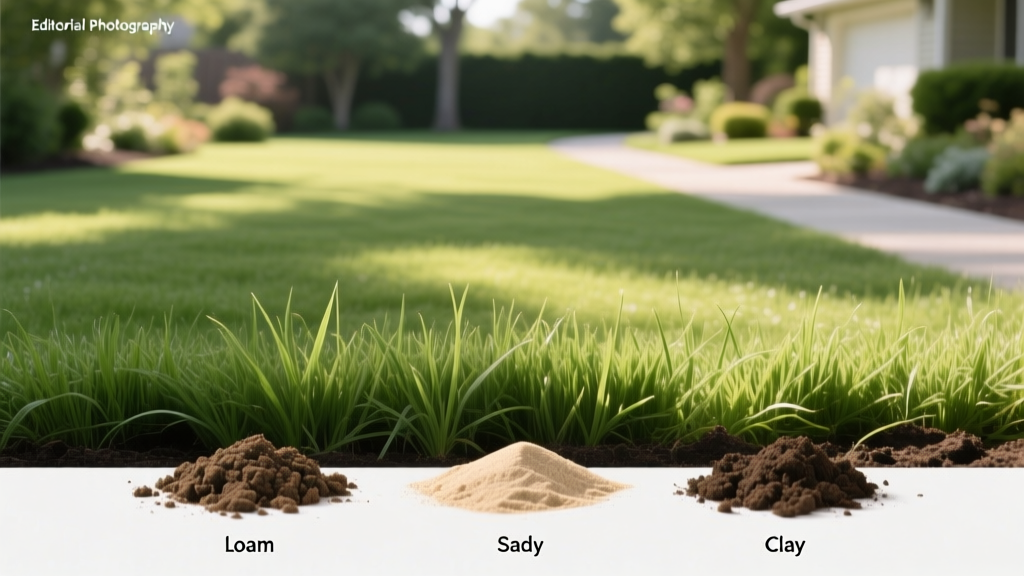
How to Match Your Soil Type to the Perfect Grass Variety
Mike RodriguezPublished
The Foundation of a Perfect Lawn: Soil and Grass Synergy
Every homeowner dreams of a lush, carpet-like lawn, but many fall into the trap of treating all soil as if it were created equal. The reality is that your soil's physical structure dictates how water, oxygen, and nutrients reach your grass roots. Planting a shade-loving, moisture-dependent grass in fast-draining sandy soil is a recipe for disappointment, just as planting a drought-tolerant variety in heavy clay can lead to shallow rooting and disease. Matching your grass variety to your specific soil type is the single most important decision you will make in your lawn care journey.
In this comprehensive guide, we will break down the four primary soil types, teach you how to perform a free at-home soil test, and provide actionable strategies for selecting the right grass seed, fertilizers, and amendments to achieve a thriving yard.
Understanding the Big Four Soil Types
Soil is generally categorized by the size of its mineral particles. The balance of these particles determines your soil's drainage rate, nutrient-holding capacity, and aeration levels.
- Sandy Soil: Composed of large, coarse particles. It drains exceptionally well and warms up quickly in the spring, but it struggles to retain water and essential nutrients, which easily leach away during heavy rains.
- Clay Soil: Made up of microscopic, plate-like particles that pack tightly together. Clay holds water and nutrients incredibly well but suffers from poor drainage, severe compaction, and restricted oxygen flow to the roots.
- Silt Soil: Features medium-sized particles that feel smooth and flour-like when dry. It is highly fertile and retains moisture better than sand, but it is highly susceptible to compaction and surface crusting.
- Loam Soil: The holy grail of gardening and lawn care. Loam is a balanced mixture of sand, silt, and clay (typically 40% sand, 40% silt, 20% clay), offering ideal drainage, moisture retention, and aeration.
The DIY Mason Jar Soil Test
Before purchasing grass seed or expensive soil amendments, you must identify your soil profile. While you can send samples to a lab, the DIY Mason Jar Test is a free, highly effective way to determine your soil's physical texture at home.
Step-by-Step Instructions:
- Collect a Sample: Dig down about 6 inches into your lawn, removing the top layer of grass and thatch. Collect soil from three different areas of your yard and mix them in a bucket.
- Fill the Jar: Fill a clear, straight-sided mason jar about one-third full with your mixed soil sample.
- Add Water and Soap: Fill the rest of the jar with water, leaving an inch of air at the top. Add one teaspoon of liquid dish soap (this acts as a dispersing agent to separate the soil particles).
- Shake and Settle: Secure the lid and shake vigorously for 3 minutes. Set the jar on a flat surface and leave it undisturbed for 24 hours.
- Read the Layers: Sand will settle at the bottom within 1 minute. Silt will form the middle layer within 2 to 4 hours. Clay will remain suspended and eventually settle at the top after 24 hours. Measure the thickness of each layer to determine your soil's percentage breakdown.
Matching Grass Varieties to Your Soil Profile
Once you know your soil type, you can select turfgrass species that have evolved to thrive in those specific conditions. According to the turfgrass specialists at NC State TurfFiles, matching the plant to the environment drastically reduces the need for chemical interventions and excessive watering.
Best Grasses for Heavy Clay Soils
Clay soils require grasses with aggressive, deep root systems capable of penetrating dense earth and surviving periods of waterlogging followed by hard, baked drought.
- Cool-Season: Tall Fescue is the undisputed champion of clay soils in northern and transition zones. Its deep, extensive root system can push through compacted layers to access subsoil moisture. Avoid Kentucky Bluegrass in heavy clay, as its shallow rhizomes will suffocate.
- Warm-Season: Bermudagrass and Zoysia are incredibly resilient and can handle the density of clay, provided the lawn is core-aerated annually to relieve compaction.
Best Grasses for Sandy Soils
Sandy soils demand drought-tolerant grasses that can survive rapid moisture loss and low nutrient availability.
- Cool-Season: Fine Fescues (such as Creeping Red Fescue and Chewings Fescue) require less water and fertilizer than other cool-season grasses, making them ideal for sandy, low-fertility sites.
- Warm-Season: Bahiagrass and Centipedegrass thrive in the sandy, acidic soils common in the deep South and coastal regions. They possess deep taproots that seek out elusive moisture.
Best Grasses for Loam and Silt Soils
If you are blessed with loamy soil, you have the widest selection of premium turfgrasses available.
- Cool-Season: Kentucky Bluegrass and Perennial Ryegrass will reward you with a dense, dark-green, carpet-like lawn when planted in well-draining loam.
- Warm-Season: St. Augustine and Centipedegrass perform beautifully in loamy soils, spreading rapidly via above-ground stolons to create a thick canopy that chokes out weeds.
Watering and Fertilization Strategies by Soil Type
Your soil type must dictate your maintenance schedule. Applying the same amount of water and fertilizer to sand and clay will result in a dead lawn or a massive weed invasion.
Sandy Soil Maintenance
Because sand has a very low Cation Exchange Capacity (CEC)—meaning it cannot hold onto positively charged nutrient ions like nitrogen and potassium—you must fertilize frequently but lightly. Use slow-release, organic nitrogen sources like Milorganite or Scotts Turf Builder to prevent nutrient burn and leaching. When watering, apply 0.5 inches of water three times a week rather than 1.5 inches all at once, which will simply drain past the root zone.
Clay Soil Maintenance
Clay holds onto nutrients tightly, sometimes too tightly, leading to phosphorus lockout. A soil test is crucial here to avoid over-fertilizing. When watering clay, apply 1 inch of water per week, but split it into two 0.5-inch sessions. If you apply 1 inch all at once, the clay will reach its infiltration capacity within 20 minutes, and the rest will run off into the street, taking your topsoil and fertilizers with it.
Soil Amendment Strategies and Costs
You do not have to accept poor soil as a permanent fate. Strategic amendments can drastically improve your soil's structure over time.
- Amending Clay: Avoid adding sand to clay, as this creates a concrete-like substance. Instead, apply calcium sulfate (gypsum), which helps flocculate (clump) clay particles together, improving drainage. A 40-pound bag of Lilly Miller Soil Gypsum costs around $15 and covers 2,000 square feet. Pair this with annual core aeration, which costs about $80 to $100 per day for a machine rental.
- Amending Sand: The only way to improve the water and nutrient retention of sand is to add organic matter. Topdress your lawn with 1/4 inch of finely screened compost in the fall. Expect to pay $30 to $50 per cubic yard of premium organic compost, which will cover approximately 1,000 square feet at a 1/4-inch depth.
Soil Type vs. Grass Match Comparison Chart
| Soil Type | Drainage Rate | Best Cool-Season Grass | Best Warm-Season Grass | Key Amendment |
|---|---|---|---|---|
| Sandy | Very Fast | Fine Fescue | Bahiagrass | Organic Compost |
| Clay | Very Slow | Tall Fescue | Bermudagrass | Gypsum / Core Aeration |
| Silt | Moderate | Perennial Ryegrass | St. Augustine | Aeration to prevent crusting |
| Loam | Ideal | Kentucky Bluegrass | Zoysia | Maintenance Compost |
Leveraging Professional Resources
While the mason jar test is excellent for determining physical texture, it cannot tell you your soil's pH or exact nutrient deficiencies. For a complete picture, utilize professional tools and databases. The USDA NRCS Web Soil Survey is an incredible, free online tool that allows you to map your exact property and view the official geological soil surveys for your region, giving you a baseline understanding of your native earth before you even dig a hole.
Furthermore, before applying lime or sulfur to alter your pH, always back up your decisions with lab data. As outlined by Penn State Extension, a standard university soil test costs between $15 and $30 and provides precise, science-backed recommendations for limestone and fertilizer applications tailored to your specific grass type and soil chemistry.
"Healthy soil is a living ecosystem. By matching your turfgrass to your soil's natural tendencies, you work with nature rather than fighting against it, saving time, money, and water in the long run."
Conclusion
Matching your soil type to the correct grass variety is the cornerstone of sustainable lawn care. Whether you are working with fast-draining sand, heavy compacted clay, or rich loam, selecting a turfgrass species adapted to your environment will result in deeper roots, fewer weeds, and a lawn that requires fewer chemical inputs. Grab a mason jar, test your soil this weekend, and set the stage for the best growing season your lawn has ever seen.