
Landscaping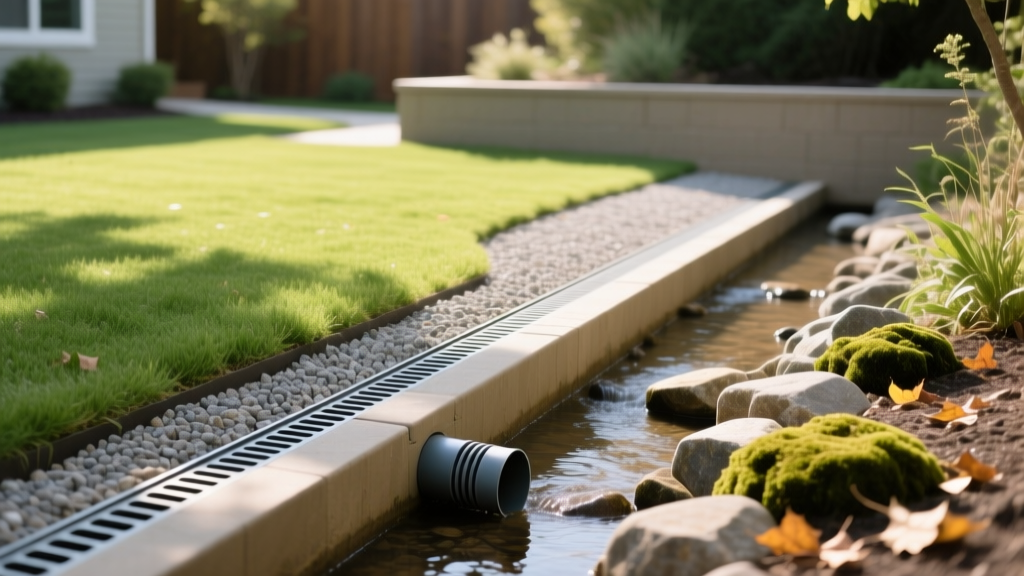
How to Fix Yard Drainage: French Drains vs Dry Creek Beds
Robert HayesPublished
The Hidden Costs of Standing Water
Standing water in your yard is more than just an aesthetic nuisance; it is a critical threat to your home’s foundation, your lawn’s root system, and your family’s health due to mosquito breeding. When heavy rains leave your landscape saturated for more than 24 hours, you have a drainage problem that requires immediate intervention. However, throwing money at random landscaping fixes will only lead to frustration and wasted capital. To permanently solve poor yard drainage, you must accurately diagnose the source of the water and select the correct hardscaping solution. In this comprehensive guide, we will break down how to diagnose your soil's drainage capacity and compare the two most effective landscape drainage solutions: the French drain and the dry creek bed.
Step 1: Diagnose Your Drainage Problem
Before purchasing a single bag of gravel or a length of pipe, you must determine whether your water issue is caused by surface runoff or subsurface saturation. Surface runoff occurs when water flows over the ground because the soil is compacted, heavily clay-based, or graded incorrectly. Subsurface saturation happens when the water table is high, or the soil's internal structure prevents water from percolating downward. Identifying the exact nature of your drainage failure dictates which solution you should install.
The Percolation Test
To test your soil's drainage capacity, perform a simple percolation test. This will tell you exactly how fast water moves through your soil profile.
- Dig a hole approximately 12 inches wide and 12 inches deep in the area where water typically pools.
- Fill the hole with water and let it drain completely. This step pre-saturates the soil, mimicking conditions after a heavy rainfall.
- Refill the hole with water to the top.
- Measure the water level drop every hour for four hours.
The Diagnosis: If the water level drops less than 1 inch per hour, you have poorly draining soil (likely heavy clay). If water drops between 1 and 3 inches per hour, you have moderate drainage. If it drops faster than 3 inches, your soil is sandy and well-draining. For lawns with less than 1 inch per hour percolation, subsurface drainage solutions like a French drain are almost always required to relieve hydrostatic pressure against your foundation.
Solution A: The French Drain (For Subsurface Water)
A French drain is a subsurface trench filled with gravel and a perforated pipe that intercepts groundwater and redirects it away from problem areas. It is the gold standard for relieving saturated soil, protecting basement walls, and drying out chronically muddy lawns.
Materials and Sizing
- Pipe: Use a 4-inch rigid PVC sewer and drain pipe (with pre-drilled holes) or a flexible corrugated pipe like the NDS EZ-Drain system. Rigid PVC is highly recommended for long-term durability and ease of cleaning.
- Gravel: You must use 3/4-inch washed drainage gravel. Never use crushed limestone or unwashed gravel, as the stone dust will clog the pipe's perforations over time.
- Fabric: Line the trench with a non-woven geotextile landscape fabric (such as Dewitt Pro 5) to prevent soil migration into the gravel bed.
Installation Specifications
The most critical element of a French drain is the slope. The trench must be dug with a minimum slope of 1/8 inch per linear foot (a 1% grade). For a 40-foot drain, the outlet must be at least 5 inches lower than the intake point. Trenches should be 12 inches wide and 18 to 24 inches deep. After laying the fabric and pipe, wrap the fabric over the top of the gravel like a burrito before backfilling with topsoil. The average DIY cost for a French drain is $15 to $25 per linear foot, while professional installation typically ranges from $50 to $85 per linear foot depending on soil conditions and accessibility.
Solution B: The Dry Creek Bed (For Surface Runoff)
If your percolation test showed moderate to good drainage, but you still experience flash flooding during heavy storms, your issue is likely surface runoff. A dry creek bed (or dry swale) is a shallow, landscaped channel designed to capture, slow down, and direct surface water away from your home while adding a beautiful, natural aesthetic to your garden beds.
Design and Materials
Unlike the hidden French drain, a dry creek bed is a visible hardscape feature. It should be designed with gentle, meandering curves to mimic a natural stream and slow the velocity of the water, preventing erosion at the discharge point.
- Base Layer: Excavate a swale 2 to 3 feet wide and 12 to 18 inches deep. Line the entire channel with heavy-duty woven geotextile fabric, securing it with 6-inch landscape staples.
- Anchor Boulders: Place large, angular boulders (12 to 24 inches in diameter) along the outer edges of the curves. These act as structural anchors and dissipate the kinetic energy of rushing water.
- Fill Rock: Fill the channel with a mix of 3-inch to 5-inch river rock and rounded cobblestones. Avoid sharp, angular gravel for the top layer, as rounded river rock allows water to flow smoothly without catching debris.
The DIY cost for a dry creek bed is generally lower than a French drain, averaging $5 to $12 per linear foot, primarily because it requires less excavation and no specialized piping. Professional landscaping contractors typically charge $20 to $35 per linear foot, factoring in the artistic placement of boulders and plantings.
Head-to-Head Comparison: French Drain vs. Dry Creek Bed
| Feature | French Drain | Dry Creek Bed |
|---|---|---|
| Best Used For | Subsurface saturation, muddy lawns, basement leaks | Surface runoff, downspout discharge, erosion control |
| Visibility | Hidden (buried underground) | Visible (acts as a landscape focal point) |
| Avg. DIY Cost | $15 - $25 per linear foot | $5 - $12 per linear foot |
| Maintenance | Low (requires occasional flushing of the pipe) | Medium (requires clearing leaves and debris manually) |
| Installation Time | 2 to 4 days (heavy excavation required) | 1 to 2 days (shallow excavation) |
Common Installation Mistakes to Avoid
Even with the right solution chosen, poor execution will render your drainage project useless. Avoid these frequent landscaping errors:
- Forgetting to Call 811: Always call your local utility locating service at least 48 hours before digging. Striking a gas or fiber-optic line can result in catastrophic fines and severe danger.
- Discharging into a Neighbor's Yard: In almost all municipalities, it is illegal to redirect stormwater onto an adjacent property. Always route your outlet to a municipal storm drain, a designated dry well, or a approved daylighting zone on your own property.
- Using the Wrong Fabric: Do not use cheap, woven weed-blocking fabric from big-box stores for drainage projects. Woven fabric restricts water flow and degrades rapidly under wet conditions. Always invest in commercial-grade, non-woven geotextile fabric.
Expert Insights on Sustainable Drainage
Modern landscaping is shifting away from simply piping water away as fast as possible, and toward sustainable stormwater management that allows water to infiltrate the local water table safely. According to stormwater management guidelines published by the Rutgers University Cooperative Extension, residential properties should aim to minimize impervious surfaces and utilize landscape features that promote natural infiltration.
'Residential stormwater management is most effective when homeowners integrate decentralized practices such as rain gardens, vegetated swales, and permeable hardscapes. By capturing runoff close to its source, homeowners reduce the burden on municipal storm sewers, filter out pollutants like lawn fertilizers, and recharge local groundwater aquifers.' — Rutgers Cooperative Extension, Water Resources Program
To align with these sustainable practices, consider terminating your French drain or dry creek bed into a Rain Garden. A rain garden is a shallow depression planted with deep-rooted, water-tolerant native species (like Swamp Milkweed, Blue Flag Iris, or Joe-Pye Weed). This allows the final 10% of your stormwater to slowly percolate into the earth, filtering out nitrogen and phosphorus before it reaches local waterways.
Final Thoughts
Solving yard drainage problems requires a methodical approach. By starting with a percolation test, you remove the guesswork from your landscaping project. If your soil is heavily compacted and water sits for days, invest the time and labor into a properly sloped French drain using rigid PVC and washed gravel. If your soil drains adequately but surface grading sends water pooling against your home, design a beautiful dry creek bed lined with river rock and anchor boulders. Whichever path you choose, proper water management will protect your home's structural integrity, revive your turfgrass, and significantly boost your property's curb appeal and long-term value.

