
Landscaping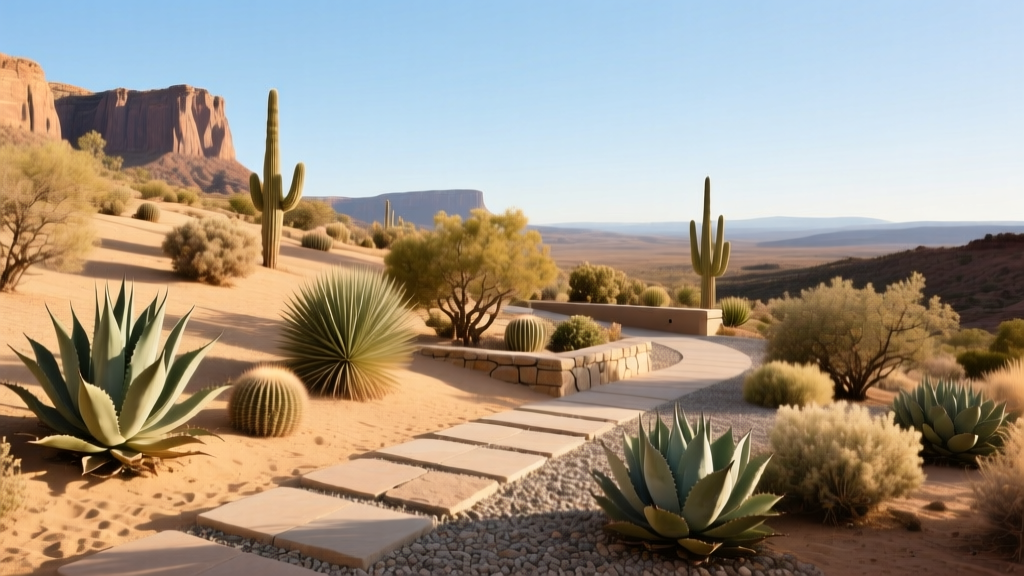
Xeriscaping in the Southwest: A Desert Landscaping Guide
Emily WatsonPublished
Embracing the Arid Aesthetic: Southwest Xeriscaping
Landscaping in the American Southwest presents a unique set of challenges and opportunities. With scorching summer temperatures, intense UV exposure, and annual rainfall often dipping below 10 inches, traditional landscaping methods simply fail. Enter xeriscaping—a regional, climate-specific approach to landscape design that prioritizes water conservation without sacrificing curb appeal. According to the EPA WaterSense program, outdoor water use can account for up to 60% of a household's total water consumption in arid regions. By transitioning to a desert-adapted xeriscape, homeowners in states like Arizona, New Mexico, Nevada, and Southern California can drastically reduce their water footprint while creating a stunning, low-maintenance outdoor living space.
Xeriscaping is not merely about laying down rocks and cacti; it is a comprehensive design philosophy. The Colorado State University Extension, which originally coined the term, outlines seven core principles of xeriscaping, including proper planning, soil improvement, efficient irrigation, and appropriate plant selection. In this guide, we will break down exactly how to apply these principles to the harsh microclimates of the Southwest.
The Foundation: Navigating Caliche and Alkaline Soils
Before selecting plants or laying hardscapes, you must address the soil. Southwestern soils are notoriously challenging, often characterized by high clay content, extreme alkalinity (pH levels between 7.5 and 8.5), and a hard, cement-like layer known as caliche. Caliche restricts root growth and prevents proper drainage, which can quickly drown drought-tolerant plants during the rare monsoon rains.
To prepare your garden beds, avoid over-tilling, which can bring buried weed seeds to the surface. Instead, use a mattock or a mechanical jackhammer to fracture the caliche layer to a depth of at least 18 to 24 inches. For soil amendment, resist the urge to add heavy peat moss or rich composts, as most native desert plants prefer lean, well-draining soils. Instead, top-dress with a 1-inch layer of organic compost and apply agricultural gypsum (calcium sulfate) at a rate of 40 pounds per 1,000 square feet to help break up heavy clay and improve water infiltration without altering the pH.
Selecting Desert-Adapted Flora for USDA Zones 7-10
Plant selection is the cornerstone of any successful xeriscape. The goal is to group plants with similar water and light requirements into distinct 'hydrozones'. When designing your landscape, aim for a mix of structural agaves, colorful perennials, and shade-providing trees to mimic the layered look of a natural desert ecosystem.
- Parry's Agave (Agave parryi): A stunning structural succulent featuring blue-gray rosettes. It grows 2 to 3 feet tall and wide. Plant in full sun with at least 4 feet of clearance from pathways due to its sharp terminal spines. Requires minimal water once established.
- Autumn Sage (Salvia greggii): A semi-evergreen shrub that produces vibrant red, pink, or white tubular flowers from spring through fall, attracting hummingbirds. Grows 3x3 feet. Plant in east-facing locations to protect from harsh late-afternoon sun. Space 3 feet apart for a natural hedge.
- Desert Willow (Chilopsis linearis): A deciduous, multi-trunked tree that reaches 15 to 25 feet in height. It features orchid-like blooms in early summer. Ideal for creating dappled shade over patios or underplanting with smaller succulents. Requires deep, infrequent watering.
- Red Yucca (Hesperaloe parviflora): Not a true yucca, this evergreen perennial features grass-like foliage and tall spikes of coral-red flowers. Grows 3 feet tall and 4 feet wide. Highly heat-tolerant and perfect for planting near reflective surfaces like driveways or south-facing walls.
- Texas Ranger (Leucophyllum frutescens): Often called the 'barometer bush' because it blooms right before a rainstorm. Features silvery-gray foliage and purple flowers. Grows up to 6x6 feet. Excellent for privacy screens and requires zero supplemental water once established after the first year.
Hardscaping: Decomposed Granite and Thermal Mass
In the Southwest, hardscaping serves a dual purpose: it reduces the area requiring irrigation and provides thermal mass to regulate soil temperatures. Decomposed granite (DG) is the premier choice for pathways and patios. Unlike solid concrete, DG is permeable, allowing precious rainwater to percolate into the groundwater table.
For high-traffic areas, use stabilized decomposed granite. This involves mixing the DG with a liquid stabilizer (such as TerraKoat or Gator Dust) before compacting it with a plate compactor. Lay a 4-inch base of crushed gravel (3/4-inch minus) topped with a 3-inch layer of DG. The cost for materials typically ranges from $40 to $60 per ton, making it a highly cost-effective alternative to pavers or poured concrete. Complement the DG with large, native desert boulders (like Arizona Moss Rock) to anchor garden beds and create microclimates where smaller plants can thrive in the cool shade of the stone.
Cost Comparison: Traditional Turf vs. Southwest Xeriscape
While the initial installation of a xeriscape can sometimes rival or exceed that of a traditional lawn due to hardscaping and mature plant costs, the long-term return on investment is undeniable. Below is a comparison of estimated costs for a 1,000-square-foot front yard in the Phoenix, Arizona metro area over a 5-year period.
| Feature | Traditional Bermuda Turf | Southwest Xeriscape |
|---|---|---|
| Initial Installation Cost | $1,500 - $2,500 | $4,000 - $7,000 |
| Annual Water Cost | $450 - $600 | $40 - $80 |
| Annual Maintenance (Mowing/Fertilizer) | $800 - $1,200 | $150 - $300 (Pruning/Weeding) |
| 5-Year Total Cost of Ownership | $7,750 - $11,000 | $4,950 - $8,900 |
Furthermore, many local municipalities offer aggressive rebate programs. The Water Use It Wisely campaign, backed by Arizona water agencies, frequently highlights turf-removal rebates that can pay homeowners up to $2 per square foot for replacing grass with xeriscape, significantly offsetting the initial installation costs.
Precision Irrigation: Drip Systems and Smart Controllers
The most common mistake in desert landscaping is overwatering. Desert plants are adapted to infrequent, deep soakings rather than shallow, daily sprinklings. To achieve this, abandon traditional spray heads and install a sub-surface or surface drip irrigation system.
Use 1/2-inch polyethylene tubing as your mainline, snaking it through your garden beds beneath a 3-inch layer of decorative river rock or wood mulch. For individual plants, utilize pressure-compensating (PC) drip emitters. Brands like Rain Bird and Netafim offer 2 GPH (gallons per hour) emitters that ensure every plant receives the exact same amount of water, regardless of its elevation or distance from the valve.
Pair your drip system with a smart irrigation controller, such as the Rachio 3 or Orbit B-hyve. These devices connect to local weather stations via Wi-Fi and automatically adjust watering schedules based on evapotranspiration (ET) rates, recent rainfall, and seasonal shifts. In the peak of July, a deeply rooted Desert Willow may only need a 4-hour drip cycle once every 14 days, while in December, irrigation can often be shut off entirely.
'The key to successful desert landscaping is training your plants to develop deep, extensive root systems. Shallow watering leads to shallow roots, which are highly susceptible to the intense surface heat of the Southwestern sun.'
Conclusion
Designing a xeriscape in the American Southwest requires a shift in perspective. By viewing the desert environment not as a barren wasteland to be conquered with imported water, but as a unique ecosystem to be celebrated, you can create a landscape that is both ecologically responsible and visually breathtaking. From fracturing caliche soil and selecting native flora to installing precision drip irrigation and permeable hardscapes, every step you take toward regional, climate-specific landscaping ensures a vibrant, sustainable outdoor space for decades to come.

