
Landscaping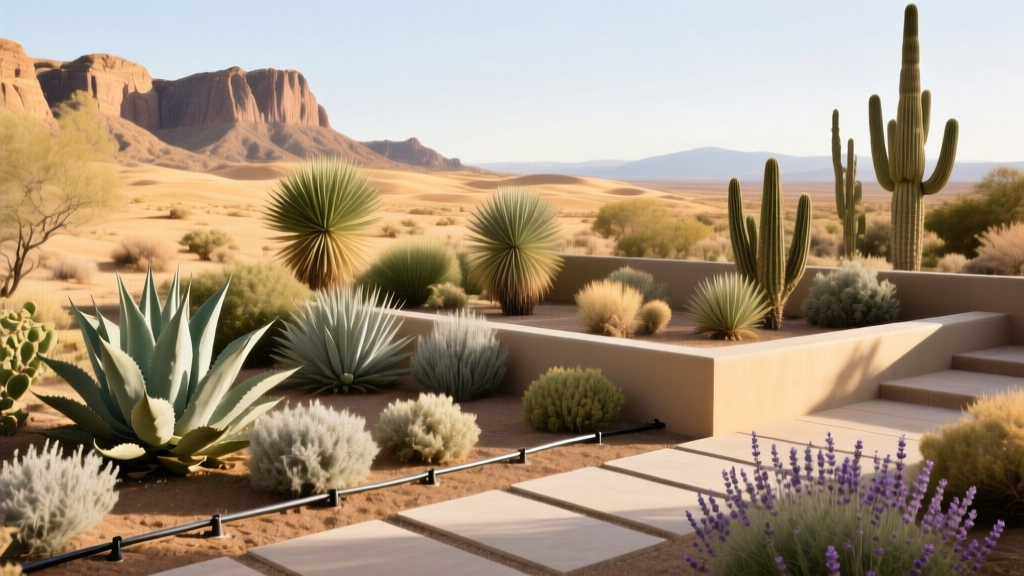
Xeriscaping in the Southwest: A Climate-Specific Guide
Anna KowalskiPublished
Mastering the Arid Canvas: Southwest Xeriscaping
Landscaping in the American Southwest presents a unique set of challenges and opportunities. With summer temperatures routinely exceeding 105°F and annual rainfall often dipping below 10 inches, traditional turf-heavy landscapes are both ecologically and financially unsustainable. According to EPA WaterSense, outdoor water use accounts for nearly 30% of total household water consumption, a figure that spikes dramatically in arid regions. Xeriscaping—a landscaping philosophy centered on water conservation and climate-appropriate design—is not just a trend in states like Arizona, Nevada, and New Mexico; it is an absolute necessity.
However, xeriscaping does not mean resigning yourself to a barren yard of gravel and a single cactus. When executed with regional microclimates in mind, a xeriscape can be a lush, vibrant, and highly functional outdoor living space. This guide provides actionable, climate-specific strategies for homeowners and landscape professionals looking to transform arid properties into resilient, low-maintenance sanctuaries.
Decoding Southwest Soil: The Caliche Challenge
Before selecting plants or laying irrigation, you must address the soil. The defining characteristic of Southwest soil is caliche—a hardpan layer of calcium carbonate that binds soil particles together into a concrete-like matrix. Caliche prevents deep root penetration, causes severe drainage issues, and locks up essential nutrients like iron, leading to chlorosis (yellowing) in many plants.
Testing and Amending the Hardpan
To test for caliche, dig a hole 12 inches deep and fill it with water. If the water does not drain within an hour, you have a hardpan layer. To combat this:
- Mechanical Breaking: For small garden beds, use a digging bar or mattock to fracture the caliche layer to a depth of at least 18 inches. For larger projects, hire a landscaping crew to use a tractor-mounted ripper.
- Chemical Amendment: Apply agricultural gypsum (calcium sulfate) at a rate of 20 to 30 pounds per 100 square feet. Gypsum helps to flocculate clay particles and slowly break down the sodium and calcium bonds in the hardpan over time.
- Organic Matter: Incorporate 2 to 3 inches of high-quality, fully composted organic matter into the top 6 inches of the fractured soil. Avoid high-saline manures, which are common in the Southwest and can exacerbate soil alkalinity.
Climate-Specific Plant Selection
Selecting the right plant for the right microclimate is the cornerstone of xeriscaping. The Southwest encompasses diverse zones, from the high-desert elevations of Santa Fe (USDA Zone 6b) to the scorching low-desert valleys of Phoenix (USDA Zone 9b). Utilizing authoritative resources like the UC Davis WUCOLS database (Water Use Classification of Landscape Species) helps professionals group plants by their precise hydro-zoning needs.
| Common Name | Botanical Name | Water Need | Sun Exposure | Mature Size |
|---|---|---|---|---|
| Desert Willow | Chilopsis linearis | Low | Full Sun | 15-25 ft tall |
| Texas Sage | Leucophyllum frutescens | Very Low | Full Sun | 6-8 ft tall/wide |
| Parry's Agave | Agave parryi | Very Low | Full to Part Sun | 2-3 ft tall/wide |
| Red Yucca | Hesperaloe parviflora | Low | Full Sun | 3-4 ft tall |
Planting Profiles and Timing
Desert Willow (Chilopsis linearis): Despite its name, this is not a true willow but a deciduous tree native to Southwest washes. It produces stunning orchid-like blooms from May to September. Plant in the fall (October/November) to allow the root system to establish before the brutal summer heat. Water deeply every 14 days during the first two summers.
Texas Sage (Leucophyllum frutescens): Also known as Texas Ranger, this evergreen shrub thrives in reflected heat and alkaline soils. It is famous for its "barometer bush" behavior, bursting into vibrant purple blooms just before or after monsoon rain events. Pro Tip: Never fertilize Texas Sage; rich soils and excess water will cause it to become leggy and prone to root rot.
Agave and Succulents: When planting succulents like Agave parryi, ensure the crown sits slightly above the surrounding soil grade to prevent water pooling and subsequent crown rot. Use a 50/50 mix of native soil and pumice or crushed granite for backfill to guarantee rapid drainage.
Precision Irrigation: Drip Systems and Smart Controllers
Overhead sprinklers are highly inefficient in the Southwest, where high winds and low humidity can cause evaporation losses of up to 50% before water ever reaches the soil. The Southern Nevada Water Authority strongly advocates for the complete removal of non-functional turf in favor of drip-irrigated xeriscapes.
Designing a Subsurface Drip Network
For a professional-grade xeriscape, abandon standard soaker hoses in favor of pressure-compensating drip tubing. Products like Netafim Techline CV feature built-in check valves that prevent drainage and siphoning on slopes, ensuring uniform water distribution across uneven desert terrain.
- Emitters: Use 1/2 gallon per hour (GPH) or 1 GPH emitters for shrubs. For trees like the Desert Willow, install a loop of drip tubing with four 2 GPH emitters spaced evenly around the drip line.
- Smart Controllers: Upgrade to a weather-based smart controller like the Hunter Pro-C with Hydrawise. These systems connect to local Wi-Fi and adjust watering schedules daily based on real-time evapotranspiration (ET) rates, ambient temperature, and wind speed.
- The "Deep and Infrequent" Rule: In July, established desert shrubs should be watered to a depth of 18-24 inches, but only once every 10 to 14 days. This forces roots to grow deep into the cooler soil profile, insulating the plant from surface heat.
Hardscaping and Mulching for Extreme Heat
Hardscaping provides the structural "bones" of a xeriscape, reducing the irrigable square footage while creating functional outdoor living areas. In fire-prone Southwest foothills, hardscaping is also a critical defensible space strategy.
Decomposed Granite (DG) vs. Organic Mulch
While shredded wood mulch is excellent for retaining moisture around non-succulent shrubs, it can retain too much moisture against the crowns of agaves and cacti, leading to fungal infections. Furthermore, in high-wind monsoon seasons, lightweight wood mulch often blows away into swimming pools or neighborhood streets.
The Solution: Use 2 to 3 inches of stabilized Decomposed Granite (DG) or 3/4-inch crushed river rock for the bulk of your landscape beds. DG compacts into a firm, permeable surface that mimics the natural desert desert pavement, suppresses weeds effectively, and reflects ambient light. To add visual interest and thermal mass, incorporate native sandstone or basalt boulders (1 to 2 tons each) as focal points. These boulders absorb heat during the day and slowly release it at night, creating microclimates that protect tender perennials from light winter freezes.
Project Costs and ROI for a 500-Square-Foot Conversion
Converting a traditional front yard to a xeriscape requires an upfront investment, but the return on investment (ROI) is realized through drastically reduced water bills, elimination of mowing, and potential municipal rebates. Below is a realistic cost breakdown for a 500-square-foot front yard conversion in a major Southwest metropolitan area.
| Project Component | Materials & Specs | Estimated Cost (500 sq ft) |
|---|---|---|
| Turf Removal | Mechanical removal, hauling, and disposal | $250 - $500 |
| Soil Amendment | Gypsum, compost, deep tilling labor | $300 - $450 |
| Drip Irrigation | Netafim tubing, valves, smart controller | $400 - $700 |
| Plants (15-gallon) | 10 mature shrubs, 2 accent trees | $800 - $1,500 |
| Hardscape & Mulch | Stabilized DG, weed barrier, boulders | $1,000 - $2,000 |
| Total Estimated Cost | Professional installation included | $2,750 - $5,150 |
Note: Many Southwest municipalities offer "Cash for Grass" rebates ranging from $1.50 to $3.00 per square foot of removed turf, which can offset 30% to 50% of your total project costs.
Conclusion: Embracing the Desert Aesthetic
Xeriscaping in the Southwest is not about deprivation; it is about adaptation and celebrating the natural beauty of the arid environment. By respecting the caliche soil, selecting climate-resilient flora, implementing precision drip irrigation, and utilizing permeable hardscaping, you can create a landscape that thrives in the harshest conditions. A well-designed xeriscape conserves thousands of gallons of water annually, supports local pollinators like the native carpenter bee and hummingbirds, and provides year-round curb appeal that stands as a testament to sustainable, regional landscaping.

