
Landscaping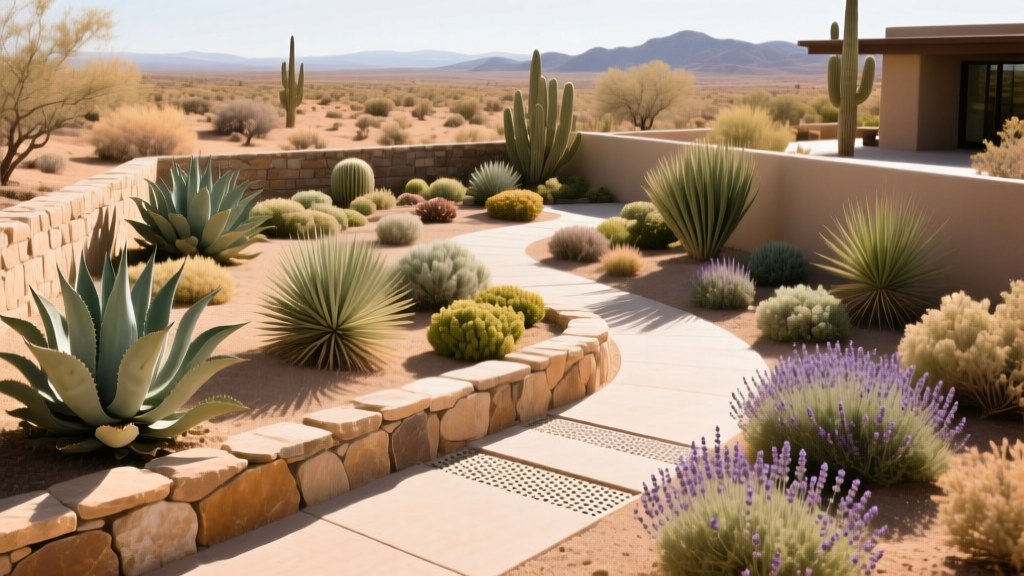
Xeriscaping the Southwest: Drought-Tolerant Landscape Design
Emily WatsonPublished
Mastering the Southwest Microclimate Through Xeriscaping
Landscaping in the American Southwest presents a unique set of challenges. With USDA Hardiness Zones ranging from 7 to 10, summer temperatures routinely exceeding 105 degrees Fahrenheit, and annual rainfall often dipping below 10 inches, traditional turf-heavy landscapes are both ecologically and financially unsustainable. According to the Environmental Protection Agency (EPA), outdoor water use accounts for nearly 30% of total household water consumption, and in arid regions, that number can climb to 60%. Xeriscaping—a term originally coined by the Denver Water Department but now a cornerstone of Colorado State University Extension guidelines—offers a brilliant solution. It is not merely about barren desert rock gardens; it is a comprehensive approach to landscape design that maximizes water efficiency while maintaining vibrant curb appeal.
Soil Preparation: Breaking Through Caliche
Before selecting plants or laying stone, you must address the native soil. Much of the Southwest is plagued by caliche—a hardened layer of calcium carbonate that acts like concrete, preventing water penetration and root growth. Attempting to plant directly into unamended caliche guarantees root rot and stunted growth.
Actionable Soil Amendment Steps:
- Testing: Dig a test hole 12 inches deep. Fill it with water. If it does not drain within 2 hours, you have a caliche or heavy clay problem.
- Mechanical Breaking: Use a mattock or a jackhammer with a spade bit to fracture the caliche layer to a depth of at least 18 inches.
- Amending: As recommended by Texas A&M Agrilife Extension, incorporate a 50/50 mix of native soil and high-quality organic compost. For highly alkaline soils (pH above 8.0), apply elemental sulfur at a rate of 1 to 2 pounds per 100 square feet to lower the pH and improve nutrient uptake.
Hydrozoning and Precision Drip Irrigation
Hydrozoning is the practice of grouping plants with similar water and sunlight requirements together. In a Southwest landscape, you should divide your yard into three distinct zones: the Oasis Zone (near the patio or entrance, requiring moderate water), the Transition Zone (moderate to low water), and the Desert Zone (relying almost entirely on natural rainfall once established).
Overhead sprinklers are highly inefficient in arid climates due to rapid evaporation and wind drift. Instead, install a subsurface or micro-drip irrigation system.
- Mainline: Use 1/2-inch poly tubing with pressure-compensating emitters to ensure uniform water distribution across sloped yards.
- Emitter Selection: For shrubs like Texas Ranger or Lantana, use 0.9 Gallons Per Hour (GPH) drippers. For groundcovers, use inline drip tubing with 12-inch emitter spacing.
- Timing: Program your smart controller to water deeply but infrequently. In peak summer (July-August), water established desert plants once every 10 to 14 days for 2 to 3 hours to encourage deep taproot growth.
Hardscaping Materials for High Heat and Water Retention
Hardscaping reduces the overall irrigable square footage of your yard, but material selection is critical in the Southwest. Dark materials absorb heat and can scorch nearby plants, while impermeable surfaces increase runoff and deprive the soil of vital rainwater.
Recommended Hardscape Materials:
- Decomposed Granite (DG): A highly permeable, natural-looking surface. For pathways, lay a 4-inch base of compacted road base, followed by 2 inches of DG mixed with a liquid stabilizer to prevent erosion. Cost: $55 to $75 per ton installed.
- Permeable Pavers: Ideal for patios and driveways. These allow rainwater to percolate into the ground, recharging local aquifers. Cost: $12 to $18 per square foot.
- Arizona Flagstone: Excellent for stepping stones. Choose lighter tan or buff colors to reflect solar radiation rather than absorbing it. Cost: $4.00 to $7.50 per square foot.
Pro Tip: Always leave a 6-inch gap between hardscape edges and the foundation of your home, filling it with 3/4-inch crushed basalt rock to deter termites and scorpions from seeking moisture near your walls.
The Ultimate Southwest Plant Palette
Selecting the right plants is the cornerstone of xeriscaping. Below is a curated comparison chart of high-performing, drought-tolerant plants suited for the Southwest microclimate.
| Common Name | Botanical Name | Water Need (Established) | Mature Size (H x W) | Sun Exposure | Est. Cost (1-Gal) |
|---|---|---|---|---|---|
| Texas Ranger | Leucophyllum frutescens | Very Low (Every 14 days) | 5-8 ft x 4-6 ft | Full Sun | $14 - $18 |
| Desert Willow | Chilopsis linearis | Low (Monthly deep soak) | 15-25 ft x 10-15 ft | Full Sun | $35 - $50 (5-Gal) |
| Red Yucca | Hesperaloe parviflora | Extremely Low (Rainfall only) | 3-4 ft x 4-5 ft | Full to Part Sun | $12 - $16 |
| New Gold Lantana | Lantana camara 'New Gold' | Low (Weekly in peak summer) | 1-2 ft x 3-5 ft | Full Sun | $8 - $12 |
| Parry's Agave | Agave parryi | None (Rainfall only) | 2 ft x 2 ft | Full Sun | $20 - $30 |
Seasonal Maintenance Calendar for Arid Landscapes
While xeriscapes are low-maintenance, they are not no-maintenance. Adhering to a regional seasonal calendar ensures your landscape thrives year-round.
Spring (March - April)
- Pruning: Prune frost-damaged tips from Texas Ranger and Lantana only after the last threat of frost has passed (usually mid-March). Do not prune agaves or yuccas unless removing dead lower leaves.
- Weed Control: Apply a pre-emergent herbicide specifically formulated for desert weeds like puncture vine and spurge in early March. Alternatively, apply a 2-inch layer of inorganic mulch (crushed granite) to smother weed seeds.
- Irrigation Check: Flush drip lines and replace clogged emitters before the summer heat sets in.
Summer (May - August)
- Watering: Shift watering schedules to early morning (between 4:00 AM and 6:00 AM) to minimize evaporation and prevent fungal diseases.
- Sunburn Protection: Young tree trunks (like Desert Willows) can suffer from sunscald. Wrap the trunks with white tree wrap or paint them with a 50/50 mixture of white latex paint and water.
Fall (September - November)
- Planting: Fall is the absolute best time to plant in the Southwest. The soil is still warm, encouraging rapid root establishment, while the cooler air temperatures reduce transplant shock and water demands.
- Fertilizing: Apply a slow-release, low-nitrogen fertilizer (such as a 5-10-10 NPK ratio) to shrubs and trees in late September. Avoid high nitrogen, which promotes weak, frost-susceptible growth.
Winter (December - February)
- Frost Protection: Cover tender succulents and newly planted citrus with frost cloth (not plastic) when temperatures are forecasted to drop below 32 degrees Fahrenheit.
- Watering: Reduce irrigation frequency significantly. Established native plants may not need any supplemental water during the winter months, relying solely on seasonal rains.
Conclusion
Transitioning to a xeriscaped landscape in the Southwest is an investment in both your property value and your local environment. By breaking through caliche soil, implementing precision drip irrigation, choosing heat-reflective hardscaping, and selecting resilient native plants, you can create an outdoor living space that is as breathtaking as it is sustainable. Embrace the unique beauty of the arid climate, and let your landscape work in harmony with nature rather than fighting against it.

