
Landscaping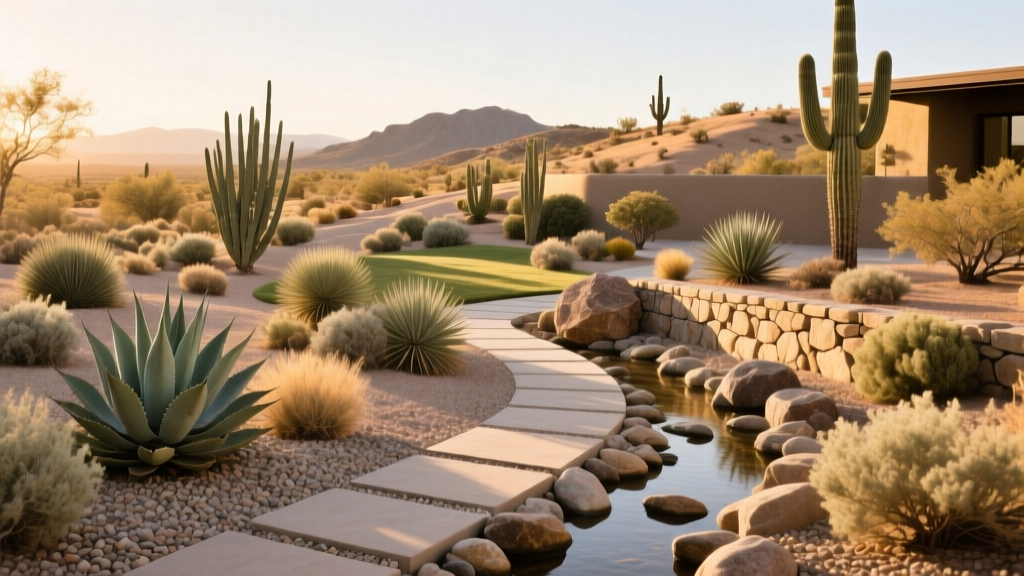
Xeriscaping the Southwest: Drought-Tolerant Landscape Design Guide
James MillerPublished
Mastering the Arid Landscape: A Southwest Xeriscaping Guide
The American Southwest is a region of stark, breathtaking beauty, but it presents some of the most unforgiving landscaping challenges in North America. With summer temperatures routinely exceeding 105°F, intense UV radiation, erratic monsoon rains, and chronic drought conditions, traditional turfgrass lawns are not just impractical—they are ecologically and financially unsustainable. According to the EPA WaterSense program, outdoor water use accounts for nearly 30% of total household water consumption, a figure that can double in arid regions during the summer months.
For homeowners in Arizona, New Mexico, Nevada, West Texas, and Southern California, xeriscaping is not merely a trend; it is a necessary evolution of landscape design. Xeriscaping, a term originally coined by the Denver Water Department, focuses on water conservation through creative, climate-appropriate design. This guide will walk you through the actionable steps, material costs, and specific plant selections required to build a thriving, low-water landscape in the Southwest.
The Southwest Climate and Soil Challenge
Before selecting plants or laying stone, you must understand the ground beneath your feet. Southwest soils are notoriously alkaline (pH 7.5 to 8.5), low in organic matter, and frequently feature a hardpan layer known as caliche. Caliche is a dense, cement-like layer of calcium carbonate that prevents water drainage and root penetration.
Actionable Soil Preparation
If you hit a white, rock-hard layer when digging, you have found caliche. Planting directly into or above it will lead to root rot and plant death.
- Testing: Dig a test hole 12 inches deep and fill it with water. If it does not drain within 4 hours, you have a drainage/caliche issue.
- Breaking Caliche: For small garden beds, use a mattock or pickaxe to physically break through the caliche layer to a depth of at least 18 inches. For large areas, rent a jackhammer or a heavy-duty rotary tiller with carbide teeth.
- Amending: Do not over-amend native soil with rich potting mixes, as this creates a 'bathtub effect' where water pools in the loose soil and rots desert-adapted roots. Instead, top-dress with a 1-inch layer of compost and apply elemental sulfur at a rate of 1 lb per 100 square feet to gradually lower the soil pH.
Hydrozoning: The Secret to Efficient Design
Hydrozoning is the practice of grouping plants with similar water and sunlight requirements together. This prevents the common mistake of overwatering drought-tolerant cacti to keep a nearby fern alive. The Colorado State University Extension, a pioneer in xeriscape research, identifies hydrozoning as a foundational principle of water-wise landscaping.
Southwest Hydrozone Breakdown
- Zone 1 (Oasis Zone): High-traffic areas near patios or entryways. Use low-water turf alternatives like Kurapia (Lippia nodiflora) or aggregate with potted tropicals on a dedicated drip line. Water: Weekly.
- Zone 2 (Transition Zone): Moderate-traffic areas visible from the home. Use flowering shrubs and small trees. Water: Bi-weekly.
- Zone 3 (Arid Zone): Perimeter areas and open spaces. Use native succulents, agaves, and gravel. Water: Monthly or rainfall only.
Top Drought-Tolerant Plants for the Southwest
Selecting the right plant for the right zone is critical. Below is a curated comparison chart of high-performing, low-water plants suited for USDA Hardiness Zones 8 through 10.
| Plant Name | Type | Mature Size | Sun / Water Needs | Best Hydrozone |
|---|---|---|---|---|
| Desert Willow (Chilopsis linearis) | Deciduous Tree | 15-25 ft tall | Full Sun / Very Low | Zone 2 or 3 |
| Red Yucca (Hesperaloe parviflora) | Succulent | 3-4 ft spread | Full Sun / Low | Zone 2 or 3 |
| Coyote Brush (Baccharis pilularis) | Evergreen Shrub | 4-6 ft tall | Full-Part Sun / Low | Zone 2 |
| Agave Parryi (Parry's Agave) | Succulent | 2-3 ft spread | Full Sun / Very Low | Zone 3 |
| Lantana (Lantana camara) | Flowering Shrub | 3-5 ft spread | Full Sun / Moderate | Zone 1 or 2 |
| Apache Plume (Fallugia paradoxa) | Deciduous Shrub | 4-6 ft tall | Full Sun / Very Low | Zone 3 |
Pro Tip: Always purchase plants in 5-gallon or larger sizes for the Southwest. The intense sun can scorch the shallow root systems of 1-gallon transplants before they establish.
Hardscaping for Heat and Water Retention
In a xeriscape, hardscaping replaces thirsty lawn areas, reduces maintenance, and provides structural interest. However, not all materials perform well in extreme heat.
Material Comparison and Costs
- Decomposed Granite (DG): The gold standard for Southwest pathways and open spaces. It compacts well, allows water percolation, and blends naturally with the desert floor. Cost: $40 to $70 per ton (covers approx. 100 sq ft at 2 inches deep). Installation: Lay a 2-inch base of crushed road base, compact, then add 2 inches of DG mixed with a liquid stabilizer to prevent erosion during monsoon rains.
- Flagstone and Sandstone: Excellent for patios, but dark-colored stones will absorb heat and can burn bare feet. Opt for light-colored Arizona Buff or Sedona Red flagstone. Cost: $4 to $8 per square foot for materials.
- River Rock vs. Crushed Gravel: Avoid smooth river rock in full sun; it acts as a heat sink and reflects UV rays onto plants, causing leaf scorch. Instead, use 3/8-inch minus crushed basalt or granite, which locks together and dissipates heat better.
Precision Irrigation: Drip vs. Flood
Sprinkler systems are highly inefficient in the Southwest due to rapid evaporation and wind drift. The Water Use It Wisely campaign strongly advocates for converting spray zones to drip irrigation, which delivers water directly to the root zone with up to 95% efficiency.
Designing a Desert Drip System
- Emitters: Use 2 Gallons Per Hour (GPH) pressure-compensating emitters. Place two emitters per shrub, spaced 18 inches apart on either side of the root ball.
- Deep Root Watering: For trees like the Desert Willow or Palo Verde, use a Ross root feeder or install deep-soaker drip tubes buried 12-18 inches below the soil surface to encourage deep, heat-resistant root growth.
- Smart Controllers: Invest in an EPA WaterSense-labeled smart controller (such as the Rachio 3 or Hunter Hydrawise). These devices connect to local Wi-Fi and automatically adjust watering schedules based on real-time local evapotranspiration (ET) rates and weather forecasts, saving up to 30% more water than standard timers.
- Timing: Program your system to run between 2:00 AM and 5:00 AM. Watering during the heat of the day leads to massive evaporative loss, while evening watering can promote fungal diseases in humid monsoon months.
Mulching in the Desert: Inorganic vs. Organic
In cooler, wetter climates, organic wood mulch is a staple. In the Southwest, organic mulch presents unique problems: it degrades rapidly under intense UV light, blows away during severe haboobs (dust storms), and can harbor pests. Furthermore, as it breaks down, it can tie up nitrogen in the already nutrient-poor desert soil.
For Zones 2 and 3 (Arid and Transition zones), inorganic mulch is vastly superior. A 2-to-3-inch layer of 3/8-inch crushed gravel or decomposed granite suppresses weeds, reflects sunlight away from plant stems, and allows monsoon rains to penetrate instantly. Reserve organic compost or wood chips strictly for Zone 1 (Oasis zones) or around vegetable gardens where soil enrichment is the primary goal.
Conclusion: Embracing the Regional Aesthetic
Transitioning to a xeriscape does not mean sacrificing beauty or curb appeal. By embracing the architectural forms of agaves, the vibrant seasonal blooms of lantana and desert willows, and the natural textures of decomposed granite and sandstone, you can create a landscape that celebrates the unique ecology of the Southwest. Not only will you drastically reduce your water bill and weekend maintenance chores, but you will also play a vital role in conserving the region's most precious resource: water. Start small by converting one irrigation zone to drip and replacing a patch of turf with native hydrozoning, and watch your desert oasis thrive.

