Gardening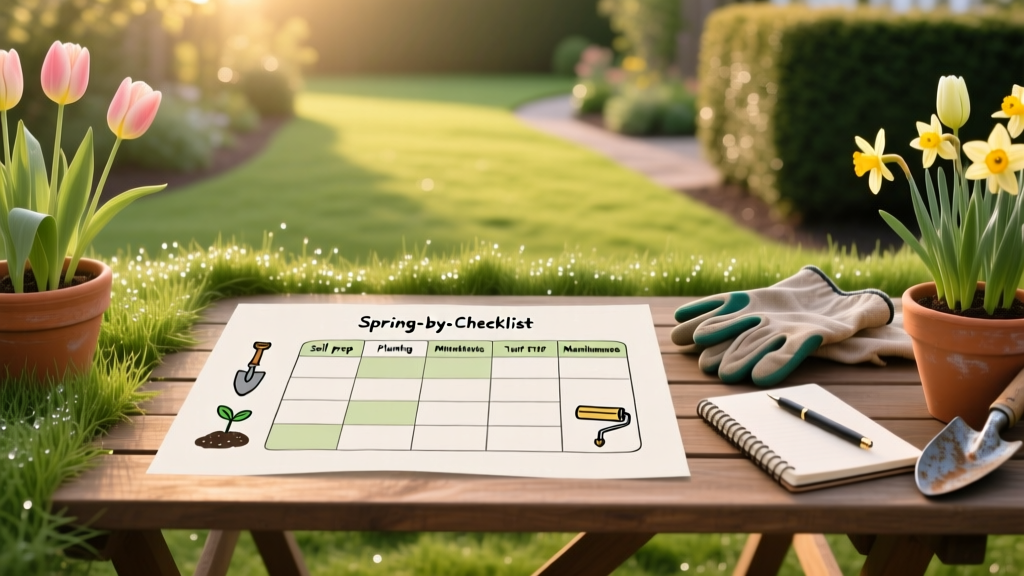
Spring Garden and Lawn Care Checklist: Weekly Schedule
Lisa ThompsonPublished
The Ultimate Spring Garden and Lawn Care Schedule
Managing both a thriving vegetable garden and a lush turfgrass lawn requires careful timing, precise measurements, and a structured routine. Many homeowners treat these two landscape elements as entirely separate projects, but synchronizing your garden and lawn care checklists can save you time, reduce water waste, and improve overall soil health. By aligning your turf maintenance with your seasonal planting guides, you ensure that both your edible crops and your grass receive the exact nutrients and care they need during critical growth windows.
This comprehensive, week-by-week spring schedule is designed for temperate climate zones (USDA Hardiness Zones 5-7). It covers soil preparation, composting, turf aeration, and seasonal planting. According to the United States Department of Agriculture (USDA), proactive spring soil management and organic matter integration are the most critical factors in establishing deep root systems for both turf and garden crops before the heat of summer arrives.
Early Spring (Weeks 1-3): Assessment, Cleanup, and Soil Testing
The first phase of your spring checklist begins as soon as the ground thaws and daytime temperatures consistently hover above 45°F. This is the time for assessment and gentle cleanup. Avoid walking on soggy lawns or tilling wet garden beds, as this compacts the soil structure and destroys beneficial microbial networks.
Soil Testing and Analysis
Before applying any fertilizers or amendments, you must understand your baseline soil chemistry. Purchase a reliable at-home kit, such as the Luster Leaf Rapitest Soil Test Kit (approximately $15), or send samples to your local university extension office. You are testing for pH, nitrogen (N), phosphorus (P), and potassium (K). Most turfgrasses thrive at a pH of 6.0 to 7.0, while vegetable gardens generally prefer a slightly acidic to neutral pH of 6.2 to 6.8. If your soil is too acidic, apply pelletized lime at a rate of 50 lbs per 1,000 square feet to raise the pH gradually.
Debris Removal and Dethatching
Rake your lawn gently with a flexible leaf rake to remove winter debris and dead grass blades. If your thatch layer exceeds half an inch, plan for mechanical dethatching in Week 4. In the garden beds, clear away decaying winter mulch and dead annual foliage to allow the soil to warm up. Add this organic debris to your compost bin, balancing the 'brown' carbon materials with 'green' nitrogen-rich kitchen scraps, a practice highly recommended by the Environmental Protection Agency (EPA) for reducing landfill waste and creating nutrient-dense humus.
Mid-Spring (Weeks 4-6): Aeration, Composting, and Cool-Season Planting
As soil temperatures reach 50°F, biological activity in the soil ramps up. This is your window for heavy soil modification and planting cold-hardy crops.
Lawn Aeration and Top-Dressing
Core aeration is essential for relieving soil compaction. Rent a walk-behind core aerator (typically $60-$80 for a half-day rental) and make two passes over your lawn in perpendicular directions. Immediately after aerating, top-dress the lawn with a quarter-inch layer of fine compost. This fills the aeration holes with organic matter, improving water retention and introducing beneficial microbes directly to the turf root zone.
Garden Bed Preparation and Early Sowing
For your raised beds and in-ground vegetable gardens, incorporate 2 to 3 inches of well-aged compost into the top 6 inches of soil using a broadfork or garden fork. Avoid using a motorized rototiller, which can bring dormant weed seeds to the surface and damage earthworm populations. Once the beds are prepped, you can direct-sow cool-season crops. According to The Old Farmer's Almanac, crops like peas, spinach, radishes, and carrots can be sown directly into the garden as soon as the soil is workable, often 4 to 6 weeks before the last expected frost date.
Late Spring (Weeks 7-10): Seeding, Mulching, and Warm-Season Transplants
When soil temperatures consistently hit 55°F at a 2-inch depth, it is time to focus on weed prevention, lawn thickening, and transitioning to warm-season garden crops.
Overseeding and Pre-Emergent Herbicides
If your lawn has bare patches, overseed them now using a premium seed blend suited to your region (such as Kentucky Bluegrass or Tall Fescue for cool-season zones). Apply seed at a rate of 3 to 4 lbs per 1,000 square feet and keep the top inch of soil consistently moist. Note: Do not apply a pre-emergent crabgrass preventer (like Dimension/dithiopyr) to areas you have just seeded, as it will inhibit grass seed germination. Apply pre-emergents only to established turf.
Mulching and Warm-Season Transplants
Wait until all danger of frost has passed and nighttime temperatures remain above 50°F before transplanting warm-season crops like tomatoes, peppers, and eggplants. After planting, apply a 2-inch layer of organic mulch (straw or shredded hardwood) around the base of the plants. This retains soil moisture, suppresses weeds, and regulates soil temperature. Keep mulch a few inches away from the stems to prevent rot.
Spring Checklist and Schedule Matrix
| Timeline | Lawn Care Task | Garden Task | Est. Cost |
|---|---|---|---|
| Weeks 1-2 | Rake debris, conduct soil pH test | Clear beds, test soil, start seeds indoors | $25 - $40 |
| Weeks 3-4 | Apply lime/sulfur based on test results | Turn compost pile, direct-sow peas/spinach | $30 - $50 |
| Weeks 5-6 | Core aeration, compost top-dressing | Fork compost into beds, thin seedlings | $80 - $120 |
| Weeks 7-8 | Overseed bare spots, apply pre-emergent | Harden off transplants, install trellises | $60 - $90 |
| Weeks 9-10 | First mow (set blade to 3 inches) | Transplant tomatoes/peppers, apply mulch | $40 - $70 |
Essential Tools and Products for Your Checklist
To execute this schedule efficiently, you need the right tools and amendments. Investing in high-quality products upfront reduces long-term landscape failures.
- Soil Thermometer: A basic $10 probe thermometer is non-negotiable. Guessing soil temperature leads to failed seed germination and wasted pre-emergent herbicides.
- Broadfork: Priced around $80-$120, this manual tool aerates garden beds deeply without turning the soil, preserving the soil food web.
- Espoma Organic Garden-tone (4-3-4): An excellent slow-release granular fertilizer for vegetable beds, providing essential nutrients and beneficial microbes without the risk of chemical burn.
- Scotts Turf Builder Lawn Food (32-0-4): Ideal for the first lawn feeding of the season in late spring, providing a high nitrogen boost to push blade growth after the stress of winter.
Watering Strategies and Summer Transition
As spring concludes and summer approaches, your watering schedule must shift from frequent, shallow irrigation to deep, infrequent soaking. Lawns require about 1 to 1.5 inches of water per week. Water your turf deeply twice a week in the early morning (between 4 AM and 8 AM) to minimize evaporation and fungal diseases. Vegetable gardens, particularly those in raised beds, may require daily watering during hot spells, but always use drip irrigation or soaker hoses to deliver moisture directly to the root zone and keep foliage dry.
By following this structured lawn care and gardening checklist, you build a resilient landscape capable of withstanding summer heat, resisting pests, and producing a bountiful harvest. Consistency and timing are your greatest assets in the garden and on the lawn.
