Pest Control
The Ultimate Spring Grub Control and Lawn Care Guide
Understanding the Spring Grub Threat to Lawn Health
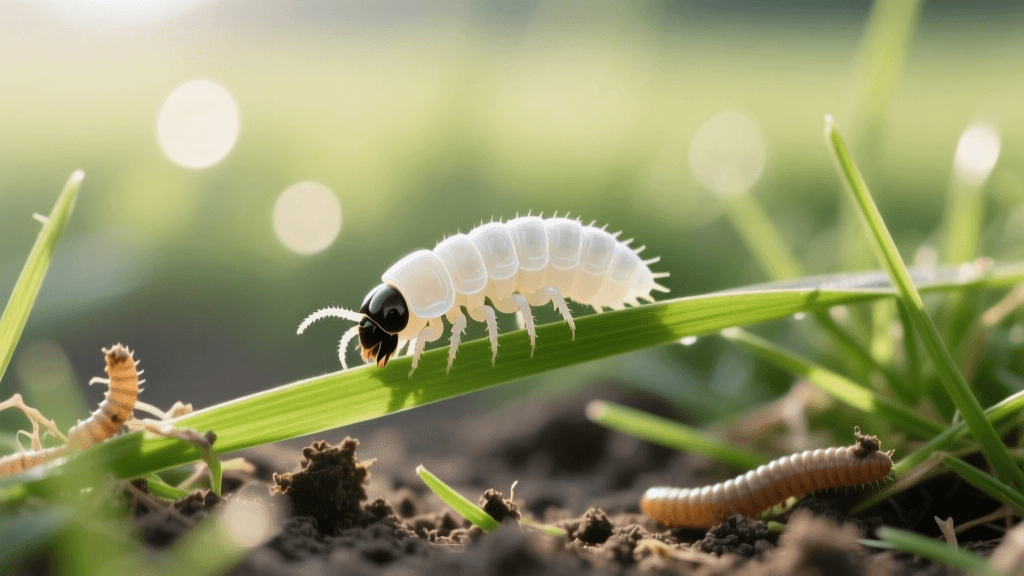
As the soil temperature begins to rise in early spring, typically crossing the 50-degree Fahrenheit threshold at a two-inch depth, your lawn wakes up from winter dormancy. Unfortunately, so do the larvae of various scarab beetles. White grubs, the larval stage of Japanese beetles, June bugs, and European chafers, spend the winter deep in the soil profile below the frost line. As spring arrives and the ground thaws, they migrate upward to feed on the tender, newly emerging roots of your turfgrass.
This root pruning severely compromises the lawn's ability to uptake water and essential nutrients. The result is widespread thinning, chlorosis (yellowing), and eventual death of the grass if left unchecked. Unlike fall treatments, which target small, vulnerable first-instar grubs, spring grubs are mature, large, and possess a thick exoskeleton that makes them highly resistant to many standard preventative insecticides. Understanding this biological shift is crucial for selecting the right seasonal maintenance strategy.
Diagnosing Grub Damage vs. Spring Lawn Diseases
Before reaching for chemical controls, it is critical to confirm that grubs are the actual culprit. Spring lawns are highly susceptible to fungal diseases like snow mold and dollar spot, which can mimic the brown, dead patches caused by root-feeding insects. Misdiagnosis leads to unnecessary chemical applications and wasted money.
The Tug Test and Economic Thresholds
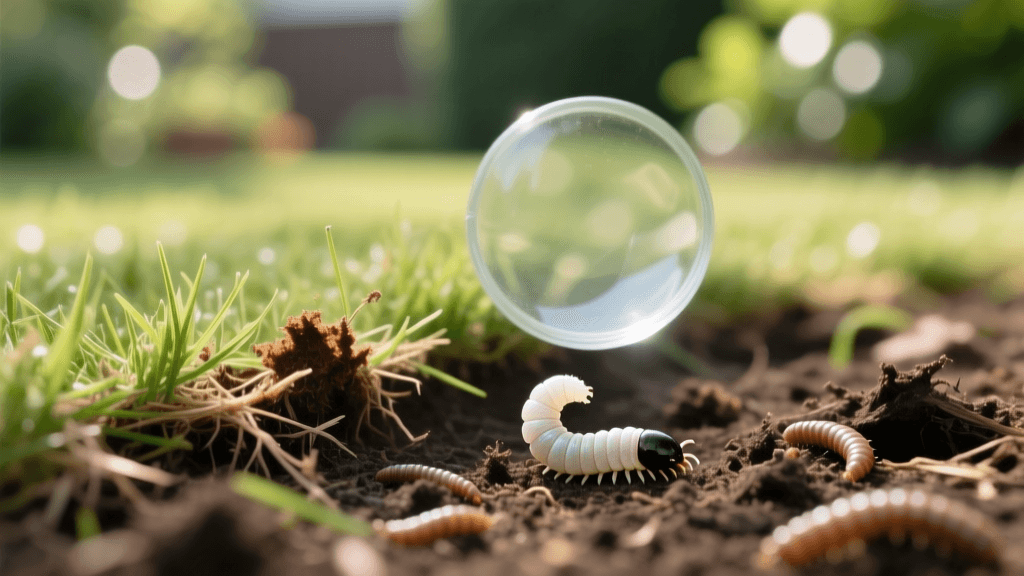
According to Purdue University Extension, a healthy, vigorously growing lawn can tolerate a low population of grubs without sustaining visible aesthetic damage. The economic and aesthetic threshold for treatment is typically between 5 and 10 grubs per square foot. To accurately test your lawn, use a sharp spade to cut a one-foot square section of turf about two inches deep. Peel it back like a carpet and count the C-shaped, white larvae with brown heads in the top two inches of soil and the underlying thatch layer.
| Issue | Primary Symptoms | Root Condition | Pest Presence |
|---|---|---|---|
| Grub Damage | Spongy turf, irregular brown patches, animal digging | Roots severed, turf rolls back easily | White C-shaped larvae visible |
| Snow Mold | Circular gray or pink matted patches | Roots intact, blades matted together | Fungal mycelium present |
| Spring Dead Spot | Well-defined sunken dead circles | Roots blackened, rotted, and brittle | No insects present |
Actionable Spring Grub Treatment Strategies
Because spring grubs are mature and preparing to pupate into adult beetles by late May, your window for effective curative treatment is narrow. You must utilize fast-acting chemicals that can penetrate the soil and eliminate the pest before it causes further root destruction or transitions into its pupal stage.
Curative Treatments for Active Spring Infestations
If you have confirmed an active infestation exceeding the 5-to-10 threshold in April or early May, you must use a fast-acting curative insecticide. Products containing Trichlorfon (commonly sold under the brand name Dylox) or Carbaryl (Sevin) are the industry standards for spring curative control.
- Trichlorfon (Dylox): Acts as a rapid knockdown agent, typically killing grubs within 24 to 48 hours. It degrades quickly in the soil (within a few days to a week), making it exceptionally safe for subsequent spring overseeding. Apply at a rate of 2 to 3 pounds of active ingredient per acre. Cost: Approximately $15 to $20 per 1,000 square feet.
- Carbaryl (Sevin): Offers a slightly longer residual effect but is highly toxic to earthworms and beneficial soil organisms. Use only when Trichlorfon is unavailable or ineffective. Cost: $10 to $15 per 1,000 square feet.
Late Spring Preventative Treatments
If you missed the curative window, or if you want to proactively protect the lawn from the next generation of grubs hatching in mid-summer, apply a preventative containing Chlorantraniliprole (e.g., Scotts GrubEx) between mid-April and early June. This chemical requires 60 to 90 days to fully translocate into the root zone, perfectly timing its peak efficacy with the emergence of young, vulnerable first-instar grubs in July and August. Cost: $10 to $12 per 1,000 square feet.
Lawn Health Recovery Post-Grub Infestation
Eradicating the pest is only half the battle. The severed root systems and excavated soil from foraging wildlife require immediate agronomic intervention to restore turf density, improve soil structure, and prevent opportunistic weed invasion.
Repairing Animal Damage
Skunks, raccoons, and crows will tear up a lawn to feast on protein-rich grubs. This leaves behind divots and flipped chunks of sod. To repair this, gently press the flipped sod back into place, step on it to ensure soil contact, and water heavily. For deep divots, fill them with a 50/50 mix of topsoil and compost, then sprinkle with grass seed and a light dusting of straw mulch.
Core Aeration and Topdressing
Animal digging and grub tunneling destroy soil structure and create air pockets that dry out roots. Rent a core aerator to pull 2-to-3-inch plugs from the soil. This alleviates compaction and creates channels for oxygen, water, and nutrients. Follow aeration with a light topdressing of compost (about 1/4 inch thick) to introduce beneficial microbes that aid in thatch decomposition and root regeneration.
Strategic Overseeding and Nutrient Management
Choose a turfgrass blend resistant to environmental stress. For cool-season lawns, Tall Fescue blends possess deeper root systems that are more tolerant of minor grub feeding. Apply seed at a rate of 4 to 6 pounds per 1,000 square feet for bare patches. Avoid high-nitrogen, quick-release fertilizers in early spring, as they promote lush, shallow top-growth. Instead, apply a slow-release, balanced fertilizer with an N-P-K ratio of 3-1-2 or 4-1-2 (such as a 24-8-16 formula) at a rate of 1 pound of actual nitrogen per 1,000 square feet to support deep root regeneration.
Integrated Pest Management (IPM) for Long-Term Health
Chemical controls should be a last resort within a holistic Integrated Pest Management (IPM) framework. Building a resilient lawn naturally deters severe pest outbreaks and reduces the need for seasonal chemical interventions.
Beneficial Nematodes
For organic lawn care enthusiasts, Heterorhabditis bacteriophora (Hb nematodes) are microscopic, soil-dwelling roundworms that actively seek out and parasitize white grubs. Apply them in late summer or early fall when soil temperatures are consistently above 60 degrees Fahrenheit. They require immediate irrigation post-application to wash them into the root zone and protect them from UV degradation. While slower than synthetic chemicals, they provide sustainable, multi-year population suppression.
Cultural Practices: Mowing and Irrigation
Mow your lawn at the highest recommended setting for your grass species (typically 3 to 4 inches for cool-season grasses). Taller grass blades produce more photosynthetic energy, which is directed downward to build massive, deep root systems capable of surviving minor grub pruning. Furthermore, avoid frequent, shallow watering. Deep, infrequent irrigation (providing 1 to 1.5 inches of water per week) encourages roots to chase moisture deep into the soil profile, placing them out of reach of surface-feeding early-instar grubs.
'A vigorous, deeply rooted turfgrass stand is the most effective defense against white grubs. Lawns maintained with proper mowing heights and deep irrigation can often mask the feeding damage of low-to-moderate grub populations without the need for chemical intervention.' — University of Massachusetts Extension Turf Program
Conclusion
Effective spring grub control requires a dual approach: precise, targeted curative treatments to eliminate active threats, followed by rigorous cultural practices to rebuild root mass and soil health. By combining strategic chemical applications with IPM principles, you can ensure your lawn remains dense, vibrant, and resilient against future pest pressures throughout the entire growing season.