Gardening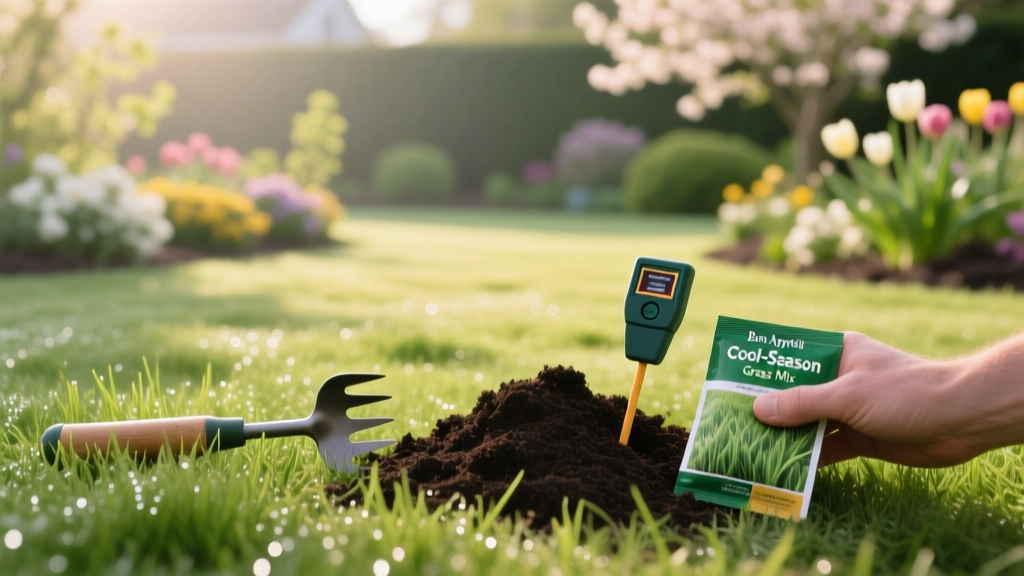
Spring Lawn and Garden Prep Schedule: Week-by-Week Checklist
Robert HayesPublished
Transitioning from the dormancy of winter into the explosive growth of spring requires a synchronized approach to yard care. Homeowners often make the mistake of treating their turfgrass and their vegetable or flower garden beds as entirely separate entities, resulting in duplicated labor and conflicting chemical applications. By adopting a unified lawn and garden care schedule, you can optimize soil health, manage water runoff, and create seamless transition zones between your recreational turf and your productive garden spaces. This comprehensive, week-by-week checklist bridges the gap between professional turf management and intensive garden bed preparation.
Weeks 1-3: Assessment, Soil Testing, and Cleanup
Before any seed or fertilizer touches the ground, you must understand your baseline soil chemistry. According to the University of Minnesota Extension Lawn Care Calendar, early spring is the critical window for assessing winter damage and testing soil pH. Use a stainless steel soil probe to extract 10 to 15 cores from your lawn at a depth of 3 to 4 inches, and separate cores from your raised vegetable beds at a depth of 6 to 8 inches. Mix them in separate clean plastic buckets and send them to your local university cooperative extension. This test, typically costing between $15 and $30, will dictate your lime, sulfur, and phosphorus requirements for the entire season.
While awaiting results, focus on physical cleanup. Rake the lawn with a flexible leaf rake to remove winter debris and dead grass blades, which can harbor snow mold. In the garden beds, clear out decaying annuals and cut back dormant perennials to 2 inches above the soil line. This shared cleanup phase prepares the canvas for both turf aeration and garden bed cultivation.
Weeks 4-6: Aeration, Decompaction, and Edging
Soil compaction is the enemy of both deep-rooted fescue and heavy-feeding tomatoes. For the lawn, rent a walk-behind core aerator (approximately $80 to $100 per day) and pull 2-to-3-inch soil plugs across the turf. Leave the plugs on the lawn to break down naturally; they contain beneficial microbes that will help decompose thatch.
Simultaneously, address your garden beds. Avoid using a rototiller, which destroys soil structure and brings dormant weed seeds to the surface. Instead, use a broadfork to gently fracture the soil in your vegetable beds to a depth of 8 inches. This preserves the soil food web while improving drainage.
Next, define the transition zones. Where turfgrass meets garden beds, use a sharp half-moon edger to cut a 4-inch deep, 2-inch wide trench. This physical barrier prevents aggressive grasses like Bermuda or Kentucky Bluegrass from invading your carefully prepared garden soil. Fill the trench with a 1-inch layer of coarse gravel or line it with commercial-grade landscape edging to maintain a crisp, professional boundary throughout the growing season.
Weeks 7-9: Seeding, Fertilizing, and Topdressing
This phase requires careful timing, particularly regarding weed control and seeding. If you plan to overseed thin patches of your lawn with cool-season grasses, you cannot apply a pre-emergent herbicide like Prodiamine, as it will inhibit grass seed germination. Instead, spot-treat early broadleaf weeds with a selective post-emergent herbicide, or rely on manual extraction.
Once the soil temperature consistently reaches 50°F to 65°F, overseed the lawn at a rate of 4 to 6 pounds per 1,000 square feet. Immediately follow this with a thin topdressing of screened compost—about 1/4 inch thick. The EPA Guide to Composting at Home highlights that incorporating organic matter improves water retention and reduces the need for synthetic fertilizers.
In the garden beds, apply a 2-inch layer of mature compost and incorporate it into the top 4 inches of soil using a garden fork. For vegetable beds, amend the soil with a balanced organic fertilizer like Espoma Garden-tone (3-4-4) at a rate of 7 pounds per 100 square feet. For the lawn, apply a slow-release, high-nitrogen turf fertilizer, such as Scotts Turf Builder (24-25-4), using a calibrated broadcast spreader set to the manufacturer's recommended dial setting.
Comprehensive Spring Task and Cost Matrix
To help you budget and schedule your weekend projects, refer to the matrix below. This table outlines the primary tasks, required materials, and estimated costs for a standard 1,000-square-foot lawn area and a 100-square-foot garden bed.
| Phase / Timeline | Lawn Task (per 1,000 sq ft) | Garden Bed Task (per 100 sq ft) | Estimated Cost |
|---|---|---|---|
| Weeks 1-3 | Soil testing, debris raking | Perennial cutback, debris clearing | $25 - $40 |
| Weeks 4-6 | Core aeration (equipment rental) | Broadforking, trench edging | $90 - $120 |
| Weeks 7-9 | Overseeding, compost topdressing | Compost amendment, organic fertilizing | $65 - $95 |
Irrigation Startup and Spreader Calibration
A unified schedule also means managing shared resources like water and application equipment. In Week 6, perform a comprehensive startup of your underground irrigation system. Slowly open the main valve to prevent water hammer, which can fracture PVC pipes. Run each zone and inspect spray heads for sunken nozzles or misaligned rotors. Adjust sprinkler heads so they water the lawn and the perimeter garden beds, but avoid overspraying onto hardscapes or home foundations.
Furthermore, calibrate your broadcast spreader before applying any seed or fertilizer. An improperly calibrated spreader can burn your turf with excess nitrogen or starve your garden beds of essential nutrients. Place a tarp on your driveway, mark a 100-square-foot test area, and run your spreader loaded with the product. Weigh the product left on the tarp to calculate your exact application rate per 1,000 square feet.
Long-Term Soil Health and Maintenance
The ultimate goal of this integrated schedule is to build a resilient, living soil ecosystem. As noted by turf and soil scientists at the Penn State Extension Lawn Maintenance Calendar, returning grass clippings to the lawn and utilizing yard waste for compost creates a closed-loop nutrient cycle. By mowing your lawn at a height of 3 to 3.5 inches, you shade out weed seeds, retain soil moisture, and encourage deeper root growth that mirrors the robust root systems of your perennial garden borders.
Maintaining this schedule ensures that your lawn remains a lush, durable carpet for recreation, while your adjacent garden beds thrive with vigorous, disease-resistant growth. The synergy between turf management and garden cultivation ultimately saves time, reduces chemical inputs, and elevates the overall aesthetics of your outdoor living space.
