Lawn Care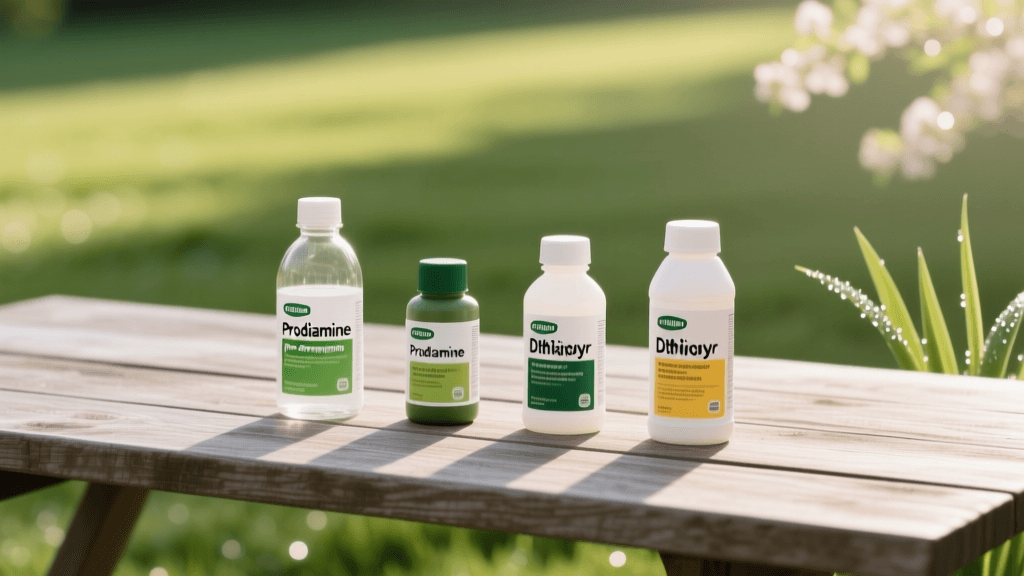
Best Pre-Emergent Herbicides for Spring Lawns Compared
The Science of Spring Weed Prevention
As soil temperatures begin to rise in early spring, your lawn faces an invisible invasion: the germination of crabgrass, goosegrass, and other pesky annual weeds. Once these weeds break through the soil surface, they become notoriously difficult to eradicate without damaging your desired turf. This is where pre-emergent herbicides become your most valuable tool. However, not all pre-emergents are created equal. Choosing the right product requires an understanding of active ingredients, residual longevity, and your specific lawn care goals, such as whether you plan to overseed in the fall.
In this comprehensive product review and comparison guide, we break down the top professional-grade and consumer pre-emergent herbicides on the market. We will compare application rates, cost-effectiveness, and active ingredients to help you make an informed decision for your cool-season or warm-season lawn.
Active Ingredients Breakdown: Prodiamine vs. Dithiopyr vs. Pendimethalin
Before diving into specific brands, it is crucial to understand the chemistry driving these products. Pre-emergents do not prevent seeds from germinating; rather, they inhibit cell division in the young root system of the sprouting weed, effectively killing it before it emerges from the soil.
- Prodiamine: Known for its exceptionally long residual control (up to 6 months depending on the application rate). It binds tightly to soil organic matter, making it highly resistant to leaching. However, it will prevent grass seed germination for months, complicating fall overseeding.
- Dithiopyr: Offers a slightly shorter residual than Prodiamine but boasts a unique advantage: early post-emergent activity. It can kill crabgrass that has already germinated and is in its early growth stages (up to the 1-tiller stage).
- Pendimethalin: Commonly found in big-box store consumer products. It provides reliable short-term control but is prone to staining concrete and asphalt an orange-yellow color if not swept off immediately.
Top Pre-Emergent Products Reviewed
1. The Andersons 0.48% Barricade (Prodiamine)
Best For: Maximum season-long control and budget-conscious professionals.
Barricade is the industry standard for Prodiamine-based pre-emergents. The Andersons formulate this with their patented DG (Dispersing Granule) technology, which ensures that each granule breaks down into thousands of micro-particles upon contact with water. This results in a much more even distribution across the soil surface compared to traditional clay-based carriers.
- Application Rate: 1.8 lbs per 1,000 sq. ft. (for 3-month control) up to 3.6 lbs per 1,000 sq. ft. (for 6-month control).
- Estimated Cost: $14 to $28 per 1,000 sq. ft. depending on the rate.
- Pros: Excellent residual, highly uniform granule size, does not stain concrete.
- Cons: Strictly prevents all seed germination; fall overseeding requires a 4 to 6-month waiting period.
2. Lesco Dimension (Dithiopyr 0.15%)
Best For: Late spring applications and lawns with early crabgrass breakthroughs.
Dimension is a premium product that provides both pre-emergent and early post-emergent control. If you miss your early spring application window and suspect crabgrass has already begun to germinate, Dimension is your safety net. It will halt crabgrass development up to the 1-leaf (1-tiller) stage while continuing to protect the soil.
- Application Rate: 2.3 lbs per 1,000 sq. ft. (standard) to 4.6 lbs per 1,000 sq. ft. (heavy pressure).
- Estimated Cost: $18 to $36 per 1,000 sq. ft.
- Pros: Early post-emergent crabgrass control, slightly shorter residual allows for earlier fall overseeding compared to Prodiamine.
- Cons: Higher cost per application; requires precise timing for post-emergent efficacy.
3. Scotts Turf Builder Halts Crabgrass Preventer (Pendimethalin)
Best For: Homeowners seeking accessible, off-the-shelf solutions for small lawns.
Scotts Halts is the most recognizable consumer-grade pre-emergent. While it utilizes Pendimethalin rather than the professional-grade active ingredients mentioned above, it is effective when applied correctly and watered in promptly. The primary drawback is the carrier quality and the potential for hardscape staining.
- Application Rate: Approximately 3.2 lbs per 1,000 sq. ft. (based on standard consumer bag coverage).
- Estimated Cost: $8 to $12 per 1,000 sq. ft.
- Pros: Widely available at local hardware stores, easy to find, affordable upfront cost.
- Cons: Stains driveways and sidewalks orange, shorter residual control (often requires a split application), lower active ingredient concentration.
Head-to-Head Feature Comparison Chart
| Product | Active Ingredient | Rate (per 1k sq ft) | Est. Cost (per 1k sq ft) | Post-Emergent Activity | Residual Length |
|---|---|---|---|---|---|
| Andersons Barricade | Prodiamine 0.48% | 1.8 - 3.6 lbs | $14 - $28 | None | 3 - 6 Months |
| Lesco Dimension | Dithiopyr 0.15% | 2.3 - 4.6 lbs | $18 - $36 | Yes (1-tiller stage) | 2 - 4 Months |
| Scotts Halts | Pendimethalin | ~3.2 lbs | $8 - $12 | None | 1 - 2 Months |
Precision Timing: The 55-Degree Rule
Applying a pre-emergent too early can result in the chemical barrier breaking down before the main weed flush occurs. Applying too late means the weeds have already germinated, rendering the product useless. The golden rule of spring pre-emergent application is to treat your lawn when soil temperatures at a 1-inch depth reach 50°F to 55°F for 3 to 5 consecutive days.
Do not rely on air temperature, as soil retains winter cold much longer than the ambient air warms. Utilize free tools like the Syngenta GreenCast Online soil temperature tracker to monitor your specific zip code. For most of the transition zone and northern cool-season turf regions, this window falls between late March and mid-April.
Expert Insight: According to Purdue University Extension’s Turfgrass Science program, 'Crabgrass begins to germinate when soil temperatures at the 1-inch depth are 53 to 55 degrees Fahrenheit for consecutive days. Pre-emergence herbicides must be applied and watered into the soil before this germination threshold is reached to ensure the chemical barrier is established in the weed seed germination zone.'
Spreader Calibration and Application Best Practices
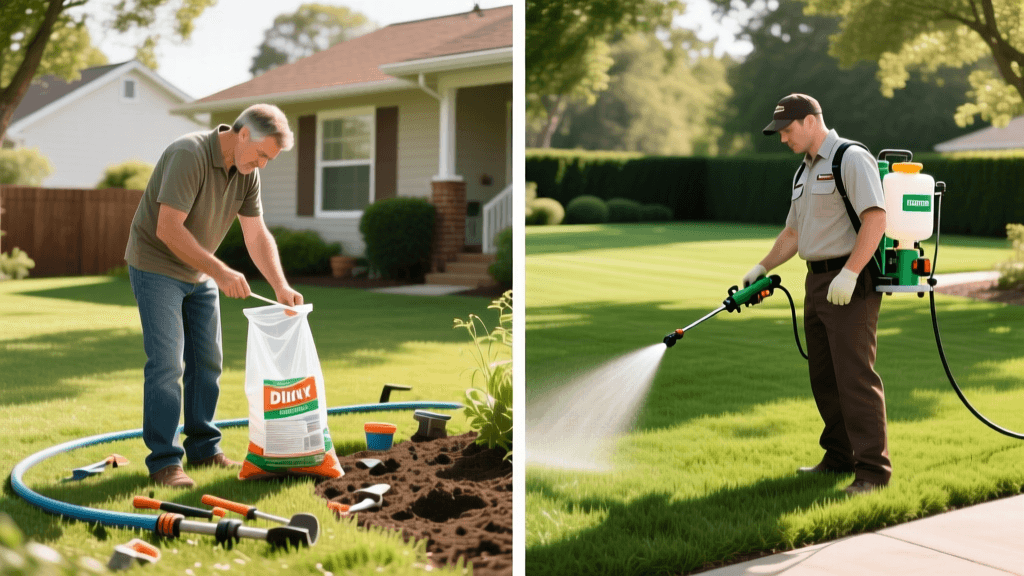
Even the most expensive professional herbicide will fail if applied unevenly. Skipping spots leaves corridors for weeds to invade, while overlapping too heavily can stunt the root growth of your desired turfgrass. Follow these actionable steps for a flawless application:
1. Calibrate Your Spreader
Check the manufacturer's label for the exact spreader setting for your specific model (e.g., Scotts EdgeGuard, Earthway, or Lesco stainless steel). If your model is not listed, perform a manual calibration: weigh out the exact amount of product needed for a 1,000 sq. ft. test area, set your spreader to a medium setting, and walk a measured 1,000 sq. ft. Adjust the dial up or down until the hopper empties exactly at the end of the measured area.
2. The Perimeter Pass
Always start by walking the perimeter of your lawn with the spreader's deflector engaged to keep granules out of garden beds and onto the turf. This creates a clean boundary line for your subsequent back-and-forth passes.
3. Sweep Hardscapes Immediately
If you are using a Pendimethalin-based product (like Scotts Halts), use a leaf blower or stiff broom to sweep any stray granules off your driveway and sidewalks back onto the lawn before watering. Once wet, Pendimethalin will dye concrete a vibrant, long-lasting orange.
4. Watering In (The Activation Step)
Pre-emergent herbicides must be moved from the soil surface into the top 1 to 2 inches of the soil profile to be effective. You must apply 0.25 to 0.5 inches of irrigation or rainfall within 48 hours of application. Use an empty tuna can placed on your lawn to measure when your sprinklers have delivered the correct amount of water. Failure to water in the product will result in UV degradation and total product failure.
Environmental Safety and Runoff Prevention
As responsible lawn care stewards, we must protect local watersheds. Never apply pre-emergents to frozen ground, saturated soils, or immediately before a heavy rainstorm, as this leads to chemical runoff into storm drains. Maintain a 10-foot buffer zone around lakes, ponds, and streams, and always wear proper Personal Protective Equipment (PPE), including nitrile gloves and closed-toe shoes, when handling and applying granular herbicides.
Final Verdict: Which Should You Choose?
If your primary goal is a set-it-and-forget-it solution for the entire spring and summer, and you do not plan to overseed your cool-season lawn in the early fall, The Andersons Barricade (Prodiamine) is the undisputed champion of longevity and value.
If you struggle with timing, frequently miss the early spring window, or want the flexibility to overseed slightly earlier in the fall, Lesco Dimension (Dithiopyr) is worth the premium price tag for its early post-emergent crabgrass killing ability.
Reserve consumer-grade Pendimethalin products for small touch-up areas or situations where professional-grade products are entirely inaccessible, taking extreme care to protect your hardscapes from staining.