
Landscaping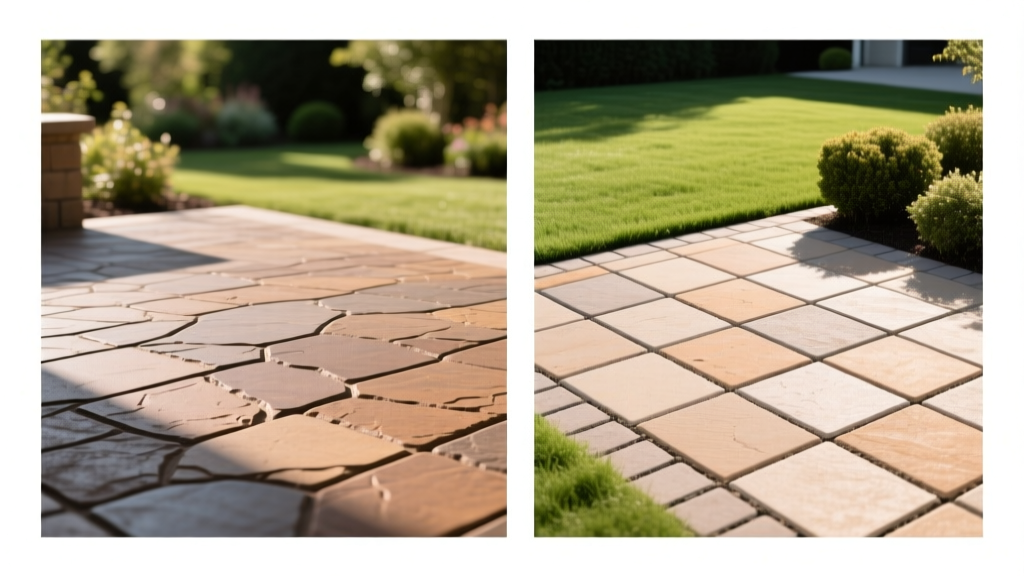
Stamped Concrete vs Pavers: Which Patio Material Wins?
David ParkPublished
The Hardscaping Dilemma: Stamped Concrete vs. Pavers
When planning a new patio, driveway, or outdoor living space, homeowners are often faced with a critical hardscaping decision: should you pour stamped concrete or install interlocking pavers? Both materials offer stunning aesthetic appeal and can dramatically improve your property's curb appeal, but they behave very differently over time. Understanding the nuances of installation, long-term maintenance, climate resilience, and overall costs is essential before you break ground on your landscaping project. In this comprehensive guide, we will compare stamped concrete and paving stones head-to-head to help you determine which material is the ultimate winner for your specific landscape design.
Understanding Stamped Concrete
Stamped concrete is a continuous poured concrete slab that is colored and textured to mimic high-end materials like natural stone, slate, brick, or even wood planks. The process involves pouring a standard concrete mix (typically rated between 3,000 and 4,000 PSI), broadcasting color hardeners onto the surface, and then pressing polyurethane stamping mats into the wet concrete to create intricate patterns. Once cured, the slab is sealed with an acrylic protective coating to enhance the color and guard against moisture intrusion. Because it is poured as a monolithic slab, stamped concrete offers a seamless look that is highly customizable in terms of color palettes and border designs.
Understanding Paving Stones (Pavers)
Paving stones, commonly referred to as pavers, are individual pre-cast units made from compressed concrete, kiln-fired clay brick, or cut natural stone. Unlike a solid slab, pavers are installed over a flexible base of compacted crushed stone and bedding sand. They interlock with one another, relying on friction and edge restraints to maintain their structural integrity. This modular approach to hardscaping allows for incredible design versatility, including intricate geometric patterns, curves, and inlays. Furthermore, the joints between the pavers are typically filled with polymeric sand, which hardens upon activation with water to lock the stones in place and deter weed growth.
Head-to-Head Comparison Chart
| Feature | Stamped Concrete | Paving Stones (Pavers) |
|---|---|---|
| Average Cost (per sq. ft.) | $12 - $20 | $15 - $30 |
| Installation Time | 3 - 5 Days | 5 - 10 Days |
| Lifespan | 25 - 30 Years | 50+ Years |
| Crack Resistance | Low (Prone to cracking) | High (Flexible system) |
| Repairability | Difficult / Noticeable patches | Easy / Invisible repairs |
| Surface Drainage | Requires sloping / Solid runoff | Can be permeable |
Installation and Base Preparation
The longevity of any hardscape is dictated by what lies beneath it. For stamped concrete, contractors typically excavate the area and lay down a 4-to-6-inch base of compacted gravel to facilitate drainage and prevent frost heave. A 4-inch layer of concrete is then poured over the base, often reinforced with steel rebar or welded wire mesh. Control joints are cut into the slab to control where inevitable cracking occurs, though these joints can sometimes interrupt the visual flow of the stamped pattern.
Paver installation is significantly more labor-intensive. The excavation is usually deeper, requiring a 6-to-8-inch base of angular crushed stone (often 3/4-inch minus gravel) that is mechanically compacted in 2-inch lifts. This is followed by a 1-inch layer of coarse bedding sand. The pavers are laid by hand, cut to fit the edges with a gas-powered wet saw, and secured with hidden edge restraints. Finally, polymeric sand is swept into the joints and activated. While the base prep for pavers takes longer, it creates a highly stable, flexible foundation that moves with the earth rather than resisting it.
Cost Breakdown and Budgeting
When budgeting for a landscaping project, stamped concrete generally holds the advantage in upfront costs. A basic stamped concrete patio with a single color and standard pattern typically ranges from $12 to $15 per square foot. Adding multiple colors, custom borders, or intricate saw-cut designs can push the price closer to $20 per square foot.
Pavers, on the other hand, start around $15 per square foot for basic concrete pavers and can easily exceed $30 per square foot for premium natural stone or high-end architectural concrete pavers. The higher cost of pavers is largely driven by the intense manual labor required for base preparation, hand-laying each individual stone, and cutting the perimeter pieces. However, many landscape architects argue that pavers offer a better return on investment (ROI) over the lifespan of the home due to their superior durability and ease of repair.
Durability, Climate, and Soil Movement
Climate plays a massive role in hardscape performance. In regions with severe freeze-thaw cycles, the ground expands and contracts dramatically. Stamped concrete, being a rigid slab, is highly susceptible to cracking when the soil beneath it shifts or settles. While control joints help manage this, random hairline cracks are almost guaranteed over a 20-year period. Additionally, if a large tree root grows beneath a concrete patio, it will inevitably heave and fracture the slab.
Pavers excel in challenging climates and expansive soils. Because they are a flexible pavement system, individual stones can shift slightly without compromising the structural integrity of the entire patio. If a tree root causes a section of pavers to heave, or if a utility line needs to be repaired beneath the surface, the pavers can simply be unzipped, the base re-graded, and the exact same stones reinstalled. You cannot jackhammer and seamlessly replace a section of stamped concrete.
Maintenance and Repairability
Stamped concrete requires a proactive maintenance regimen. The acrylic sealer that protects the surface and enhances the color degrades under UV exposure and foot traffic. Homeowners must plan to clean and re-seal the concrete every 2 to 3 years, which adds to the long-term cost and effort. If a stamped concrete slab cracks or spalls, repairs are notoriously difficult; patching compounds rarely match the original color or stamped texture perfectly, leaving an eyesore in the middle of your patio.
Pavers require a different type of maintenance. The primary concern is the joint sand. Over time, heavy rains or pressure washing can erode the polymeric sand, requiring homeowners to sweep in new sand and re-activate it to prevent weeds and ant infestations. However, when it comes to structural repairs, pavers are unmatched. If a paver cracks or becomes stained beyond cleaning, you can simply pry it out with a flathead screwdriver and drop in a replacement stone for less than five dollars.
Environmental Impact and Drainage
Modern landscaping increasingly prioritizes sustainable practices and effective stormwater management. Traditional stamped concrete is an impermeable surface. All rainwater that hits the patio becomes runoff, which can overwhelm local storm drains, contribute to soil erosion, and carry pollutants into local waterways. To mitigate this, concrete patios must be carefully sloped away from the home and directed toward permeable garden beds or dry wells.
Pavers offer a distinct environmental advantage, particularly when installed as a permeable pavement system. According to the Environmental Protection Agency (EPA), permeable pavers are designed with wider joints filled with small, open-graded crushed stone, allowing rainwater to infiltrate directly into the underlying soil. This reduces stormwater runoff, filters out pollutants naturally, and helps recharge local groundwater tables, making it an excellent choice for eco-conscious landscape designs.
Furthermore, the thermal properties of your hardscape matter. The EPA's Heat Island Effect research highlights that traditional dark-colored concrete and asphalt absorb and retain significant solar radiation, raising the ambient temperature of your outdoor living space. By selecting light-colored pavers or utilizing specialized cool-pavement coatings, homeowners can significantly reduce heat absorption, making the patio more comfortable during the peak of summer and reducing the cooling load on the adjacent home.
Final Verdict: Which is Right for Your Landscape?
The choice between stamped concrete and pavers ultimately comes down to your budget, your local climate, and your long-term landscaping goals. Stamped concrete is the ideal choice for homeowners who want a highly customized, seamless aesthetic with a lower upfront cost, provided they are willing to commit to a strict resealing schedule and accept the inevitability of some minor cracking over time.
Paving stones are the undisputed winner for long-term durability, structural flexibility, and ease of repair. If you live in an area with heavy frost heave, expansive clay soils, or mature trees with aggressive root systems, pavers will save you thousands of dollars in future demolition and replacement costs. Additionally, if sustainable drainage and permeable hardscaping are priorities for your garden design, pavers offer an elegant, environmentally responsible solution that stamped concrete simply cannot match.

