Tree Care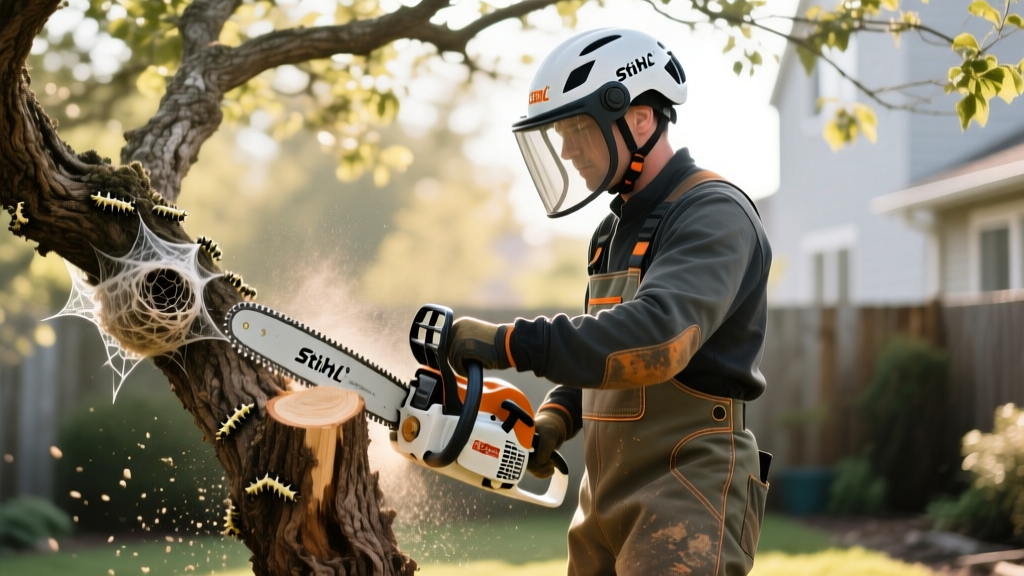
Best Stihl Chainsaw Safety Gear for Webworm Pruning 2026
Emily WatsonPublished
The Intersection of Webworm Control and Chainsaw Safety
When managing severe fall webworm (Hyphantria cunea) infestations, homeowners and arborists often start with organic sprays or pole pruners. However, as we move through the 2026 growing season, many mature trees are suffering from massive, multi-generational webworm nests that have colonized thick, high-canopy scaffolding branches. When a nest encompasses a limb thicker than three inches, pole pruners are no longer sufficient. You must bring in a chainsaw to safely drop the infested wood before the caterpillars defoliate the entire crown or the deadwood becomes a structural hazard.
Using a chainsaw to remove webworm-infested branches introduces unique hazards that standard firewood cutting does not. According to Penn State Extension, fall webworms encase entire branch terminals in dense, tough silk webbing. This silk, combined with the brittle nature of defoliated deadwood and the shower of frass (caterpillar droppings) that falls when a nest is cut, requires specialized personal protective equipment (PPE). In 2026, Stihl continues to lead the arboriculture industry with advanced protective chaps and helmet systems designed specifically for the unpredictable nature of overhead and brush-heavy pruning.
Why Webworm-Infested Wood is Uniquely Dangerous
Before discussing specific Stihl gear, it is vital to understand the physics of cutting a webworm nest. The hazards dictate the safety gear you must wear:
- Silk Binding and Chain Throw: Webworm silk is incredibly tensile. If the silk wraps around your chainsaw bar and sprocket, it can bind the chain, cause the motor to stall, or worse, snap the chain and throw it back at the operator.
- Brittle Deadwood Kickback: Branches completely defoliated by webworms often begin to die and dry out. Dry, brittle wood splinters unpredictably upon contact with a chainsaw chain, increasing the risk of kickback.
- The Frass Shower: A mature webworm nest is packed with weeks of caterpillar droppings, shed skins, and fine wood dust. The moment your chain bites into the branch, a cloud of this debris falls directly onto the operator. Eye and face protection are not optional; they are critical for preventing blindness and respiratory distress.
Top 2026 Stihl Helmet Systems for Arborists
To combat the 'frass shower' and the risk of falling deadwood, a standard construction hard hat will not suffice. You need a dedicated forestry helmet system. Stihl's 2026 lineup offers two premier options for webworm pruning.
1. STIHL Advance™ X-Vent Helmet System
The Advance X-Vent is the gold standard for professional arborists and serious homeowners in 2026. Its standout feature for webworm control is the high-contrast stainless steel mesh visor. Unlike clear plastic visors that instantly fog up when you are sweating in late-summer humidity, the mesh visor allows maximum airflow while completely blocking falling caterpillar frass, woodchips, and sawdust. The integrated ear muffs provide essential hearing protection against the high-decibel whine of battery-powered or gas chainsaws used in canopy work. The ratchet suspension system ensures the helmet stays firmly seated on your head even when you are looking sharply upward to track a suspended webbed branch.
2. STIHL Woodcutter™ Helmet System
For those on a tighter budget or managing smaller properties, the Woodcutter system remains a highly reliable choice. It features a durable ABS plastic shell and an adjustable 6-point harness. While it often comes with a clear polycarbonate visor, arborists pruning webworms should upgrade to the optional mesh screen to prevent the visor from scratching and clouding due to the abrasive nature of dry, webbed wood debris.
Essential 2026 Stihl Protective Chaps
The Occupational Safety and Health Administration (OSHA) mandates strict leg protection protocols for chainsaw operators. When pruning out heavy webworm nests, you are often navigating uneven ground, stepping over dropped, silk-tangled branches, and working at awkward angles. Stihl's protective chaps utilize advanced multi-layer fabrics designed to instantly clog a chainsaw's drive sprocket upon contact, stopping the chain in a fraction of a second.
STIHL Pro Chaps with Apron
The STIHL Pro Chaps are engineered with a water-resistant and oil-resistant outer shell, which is crucial when dealing with the sticky tree sap and caterpillar silk inherent to webworm nests. The inner layers consist of Stihl's proprietary protective fibers. In 2026, these chaps feature improved ventilation channels, reducing heat fatigue during the sweltering late-summer months when fall webworms are most active. The wrap-around apron design ensures that even if you twist your body to guide a falling, web-heavy branch away from your home or garden beds, your femoral arteries remain fully protected.
STIHL Functional Chaps
A more lightweight option, the Functional Chaps offer excellent protection for occasional users. They are easier to slip on over standard work pants and feature a durable polyester outer layer that resists snagging on the thorny or rough bark of trees commonly targeted by webworms, such as pecan, walnut, and sweetgum.
2026 Stihl Safety Gear Comparison Chart
| Stihl Gear Model | Category | Key Feature for Webworm Pruning | Best User Profile |
|---|---|---|---|
| Advance™ X-Vent | Helmet System | Mesh visor blocks frass without fogging | Professional Arborists / Heavy Pruning |
| Woodcutter™ | Helmet System | Cost-effective 6-point harness stability | Homeowners / Light Seasonal Pruning |
| Pro Chaps w/ Apron | Leg Protection | Sap/silk-resistant shell, full wrap coverage | Professionals / Uneven Terrain Work |
| Functional Chaps | Leg Protection | Lightweight, snag-resistant polyester | Homeowners / Quick Nest Removal |
Step-by-Step Safe Pruning Protocol for Webworm Nests
Following the Tree Care Industry Association (TCIA) safety guidelines, always approach webworm pruning with a methodical plan. Never operate a chainsaw while standing on a ladder; if the nest is out of reach from the ground, use a bucket truck, approved climbing spurs, or hire a certified arborist.
- Gear Up Completely: Don your Stihl helmet, secure the chin strap, pull on your cut-resistant gloves, and fasten your Stihl chaps tightly over your legs. Ensure your chainsaw boots have steel toes and cut-resistant uppers.
- Clear the Drop Zone: Webworm nests are surprisingly heavy due to the accumulation of moisture, frass, and dense silk. Clear the ground below the branch to ensure you have a stable, trip-free retreat path.
- Use the 3-Cut Method: To prevent the heavy, webbed branch from tearing the bark down the trunk (which invites secondary fungal pathogens), make an undercut a foot away from the trunk, followed by a top cut further out to drop the bulk of the nest. Finally, make a clean collar cut to remove the stub.
- Watch for Silk Binding: As you cut, watch the bar tip. If you see white webbing pulling toward the sprocket, release the throttle immediately and let the chain brake engage. Clear the silk with a stick before resuming.
- Dispose Properly: Do not compost webworm nests. The silk and caterpillars can survive and migrate. Bag the nests in heavy-duty contractor bags or burn them where local fire ordinances permit.
Cleaning and Maintaining Your Stihl Gear After Pruning
Webworm pruning is messy. Your Stihl gear will be coated in tree sap, caterpillar silk, and acidic frass. Proper maintenance ensures your PPE remains effective for the 2027 season.
- Helmet Visor: Remove the mesh visor and wash it with warm water and a mild dish soap. Use a soft-bristled brush to gently dislodge dried sap and frass from the wire mesh. Never use harsh solvents that could degrade the plastic mounting brackets.
- Washing Chaps: Stihl chaps must be washed carefully to preserve the life-saving inner fibers. Hand wash or use a front-loading washing machine on a gentle cycle with cold water and a mild detergent. Never use bleach or fabric softener, as these chemicals break down the protective fibers' ability to pull out and clog the chainsaw sprocket. Always air dry your chaps out of direct sunlight.
Conclusion
Tree webworm control is a vital part of maintaining the health and aesthetics of your landscape, but it should never come at the cost of your personal safety. By understanding the unique hazards of cutting silk-bound, frass-filled deadwood, and by equipping yourself with the 2026 lineup of Stihl protective chaps and helmet systems, you can tackle even the most severe canopy infestations with confidence. Always prioritize proper technique, maintain your gear meticulously, and respect the power of your chainsaw.