Tree Care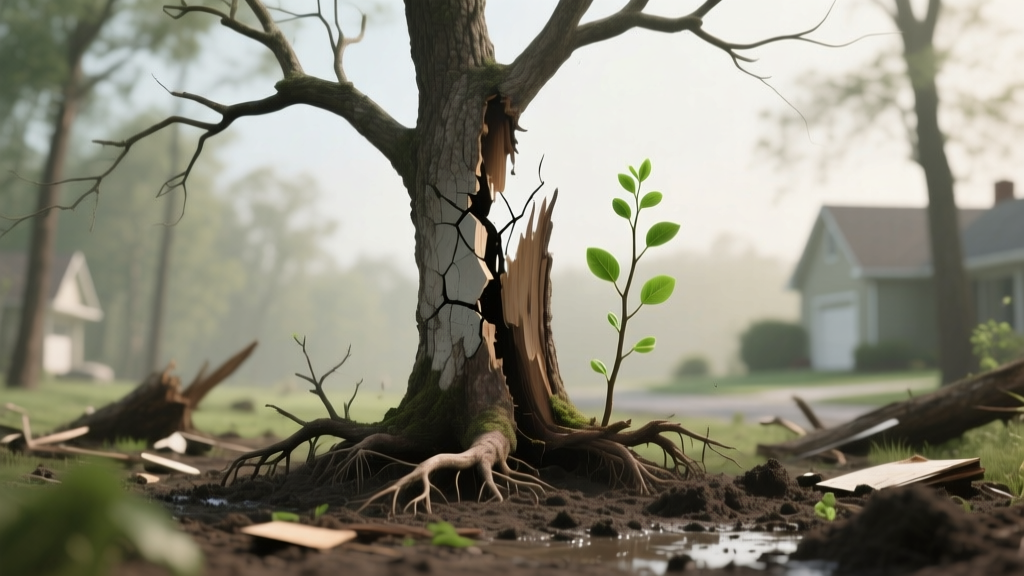
2026 Storm Damage Tree Triage & Recovery Fertilizer Guide
David ParkPublished
Introduction to 2026 Storm Triage and Tree Recovery
As severe weather events continue to increase in frequency and intensity throughout 2026, homeowners and property managers are frequently left surveying the aftermath of high winds, heavy ice, and torrential rains. When a mature shade tree suffers structural damage, the immediate instinct is often to either cut it down entirely or rush to feed it with heavy fertilizers to 'save' it. Both reactions can be disastrous. Proper storm damage tree triage requires a methodical assessment to decide whether to repair or remove the specimen, followed by a highly specific, scientifically backed post-storm recovery fertilizer schedule.
According to the Arbor Day Foundation, a tree can often recover from significant canopy loss if its root system and primary trunk remain intact. However, the biochemical needs of a traumatized tree are vastly different from those of a healthy, growing tree. Applying the wrong fertilizer types at the wrong time can trigger weak, water-sprout growth that compromises the tree's structural integrity for decades. This guide will walk you through the 2026 best practices for storm damage triage and the precise fertilizer schedules required to rehabilitate surviving trees.
The Triage Protocol: Assess, Repair, or Remove?
Before you even consider opening a bag of fertilizer, you must conduct a thorough triage assessment. The University of Minnesota Extension outlines that the decision to save a storm-damaged tree hinges on three primary factors: the percentage of canopy loss, the extent of trunk and bark damage, and the condition of the root plate. If a tree has suffered root heave (where the root ball lifts from the soil on one side), it is generally considered a hazard and must be removed, regardless of canopy health.
When assessing the canopy, arborists use a visual percentage estimate. If less than 25% of the branches are broken, the tree will likely recover with basic pruning and standard care. If 25% to 50% of the canopy is destroyed, the tree enters a critical stress state and requires a specialized, low-nitrogen recovery fertilization schedule to rebuild its energy reserves without forcing unsustainable top growth. If more than 50% of the canopy is gone, or if the central leader is split down the main trunk, the tree is usually a candidate for removal.
Storm Damage Decision Matrix
| Damage Assessment | Trunk & Root Condition | Triage Decision | Fertilizer Action Plan |
|---|---|---|---|
| Canopy Loss < 25% | Trunk intact; no root heave | Repair & Maintain | Standard maintenance schedule; resume normal NPK in spring. |
| Canopy Loss 25% - 50% | Minor bark tearing; roots stable | Repair & Rehabilitate | Immediate mycorrhizal inoculation; delayed low-N, high-P/K schedule. |
| Canopy Loss > 50% | Split leader; extensive decay | Remove | Do not fertilize. Schedule safe removal and stump grinding. |
| Any Canopy Loss | Root plate lifted / soil mounding | Remove Immediately | Do not fertilize. High windthrow hazard; remove immediately. |
The Fertilization Paradox: Why Nitrogen is the Enemy Post-Storm
One of the most common mistakes homeowners make after a severe storm is applying a high-nitrogen fertilizer (such as a standard 32-0-10 lawn fertilizer or synthetic tree spikes) to a damaged tree in an attempt to 'shock' it into regrowing its lost leaves. In 2026, modern arboricultural science strongly advises against this practice. When a tree loses a significant portion of its canopy, its ability to photosynthesize is drastically reduced. If you flood the root zone with nitrogen, the tree will attempt to push out rapid, weak, water-sprout growth to replace the lost leaves. These water sprouts are poorly attached to the trunk, highly susceptible to pests, and will create a top-heavy, wind-resistant sail effect that makes the tree highly vulnerable to being uprooted in the next storm.
Instead of forcing canopy growth, the immediate goal of a post-storm fertilizer schedule is to stimulate root regeneration, promote wound compartmentalization (the tree's natural process of sealing off damaged tissue), and build cellular strength. This requires a shift away from nitrogen-heavy blends and toward phosphorus, potassium, and specialized bio-stimulants.
2026 Recommended Fertilizer Types for Storm Recovery
When rehabilitating a storm-damaged tree that has passed the triage assessment, you should utilize specific fertilizer types and soil amendments designed for trauma recovery. The USDA Forest Service emphasizes the importance of soil biology and slow-release nutrients in maintaining long-term forest and urban canopy health, a principle that applies directly to individual tree recovery.
1. Mycorrhizal Fungal Inoculants (Immediate Application)
Before applying any traditional NPK fertilizer, the root zone must be fortified. Storms often compact soil and sever fine feeder roots. Applying an endo/ecto-mycorrhizal inoculant (such as BioPak Plus or MycoApply UltraFine) via soil drench or root zone injection helps re-establish the symbiotic fungal networks that allow the tree to absorb water and nutrients efficiently. This is not a fertilizer in the traditional sense, but it is the most critical first step in the recovery schedule.
2. Low-Nitrogen, High-Phosphorus Blends (Months 2 to 6)
Once the tree has stabilized and callus tissue has begun to form over pruning wounds, apply a slow-release, low-nitrogen fertilizer. A blend with an NPK ratio of 5-15-10 or 4-12-8 is ideal for 2026 recovery protocols. The phosphorus encourages deep, strong root growth to re-anchor the tree, while the moderate potassium thickens cell walls, improving the tree's drought tolerance and disease resistance. Avoid quick-release synthetic salts, which can burn compromised root systems.
3. Potassium Phosphite Liquid Drenches (Wound Defense)
For trees with significant bark tearing or large pruning wounds resulting from storm cleanup, a potassium phosphite (phosphonate) drench can be applied. Phosphites move systemically through the tree's vascular system and stimulate the production of phytoalexins, natural defense compounds that protect the open wounds from opportunistic fungal pathogens like Armillaria root rot or Hypoxylon canker.
The Post-Storm Fertilizer & Care Schedule
To ensure your repaired tree survives the critical first year and returns to a standard maintenance schedule by year two, follow this actionable timeline. Always calculate application rates based on the tree's root zone, which typically extends 1.5 feet outward from the trunk for every 1 inch of trunk caliper measured at chest height.
- Week 1 to 4 (Immediate Triage Phase): Focus entirely on hydration and soil biology. Water deeply to settle any air pockets created by shifting roots. Apply a mycorrhizal fungal inoculant via soil drench. Do not apply any NPK fertilizers during this window. Cleanly prune jagged branch stubs to allow the tree to begin compartmentalizing the wounds.
- Month 2 to 3 (Early Recovery Phase): Apply a slow-release 5-15-10 granular fertilizer or professional-grade soil injection equivalent. Apply at a rate of 2 to 3 pounds of actual phosphorus per 1,000 square feet of root zone area. Mulch the root zone with 2 to 3 inches of organic wood chips, keeping the mulch strictly away from the trunk flare to prevent collar rot.
- Month 6 (Mid-Season Assessment): Evaluate the tree's canopy density and wound closure. If the tree is pushing out healthy, moderate growth, apply a liquid potassium phosphite drench to boost systemic disease resistance. If the tree shows signs of severe dieback, consult an ISA Certified Arborist, as internal decay may be progressing.
- Month 12 to 14 (Year Two Transition): The tree should now be stabilized. Transition back to a standard, balanced maintenance fertilizer (such as a 16-8-8 or 12-6-6 slow-release blend) applied in early spring just before bud break. Resume standard structural pruning to correct any asymmetrical canopy growth that occurred during the recovery year.
Conclusion
Storm damage triage is a delicate balance between structural engineering and plant physiology. By accurately assessing whether a tree is a candidate for repair or removal, you prevent hazardous situations and wasted resources. For the trees you choose to save, abandoning the outdated practice of high-nitrogen shock feeding in favor of a targeted, root-focused 2026 recovery fertilizer schedule will ensure your landscape remains safe, resilient, and beautiful for decades to come. Always prioritize soil biology, slow-release phosphorus, and systemic defense compounds to give your surviving trees the best possible chance at a full recovery.
