Tree Care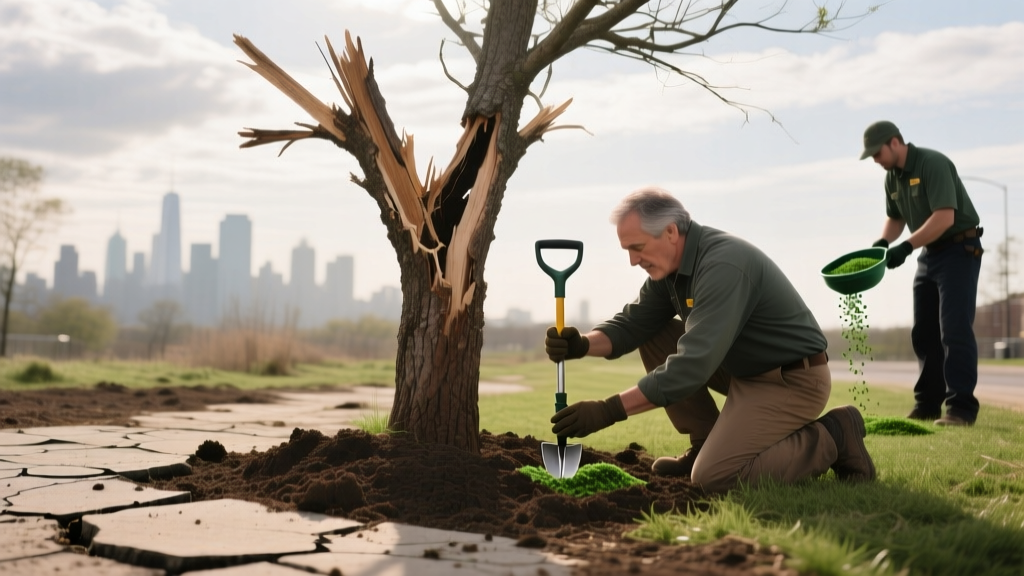
2026 Storm Tree Triage: Assess, Repair, Remove & Aeration Guide
Mike RodriguezPublished
The 2026 Storm Tree Triage Protocol: An Aeration and Seeding Perspective
As we navigate the increasingly volatile weather patterns of 2026, severe microbursts, prolonged derecho events, and torrential spring rains have left countless residential landscapes battered. When a mature shade tree suffers catastrophic storm damage, the immediate instinct is to look up at the shattered canopy. However, as senior lawn and tree care specialists, we know that the true battleground for a tree's survival—and the subsequent recovery of your landscape—lies beneath the surface.
Storms do not just break branches; they devastate soil structure. Heavy debris, standing water, and the foot traffic of emergency cleanup crews severely compact the soil around the root zone. From an aeration and seeding perspective, making the correct triage decision—whether to assess, repair, or remove a damaged tree—is inextricably linked to soil health, oxygen availability, and your plan for turf restoration. This comprehensive guide will walk you through the 2026 storm tree triage process, emphasizing the critical role of soil aeration and strategic overseeding in both saving compromised trees and restoring lawns after tree removal.
Phase 1: Assessing Storm Damage and the Triage Decision
The first step in storm recovery is a objective assessment of the tree's structural integrity and root stability. According to the University of Minnesota Extension, the decision to save or remove a tree hinges on several vital factors, primarily the extent of canopy loss and the condition of the root plate.
- The 50% Rule: If more than 50% of the tree's crown is destroyed, the tree may not be able to produce enough foliage to sustain itself through the 2026 growing season. Removal is often the safest choice.
- Root Heaving and Soil Saturation: Torrential rains leading up to high winds often cause the soil to lose its shear strength. If the root plate has shifted, lifted, or cracked the surrounding soil, the structural anchors are severed.
- Trunk Integrity: Deep vertical cracks, split crotches, or extensive bark stripping expose the cambium layer to the aggressive 2026 pest populations, such as the Emerald Ash Borer and various bark beetles.
However, the assessment must also include the soil. If the tree is a candidate for repair, the compacted, waterlogged soil must be addressed immediately to prevent secondary root suffocation.
Phase 2: Soil Compaction – The Silent Storm Killer
Why view tree triage through the lens of aeration? Because soil compaction is the leading secondary cause of tree decline following a storm. When heavy limbs crash onto the lawn, they act like a tamper, compressing the soil pores. Add the weight of debris removal equipment and the saturation from heavy rains, and the soil within the tree's critical root zone (CRZ) becomes virtually impermeable.
As noted by Penn State Extension, compacted soil lacks the macropores necessary for oxygen exchange and water infiltration. A storm-damaged tree is already in a state of shock, expending massive energy reserves to compartmentalize wounds. If its roots are simultaneously suffocating in anaerobic, compacted soil, the tree will rapidly decline, rendering your repair efforts useless. Therefore, mechanical soil aeration is not just a lawn care task; it is an emergency medical intervention for a storm-stressed tree.
2026 Tree Triage and Soil Recovery Matrix
Use the following decision matrix to determine your triage path and the corresponding aeration and seeding protocols required for your landscape.
| Damage Level | Triage Decision | Aeration & Seeding Action Required |
|---|---|---|
| Minor (Under 25% canopy loss, no root lift) | Repair & Retain | Pneumatic soil fracturing in CRZ; core aeration and overseed surrounding turf. |
| Moderate (25-50% canopy loss, minor soil cracking) | Assess & Monitor | Radial trenching with organic amendments; delay heavy turf seeding until fall. |
| Severe (Over 50% loss, trunk split, root heaving) | Remove | Stump grind; aggressive deep-tine aeration; full lawn reseed with 2026 eco-blends. |
Phase 3: Aeration Techniques for Compromised Root Zones
If your triage assessment dictates that the tree can be saved, you must immediately alleviate soil compaction. Standard lawn core aeration is insufficient for the critical root zone of a mature tree, as it only penetrates 3 to 4 inches. Tree roots require oxygen at depths of 12 to 18 inches.
Pneumatic Excavation (AirSpade)
In 2026, the industry standard for emergency root zone aeration is pneumatic excavation using tools like the AirSpade. This tool uses supersonic air to safely fracture compacted soil without cutting or damaging the delicate feeder roots. An arborist will excavate narrow, radial trenches from the trunk outward to the drip line, breaking up the compacted layers caused by storm debris and equipment.
Radial Trenching and Amendment
Once the soil is fractured, the trenches are backfilled with a highly porous, nutrient-rich mix. We recommend a blend of expanded shale, biochar, and coarse compost. This creates permanent macropores, ensuring that water and oxygen can reach the damaged root system. Following this deep-root aeration, the surrounding lawn (outside the immediate mulch ring) should be core-aerated and overseeded to restore the landscape's aesthetic and prevent erosion.
For more on managing structural risks and soil health, the International Society of Arboriculture (ISA) provides excellent guidelines on hiring certified arborists for post-storm risk assessments and pneumatic soil treatments.
Phase 4: Tree Removal and Post-Storm Lawn Seeding
When the triage decision is removal, the landscape is left with a massive void, a damaged soil profile, and a mound of sawdust from the stump grinder. The intersection of tree removal and lawn seeding requires careful chemical and physical soil management.
The Nitrogen Tie-Up Problem
Stump grinding mixes carbon-heavy wood chips and sawdust directly into the topsoil. As soil microbes break down this carbon, they consume massive amounts of nitrogen, robbing it from any new grass seed you attempt to plant. If you simply throw seed over a fresh stump grind, the grass will germinate and immediately turn yellow and die from nitrogen starvation.
The 2026 Restoration Protocol
- Remove the Sawdust: Excavate the top 4-6 inches of the sawdust-soil mix from the stump footprint.
- Deep-Tine Aeration: The soil beneath the stump is heavily compacted from years of root pressure and the weight of the grinding equipment. Use a deep-tine aerator to fracture the subsoil.
- Topdressing and Nitrogen Loading: Fill the void with a high-quality topsoil blended with a fast-acting, high-nitrogen organic fertilizer (such as feather meal or blood meal) to counteract any residual carbon tie-up.
- Overseeding with 2026 Climate-Resilient Blends: The microclimate of your lawn has just changed dramatically. An area that was once deep shade is now full sun. You must select a seed blend suited for this new reality.
2026 Seed and Aeration Equipment Recommendations
For the lawn surrounding a saved tree, or the newly exposed footprint of a removed tree, choosing the right 2026 seed technology is paramount. We recommend Endophyte-Enhanced Turf-Type Tall Fescue (TTTF) blends. Modern 2026 TTTF varieties feature deep root systems that naturally help break up mild soil compaction over time, while the endophytes provide natural resistance to surface-feeding insects that often invade stressed lawns.
If you are dealing with a transition zone that receives dappled sunlight from remaining storm-damaged trees, consider a Micro-Clover and Fine Fescue Eco-Mix. Micro-clover fixes its own nitrogen, which is incredibly beneficial for soils recovering from the stress of storm cleanup and stump grinding.
Seeding Rates and Timing: For a full lawn renovation over a removed tree footprint, apply TTTF at a rate of 8 to 10 lbs per 1,000 square feet. For overseeding the lawn around a saved, aerated tree, apply at 5 to 6 lbs per 1,000 square feet. The optimal window for this post-storm recovery seeding is early fall (late August to mid-September), when soil temperatures are ideal for germination and the cooler air reduces moisture stress on the new turf and the recovering tree.
Conclusion
Storm damage tree triage is rarely as simple as looking at a broken branch and making a cut. The 2026 approach to landscape recovery demands a holistic view that bridges arboriculture and advanced turf management. By accurately assessing the tree's viability, aggressively aerating compacted soils to save compromised root systems, and executing a scientifically sound seeding protocol when removal is necessary, you can ensure your landscape bounces back stronger, greener, and more resilient against the storms of tomorrow.