Tree Care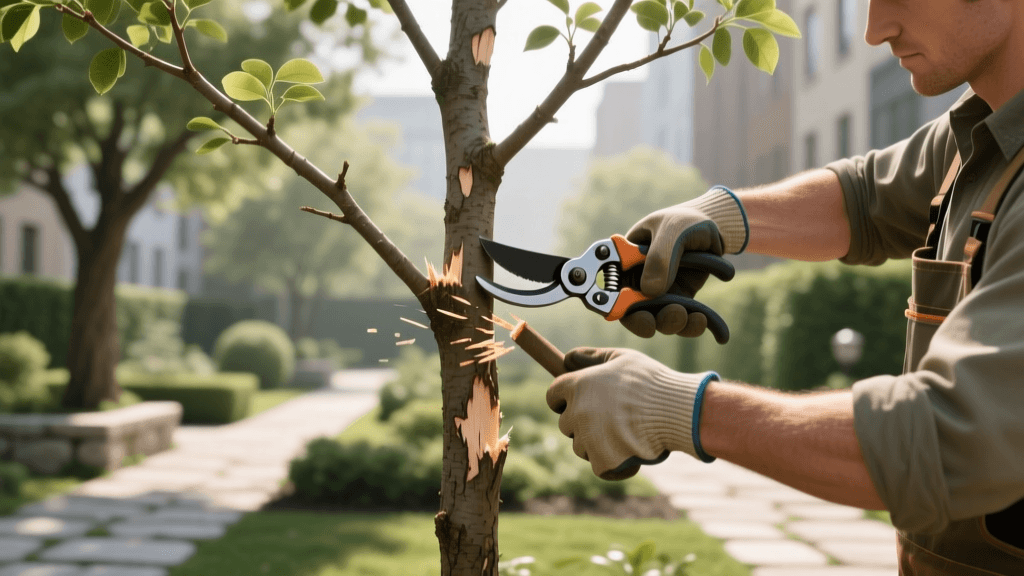
Expert Structural Pruning Guide for Young Deciduous Trees
The Hidden Dangers of Neglected Tree Architecture
Planting a young deciduous tree is a long-term investment in your property's landscape, ecology, and curb appeal. However, simply digging a hole and placing a sapling in the ground is only the first step. Without early and consistent intervention, many tree species develop poor branch architecture that leads to catastrophic failure during mature years. Structural pruning is the proactive process of guiding a tree's growth to develop a strong, resilient framework capable of withstanding high winds, heavy snow loads, and ice storms.
According to the International Society of Arboriculture (ISA), trees that are not structurally pruned during their first five to ten years of life are significantly more prone to developing codominant stems, included bark, and weak branch unions. These defects are the leading causes of mature tree failure in urban environments. By implementing a disciplined, expert-level pruning schedule, homeowners and land managers can drastically extend the lifespan of their trees while minimizing future liability and maintenance costs.
Understanding Tree Biology and CODIT
Before making a single cut, it is crucial to understand how trees respond to injury. Unlike humans, trees do not heal wounds; they seal them. Dr. Alex Shigo, the pioneering researcher who developed the Compartmentalization of Decay in Trees (CODIT) model, demonstrated that trees create chemical and physical barriers to isolate decay from spreading into healthy tissue.
Every pruning cut is essentially a wound. Therefore, the goal of structural pruning is to make the smallest, most precise cuts possible while the tree is young. A one-inch cut made in Year 3 will compartmentalize rapidly and seal within a single growing season. Conversely, a six-inch cut made in Year 15 to remove a massive, competing leader will leave a massive wound that invites fungal pathogens, wood-boring insects, and internal decay. This biological reality underscores why early structural pruning is non-negotiable for long-term tree health.
"Proper pruning of young trees is one of the most important things you can do to ensure a long, healthy, and structurally sound tree. Small cuts made early in a tree's life prevent the need for large, damaging cuts later." — International Society of Arboriculture (ISA) Best Management Practices.
Essential Tools and Sanitation Protocols
Using the correct tools ensures clean cuts that do not crush the cambium layer or tear the bark. Furthermore, strict sanitation protocols are required to prevent the transmission of devastating diseases like Oak Wilt, Fire Blight, and Dutch Elm Disease.
The Expert's Toolkit
- Bypass Hand Pruners: Ideal for branches up to 3/4 inch in diameter. The Felco 2 or Corona BP 3180 are industry standards due to their replaceable blades and ergonomic design.
- Bypass Loppers: Used for branches between 3/4 inch and 1.5 inches. Look for models with geared joints for increased leverage.
- Pruning Saw: For branches up to 4 inches thick. A curved blade with tri-cut teeth, such as the Silky Gomboy 240, slices through green wood effortlessly without binding.
- Pole Pruner: Essential for reaching higher lateral branches without using a ladder, which is a major safety hazard.
Sanitation Best Practices
Always sterilize your tools between trees, and especially after cutting any diseased wood. The University of Florida IFAS Extension recommends wiping blades with 70% isopropyl alcohol or a 10% household bleach solution (1 part bleach to 9 parts water). Note that bleach can corrode steel over time, so always oil your blades with a light lubricant like WD-40 or Camellia oil after cleaning and at the end of the day.
The 5-Year Structural Pruning Schedule
Developing a central leader and well-spaced scaffold branches requires a multi-year approach. The following table outlines a professional 5-year structural pruning plan for most deciduous species (e.g., Maples, Oaks, Elms, and Ash).
| Tree Age | Primary Objective | Actionable Steps & Measurements |
|---|---|---|
| Year 1 | Establishment & Recovery | Remove only dead, broken, or crossing branches. Do not prune the central leader. Allow the tree to focus energy on root establishment. |
| Year 2 | Identify the Central Leader | Select the straightest, most vigorous main stem. Subordinate (shorten by 1/3) any competing vertical stems to force dominance into the chosen leader. |
| Year 3 | Scaffold Branch Selection | Identify 3 to 5 strong lateral branches to serve as the main framework. Ensure they are spaced at least 12-18 inches apart vertically and radiate evenly around the trunk. |
| Year 4 | Clearance & Subordination | Remove lower branches that will eventually interfere with pedestrian or vehicular traffic. Subordinate any lateral branches that are growing larger than 50% of the trunk's diameter. |
| Year 5 | Canopy Balance & Refinement | Perform minor thinning to allow light penetration. Remove any water sprouts or suckers. Ensure the central leader remains dominant and unbroken. |
Mastering the Pruning Cut: Anatomy and Technique
Knowing exactly where to cut is the difference between a tree that thrives and one that rots. Every branch has a Branch Bark Ridge (the raised line of bark where the branch meets the trunk) and a Branch Collar (the swollen area at the base of the branch). You must always cut just outside the branch collar. Cutting flush with the trunk removes the collar's protective chemical zone and creates a massive wound that the tree cannot seal effectively.
Reduction Cuts vs. Removal Cuts
Structural pruning relies heavily on reduction cuts rather than heading cuts. A reduction cut involves shortening a competing branch back to a lateral branch that is at least 1/3 the diameter of the branch being removed. This maintains the tree's natural growth habit and apical dominance while suppressing the competing stem. Heading cuts (shearing the end of a branch arbitrarily) stimulate dense, weak clusters of water sprouts that ruin the tree's architecture.
The 1/3 Rule and the 25% Canopy Limit
Never remove more than 25% to 30% of a tree's live canopy in a single growing season. Stripping too much foliage starves the root system and triggers a panic response, resulting in rampant, weakly attached epicormic growth. Additionally, adhere to the 1/3 Rule: never allow a single lateral branch to grow larger than 1/3 the diameter of the main trunk at the point of attachment. Branches that exceed this ratio are highly susceptible to splitting under load.
Seasonal Timing and Environmental Considerations
For most deciduous trees, the optimal time for structural pruning is during the dormant season, typically late winter to early spring (February to early March, depending on your USDA Hardiness Zone). Pruning while the tree is dormant offers several distinct advantages:
- Visibility: Without leaves, the branch architecture, crossing limbs, and defects are clearly visible.
- Disease Prevention: Fungal spores and insect vectors that spread diseases like Oak Wilt are inactive in freezing temperatures.
- Vigorous Sealing: The tree will begin compartmentalizing the wounds immediately as the spring growth flush begins.
Avoid pruning in late summer or early fall. Pruning during this period can stimulate tender new growth that will not have time to harden off before the first frost, leading to severe winter dieback.
Cost Analysis: DIY vs. Hiring an ISA Certified Arborist
While homeowners can easily handle the first three years of pruning on small saplings using hand tools, larger trees require professional intervention. Investing in high-quality tools (approximately $150 to $250 for professional-grade pruners, loppers, and saws) is cost-effective for those managing multiple young trees.
However, if your trees have reached heights exceeding 15 feet, or if you are dealing with large codominant stems near power lines, it is imperative to hire an ISA Certified Arborist. The national average cost for professional young tree structural pruning ranges from $150 to $350 per tree, depending on size, location, and accessibility. While this may seem like a steep upfront cost, it pales in comparison to the $1,500 to $5,000+ cost of emergency storm damage removal or property repair caused by a failed mature tree.
Final Thoughts on Long-Term Stewardship
Structural pruning is not a one-time event; it is a stewardship practice that bridges the gap between nursery cultivation and mature landscape dominance. By understanding tree biology, utilizing sharp and sanitized tools, and adhering to a strict 5-year developmental schedule, you ensure that your young deciduous trees will grow into majestic, resilient giants capable of shading your property for generations to come.